Current location:
Home
> News > Product News > Query machine
 Release date: 2026-10-12
 Clicks:0
Many clients do.K-type inquiry machine customizationWhen consulting, the first sentence is "can we do it according to our brand color and size", but few people first know which steps to take and which parameters to lock in each step. As a long-termHorizontal inquiry machine customizationWith the manufacturers of production, QUNMAO in this article to the K-type horizontal inquiry machine customization process according to the engineering sequence to explain clearly: from the demand combing, appearance and size customization, to software function customization, proofing test, mass production quality inspection, and finally the cycle and contract points. If you haven't seen the standard form and core selling points of the K-type horizontal inquiry machine, it is recommended to read it first.K-type horizontal inquiry machine product detailsThis article defaults to your understanding of its basic structure, focusing on "how to change it to what you want it to look like".
First look at the industry background: query class self-service terminal is not a shrinking stock market. According to statistics from industry research reports, in 2025, the market size of China's touch screen inquiry all-in-one machine will be about 12 billion yuan, up 13.8 year-on-year, with shipments of about 772000 units, of which government applications will account for 39.2, finance for 28.5, and medical and transportation for 22%. During the same period, the overall market size of China's self-service terminals was about 28.76 billion yuan, up 12.3 percent year on year. In other words,About 90% of the query terminals are deployed in public service scenarios such as government affairs, finance and medical treatment.-- This is where the customization requirements are most concentrated and is the premise of all process designs in this article.
It should be noted that the customization process of the K-type horizontal inquiry machine is onlySelf-service terminal OEM/ODM customization whole processThe overall logic (demand → proofing → mass production → quality inspection → delivery) is the same for the specific landing of this product category. However, the K-type horizontal inquiry machine has its own special features in size and appearance customization because its structure is an inclined horizontal console, which is also the focus of this article.
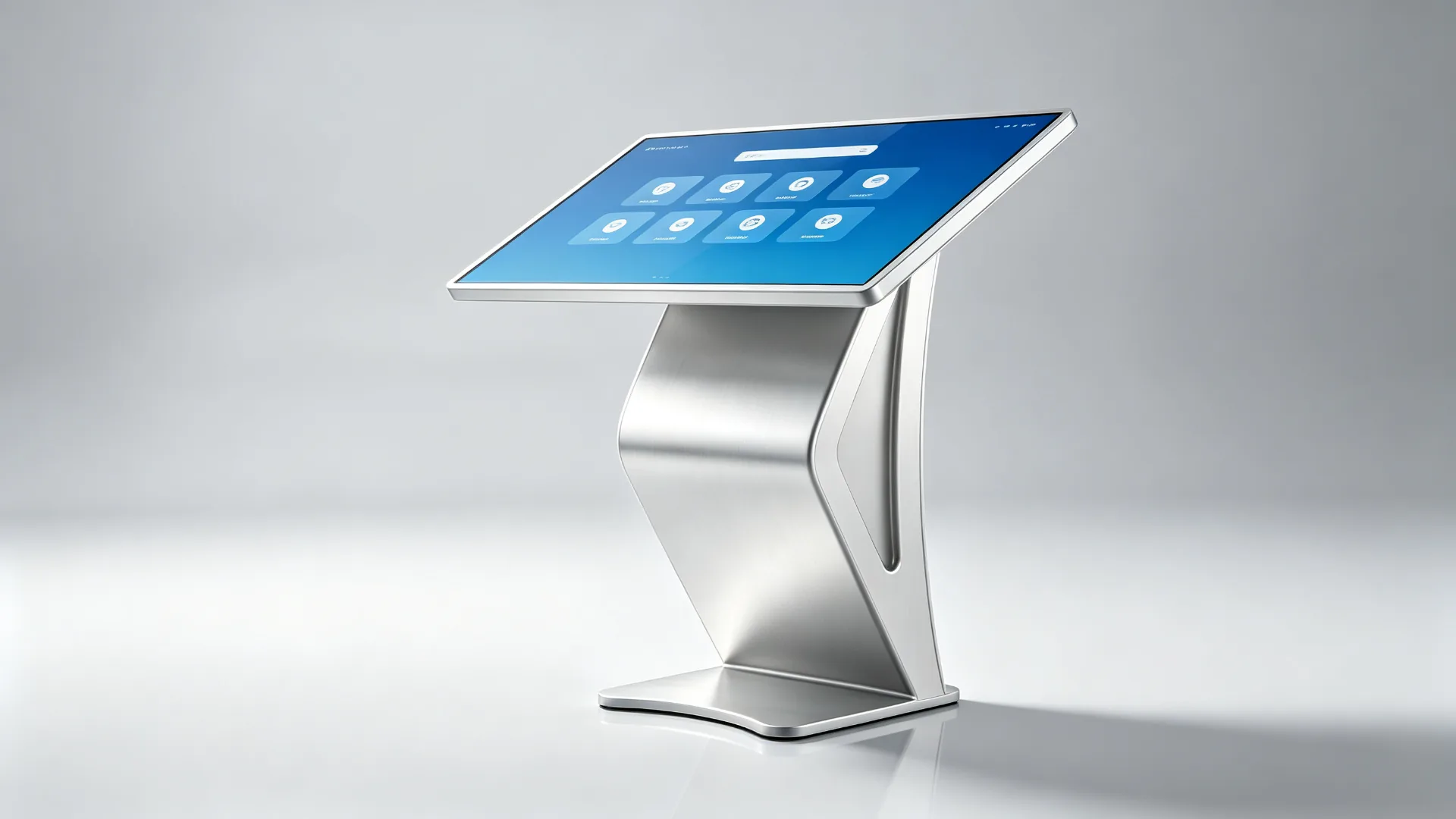
The first step in the customization process is not to draw a picture, but to answer a more basic question:Do you want appearance-level, structure-level or function-level customization?These three gears have a completely different impact on MOQ, cycle time and cost, and are alsoQuery machine non-standard custom cycleThe source of the difference. To make the depth of customization clear is the first step to avoid "large differences in quotations and uncertain cycles.
| Custom Level | Typical requirements | Involving engineering links | Impact on cycle time and MOQ |
|---|---|---|---|
| Appearance level customization | Brand color spray, LOGO technology, panel material combination | Spraying/film sticking scheme, LOGO process confirmation, not involving structural tooling | Short cycle, MOQ threshold is relatively loose |
| Structural level (non-standard) customization | Inclined angle adjustment, machine height, base size, screen size beyond the standard series | Sheet metal mold opening/fixture adjustment, structural strength and stability check | There is a minimum order quantity threshold, and the proofing period is obviously lengthened. |
| Function-level customization | Query software UI, business system docking, card swiping/code scanning/printing module, letter creation adaptation | Software architecture, interface development, hardware module native integration, joint debugging test | Complexity determines the workload of joint debugging. The earlier the requirements are clear, the more controllable they are. |
Three levels of customization usually appear superimposed-for example, the government affairs hall project not only makes VI color appearance customization, but also adjusts the operation height (structure level), and also interfaces with the matter library (function level). The next steps in this article are based on this overlay logic.
The first step in the customization process is not drawing, but "breaking down the requirements into executable engineering language". QUNMAO's approach is to let customers first clarify the following four types of information, and then by the engineer into a technical task book, to avoid repeated revision:
| Dimension | Customer information required | How engineers use |
|---|---|---|
| Use case | Government affairs hall, hospital outpatient service, bank outlets, shopping mall atrium, temporary exhibition booth, etc. | Determine the protection level, heat dissipation method, base fixing method and function module combination |
| Size | Installation position available space, channel width, height limit, number and distribution of points | Incline angle, body height, floor area and arrangement density |
| Appearance | Brand VI color number, LOGO source file, panel material preference | Determine spray/film scheme, LOGO process and surface treatment |
| Function | Interfacing business system (transaction library/HIS/queuing/ticketing), language, interaction mode, and letter creation requirements | Identify software architecture, hardware interfaces and network deployment options |
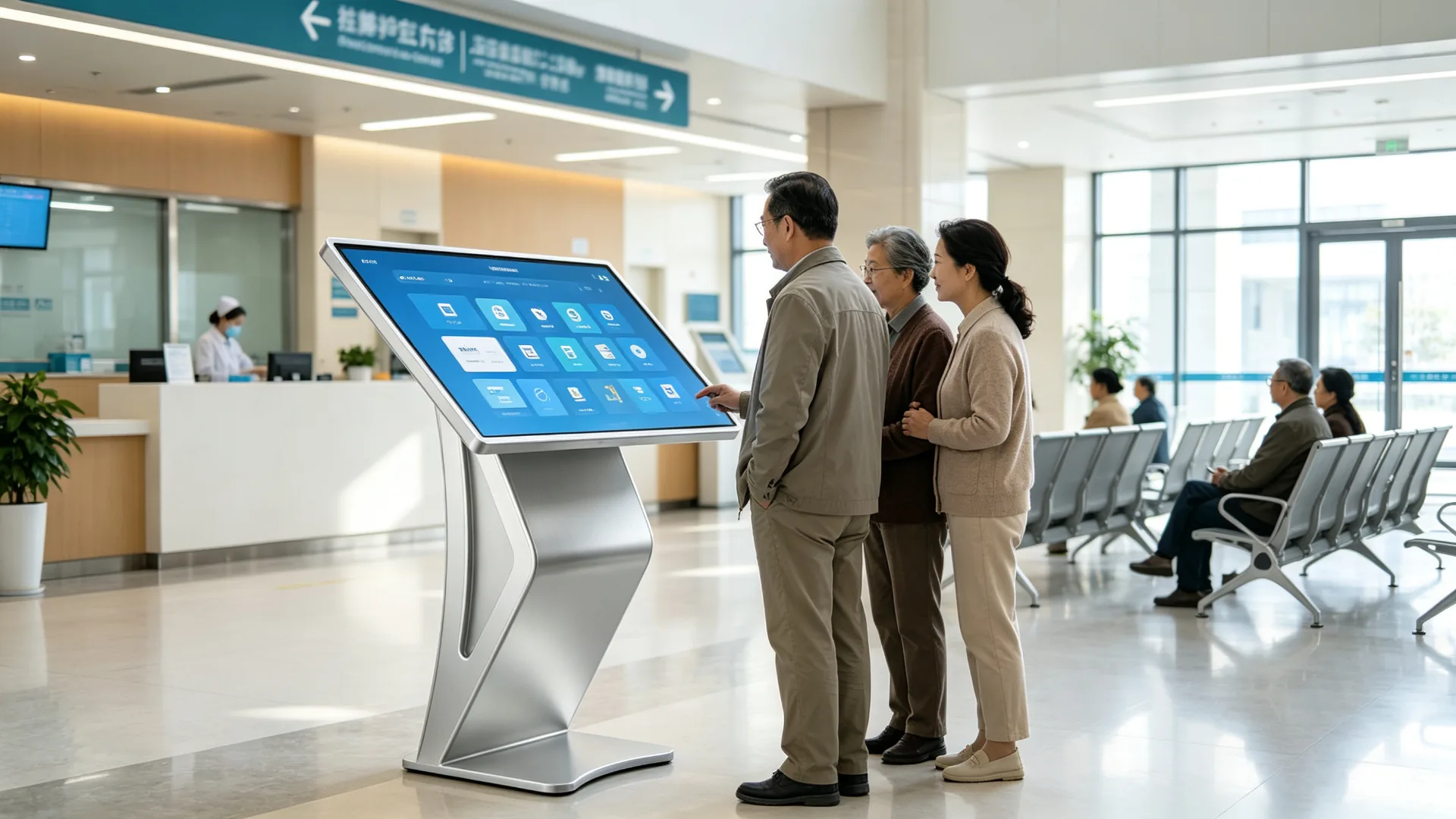
The appearance customization of the K-type horizontal inquiry machine mainly falls on three adjustable dimensions, each of which corresponds to a different process path and delivery date impact:
The common practice is to spray plastic sheet metal according to the brand color number provided by the customer (such as Pantone color card number), or a combination of local wire drawing panel and spray plastic shell can be used. Color customization does not affect the structural strength, but color change will involve the spray booth scheduling, which is a variable that must be locked in advance during the proofing stage. The color difference acceptance shall be subject to the comparison between the proofing piece and the customer's confirmed color plate. Both parties shall keep samples to avoid holding different opinions on "whether the color is right or not" at the arrival stage.
Common processes of LOGO include silk screen printing, UV printing and acrylic three-dimensional character bonding, which correspond to different visual thickness and wear resistance respectively. The selection is usually determined by the contact frequency of people in the usage scene:
| Craftsmanship | Visual effects | Wear resistance and maintenance | suitable for batch |
|---|---|---|---|
| Screen printing | Flat thin print, flush with panel | Medium wear resistance, suitable for low frequency cleaning areas | High-volume, monochrome/low-color |
| UV printing | Good color reproduction, multi-color gradient | Good wear resistance, suitable for high frequency touch area | Small and medium batch, multi-color complex graphics |
| Acrylic three-dimensional characters | Three-dimensional convex, strong brand texture | The resistance to collision is general, and it is necessary to avoid push-pull collision. | Model room, flagship point, small batch |
The main body of the K-type horizontal inquiry machine is mostly cold-rolled steel plate structure, the panel can be brushed stainless steel or plastic-sprayed steel plate, and the operation table is usually made of tempered glass to cover the screen area, taking into account scratch resistance, fingerprint resistance and easy cleaning. For outdoor or semi-outdoor scenes, it is usually recommended to upgrade the protection level and adjust the material thickness. After the back of the fuselage is reserved, the maintenance door is opened to facilitate on-site maintenance after batch deployment of multiple outlets-these will be confirmed together with the protection level during the demand sorting stage.
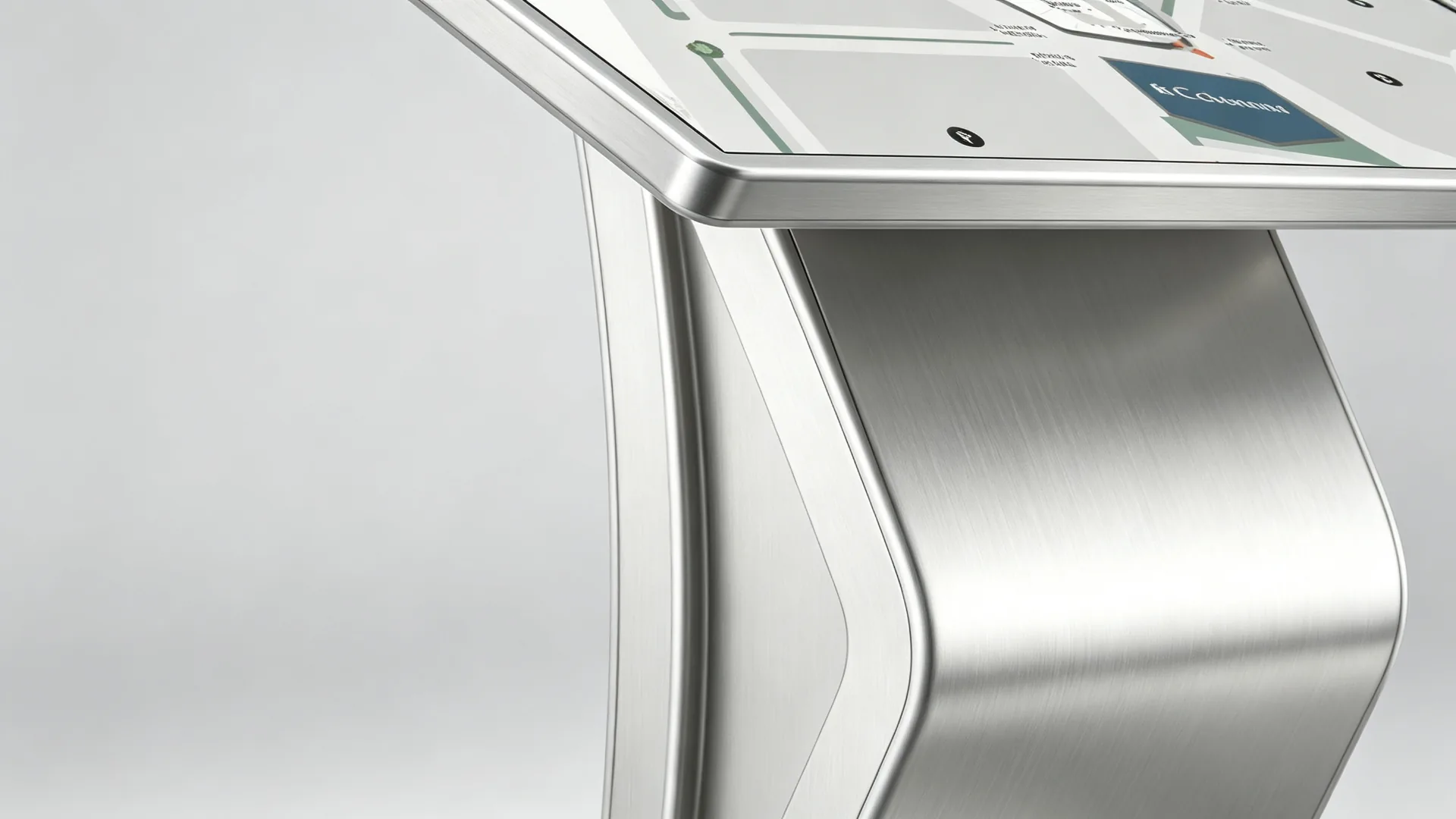
K-type horizontal inquiry machine is characterized by the structure of the "horizontal inclined platform", which is different from the vertical inquiry machine, and evenL-type horizontal inquiry machineThe core difference point of the-L-type structure adds a lateral operation surface at the corner, which is suitable for scenes requiring two-way guidance, while the K-type focuses more on a single-direction inclined plane query experience. Size customization mainly revolves around three parameters:
| Parameter | Standard Form | Common non-standard adjustment direction | Basis for adjustment |
|---|---|---|---|
| bevel angle | QUNMAO conventional design about 45 ° (both viewing and operating comfort zone) | Increase or decrease the inclination angle | Average height of users, standing/wheelchair accessibility needs, screen size |
| Overall height/screen center line | Overall design according to the height distribution of adult population | Lower the height of the operating surface and adjust the center line of the screen. | Accessible access specifications, child/wheelchair use scenarios |
| Base width | Standard base size (counterweight incorporated into stability design) | Narrowing or widening | Installation point space limitation and stability requirements |
The two items of inclined plane angle and height belong to "non-standard structure customization", which will directly affect the adjustment of sheet metal mold opening or tooling fixture. Therefore, one-time locking is required in the scheme confirmation stage to avoid changing the structural parameters after proofing. This is alsoQuery machine non-standard custom cycleOne of the common causes of being stretched. Here are two reference engineering basis:
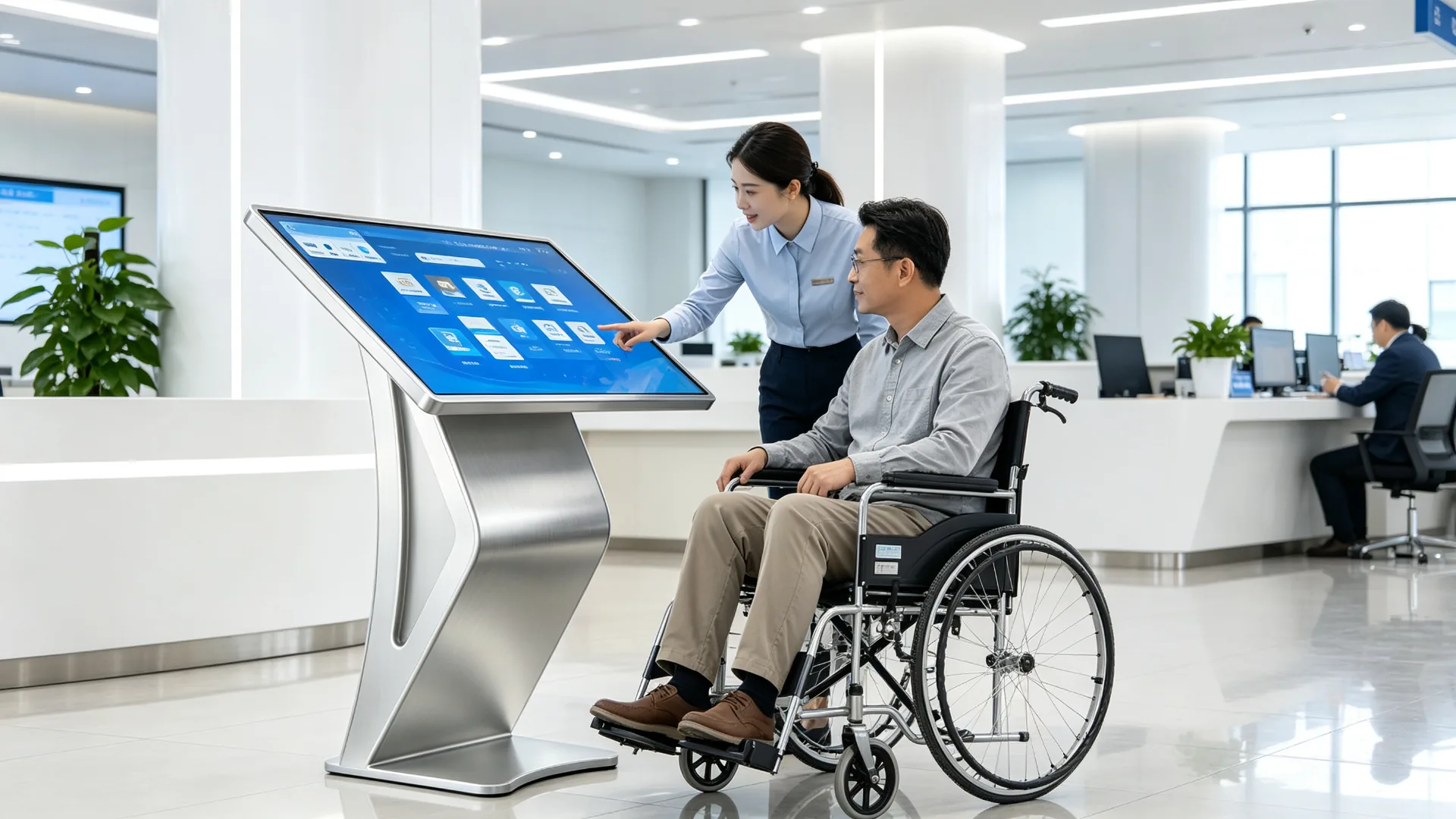
After the hardware structure is finalized, the customization at the functional level mainly focuses on the query software itself, rather than simply replacing external accessories. QUNMAO usually confirms the following with the customer at this stage:
The complexity of software customization directly determines the workload of the joint debugging test, so the earlier this part of the requirement is clear, the more controllable the schedule for subsequent proofing and mass production phases. The hardware side also supports native integrated card swiping (ID card/social security card/bank card), code scanning, printing and other modules, rather than later external modification, to ensure the integrity and long-term stability of the whole machine structure.
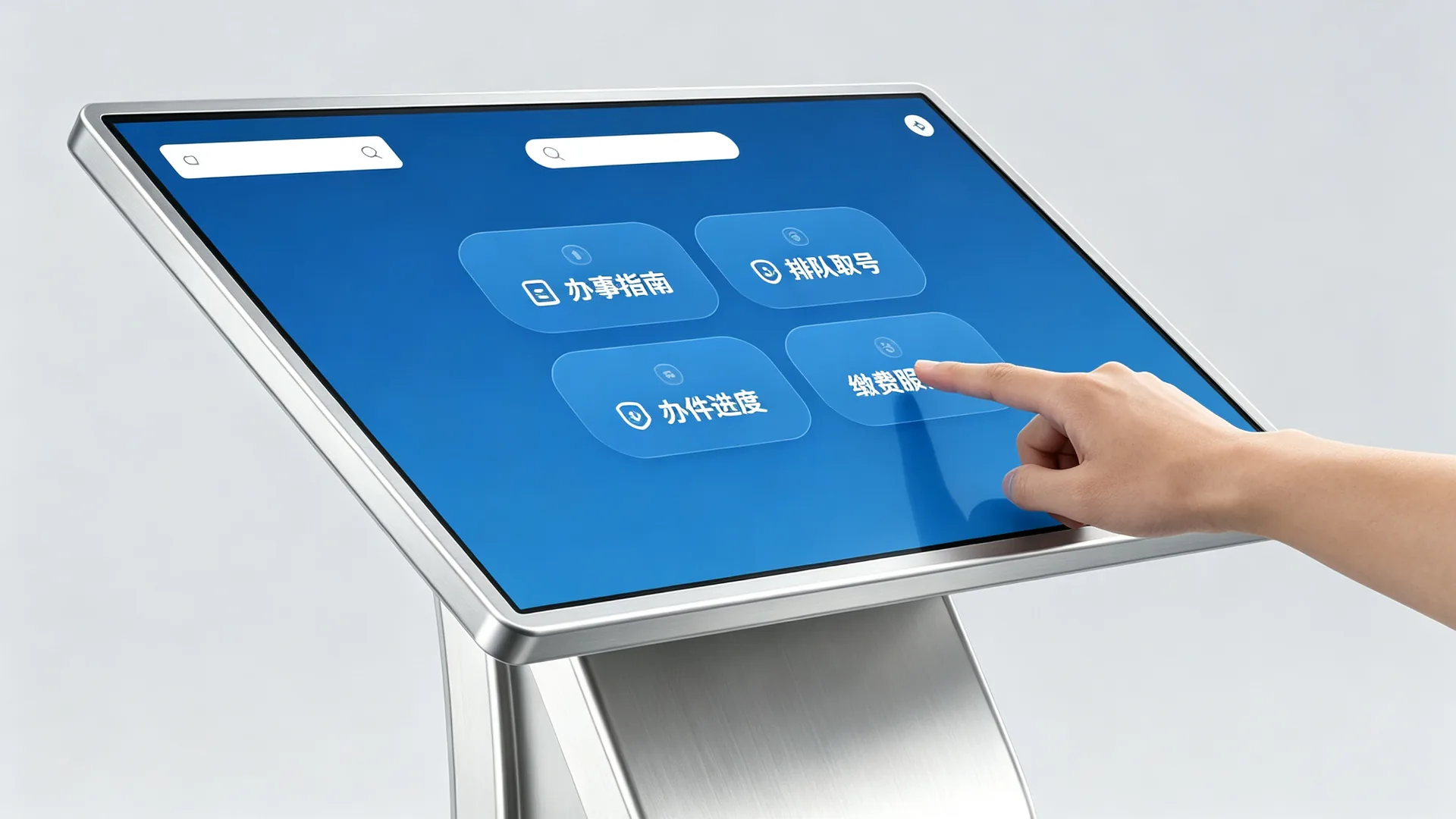
After the requirements and parameters are determined, the engineering team will first produce a 3D renderings for the customer to confirm whether the appearance, color and LOGO position meet the expectations, and then convert the renderings into formal engineering drawings (structural drawings, electrical drawings and assembly drawings). The key to this step is "change management": once the engineering drawings are frozen and enter the proofing stage, any changes in appearance or structure will trigger tooling adjustment again. therefore, we suggest that customers unify the opinions of internal departments in the renderings stage, instead of leaving them until proofing.
The purpose of the proofing stage is not to "make a good-looking prototype", but to verify whether the structure, appearance and function are consistent with the drawings, and to expose the problems that may occur in the mass production stage in advance. Typical proofing test items include:
Check whether the center of gravity and stability of the whole machine meet the expectation after the adjustment of non-standard inclined plane angle and base size, including anti-dumping test of simulating external force pushing.
Verify the heat dissipation performance of the internal host and screen under the actual shell structure, covering the 7 × 24-hour operation scenario.
Check whether the spraying color and LOGO process are consistent with the effect drawing and the color number provided by the customer, and keep the color plate confirmed by both parties.
Confirm whether the response of the query software in the real hardware environment, the touch sensitivity and the background data interface are normal.
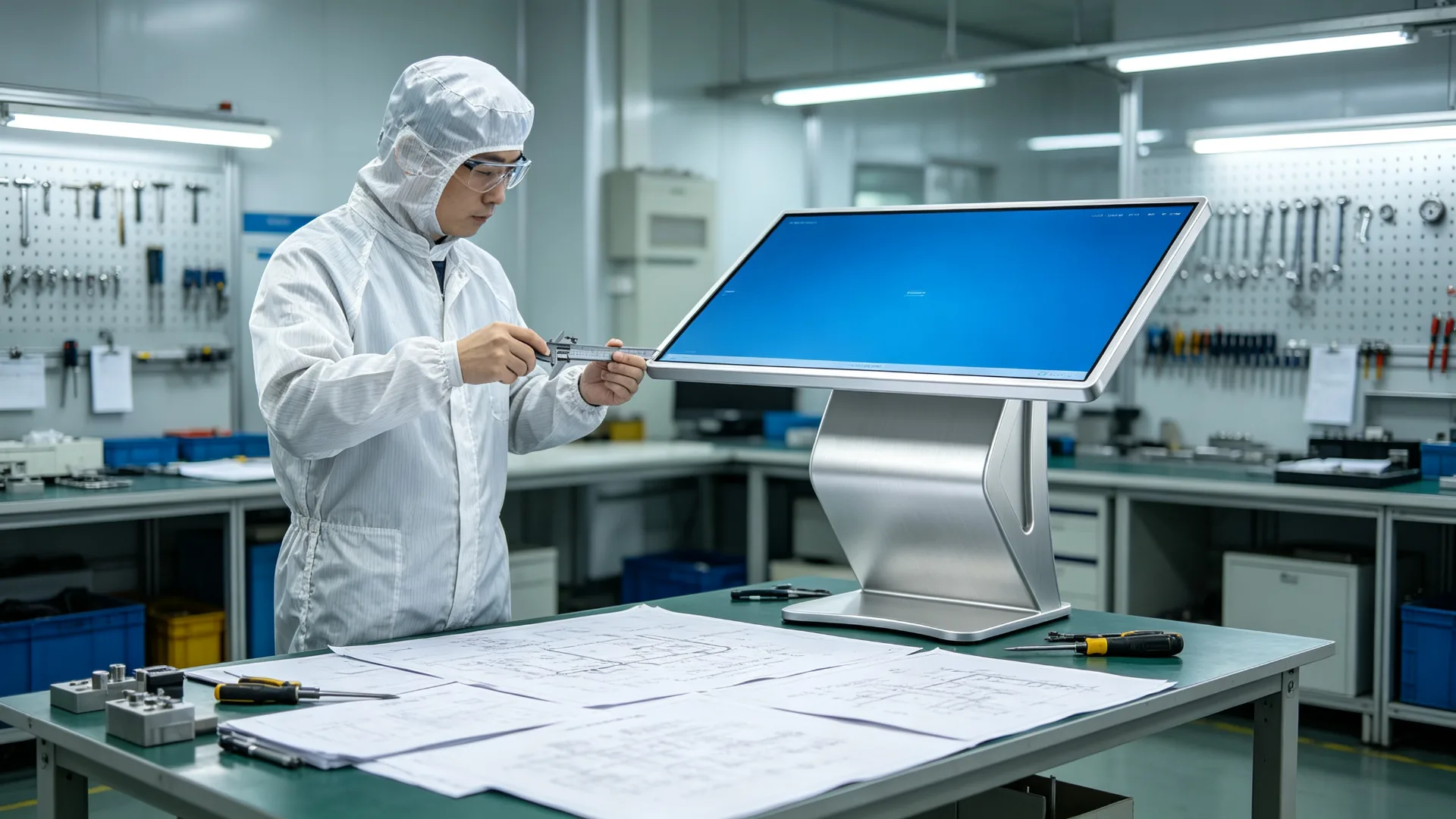
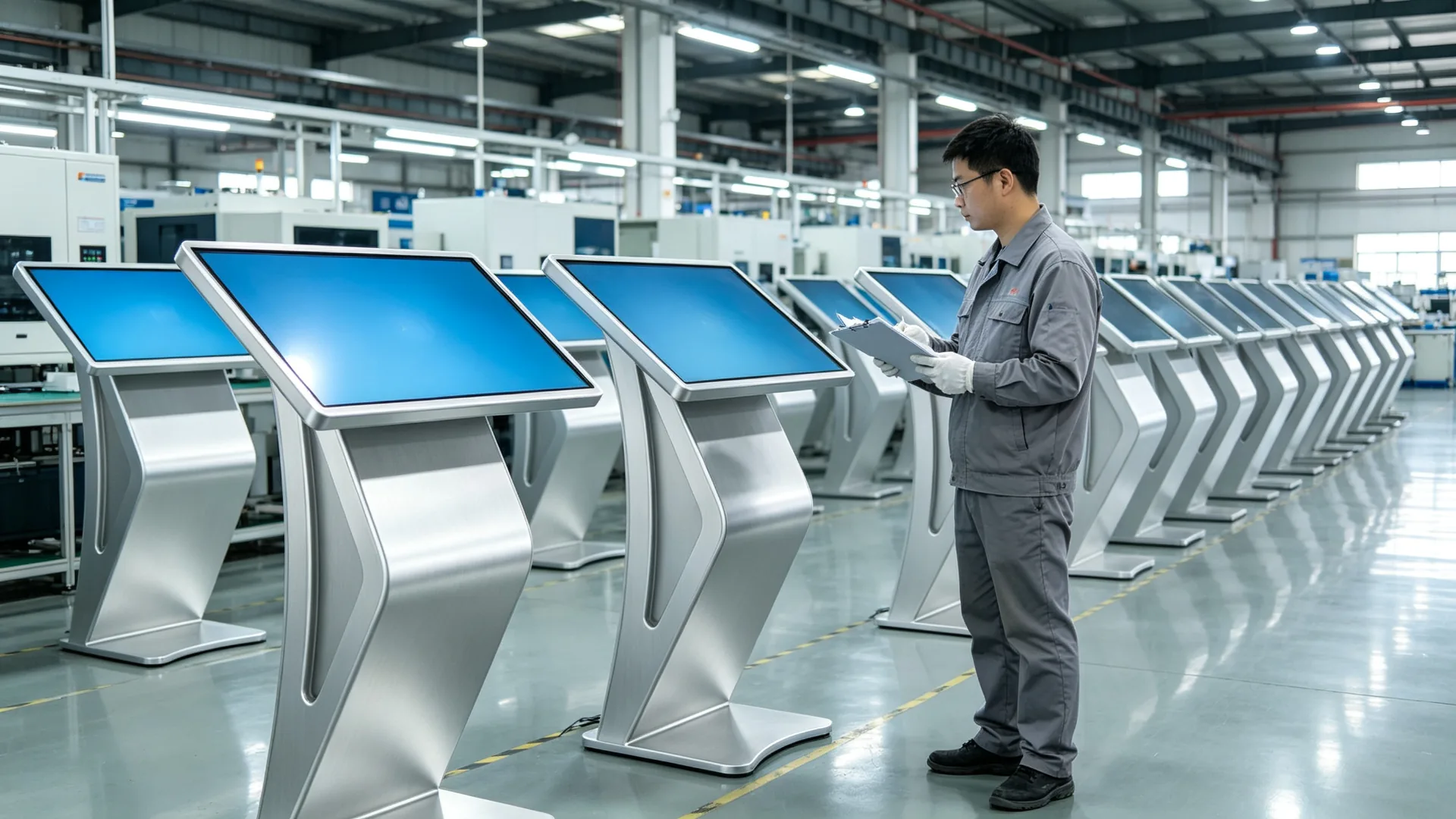
After the proofing acceptance is passed, the process documents will be officially frozen and enter the mass production stage. The quality inspection in the mass production process is usually carried out in layers according to the three nodes of incoming inspection, process inspection and finished product delivery inspection. Each node pays attention to different issues: the incoming part verifies whether the plate and electronic components conform to the specification; The process pays attention to the assembly consistency, especially whether the non-standard structural parts are implemented according to the drawing tolerance. Before shipment, the final inspection and appearance. QUNMAO in undertakingK machine OEM customizationWhen ordering, the inspection records of the mass production node will be kept and archived, so that customers can trace batch quality problems later.
The two questions that customers are most concerned about are often "how long to deliver" and "how to calculate the cost of customization". The answers to these two questions essentially depend on the customization depth locked in the previous steps.
The customization cycle of K-type horizontal inquiry machine usually consists of three sections: scheme confirmation and drawing freezing, proofing and testing, mass production and logistics. Non-standard structures (such as bevel angle and overall height adjustment) will lengthen the time-consuming proofing phase, while appearance customization involving only color and LOGO will usually not affect structural tooling, and the cycle is relatively controllable. The following is the engineering reference interval, specific to how long a certain order will take, it is recommended to let the engineer give a written schedule according to the customization depth at the demand sorting stage, instead of applying a common number of days:
| Phase | Appearance level customization | Including non-standard structure customization | Description |
|---|---|---|---|
| Requirement confirmation and drawing freeze | 3~5 | 7~10 | Effect drawing → engineering drawing → freezing, change management critical period |
| Proofing and testing | 10~15 | 20~30 | Tooling production and non-standard structure verification as the main variables. |
| Mass production and logistics | 15~25 | 25~40 | Related to batch size, scheduling period |
The customization contract of K-type horizontal inquiry machine usually needs to specify three types of clauses: first, the composition of the customization fee (how to calculate the tooling fee, proofing fee and batch unit price respectively, and whether they can be shared or deducted in subsequent batch orders); The second is the ownership of intellectual property rights related to customized appearance, LOGO and software UI; The third is the warranty clause, including the corresponding warranty period and responsibility division of structural parts, electronic components and software systems. If you want to understand the logic of price composition under different configurations first, you can referHow much is the price of a K-type horizontal inquiry machine?This article, which details the factors that affect the offer.
Customer requirements:The new hall of a municipal government service center is upgraded, requiring the VI vision system of the inquiry machine panel color matching center. Taking into account the barrier-free requirements-reducing the height of the operating surface and adapting to wheelchair crowds; Docking hall number and number system and matter library; The interface supports bilingual Chinese and English and is designed according to aging standards.
Customized scheme:On the structure side, the angle of the inclined plane will be fine-tuned from the standard 45 to about 42. The center line of the screen will be recalculated according to the height distribution of the population using the site. The low operating height will be designed according to the low service facility interval of GB 50763-2012. The appearance side adopts VI color sheet metal spray UV printing LOGO; The software side customizes the government affairs inquiry UI (large font size, high contrast, high contrast and voice reading), and the interface interface.
Implementation cycle:Demand confirmation and drawing freeze for about 10 working days, proofing and prototype testing for about 18 days, mass production for about 25 days, from demand locking to the first batch of delivery for about 60 days, one acceptance.
Delivery results:The inquiry machine in the entrance area is responsible for the inquiry and guidance of the first station in the hall. The pressure of repetitive inquiry in the comprehensive window is significantly reduced, and the number of round trips caused by the uneven preparation of materials for the masses is reduced. After the equipment goes online, the information management department of the hall will update the content in batches according to the agreed mechanism. After the operation and maintenance are completed, the maintenance door will be opened without affecting the normal business.
Customer evaluation:"From the confirmation of the effect diagram to the proofing and acceptance, each node has written confirmation and actual shooting records, and there is basically no dispute in the acceptance process. The handling of non-standard height and angle enables wheelchair people to operate independently, which is a bonus in the service assessment of the hall."
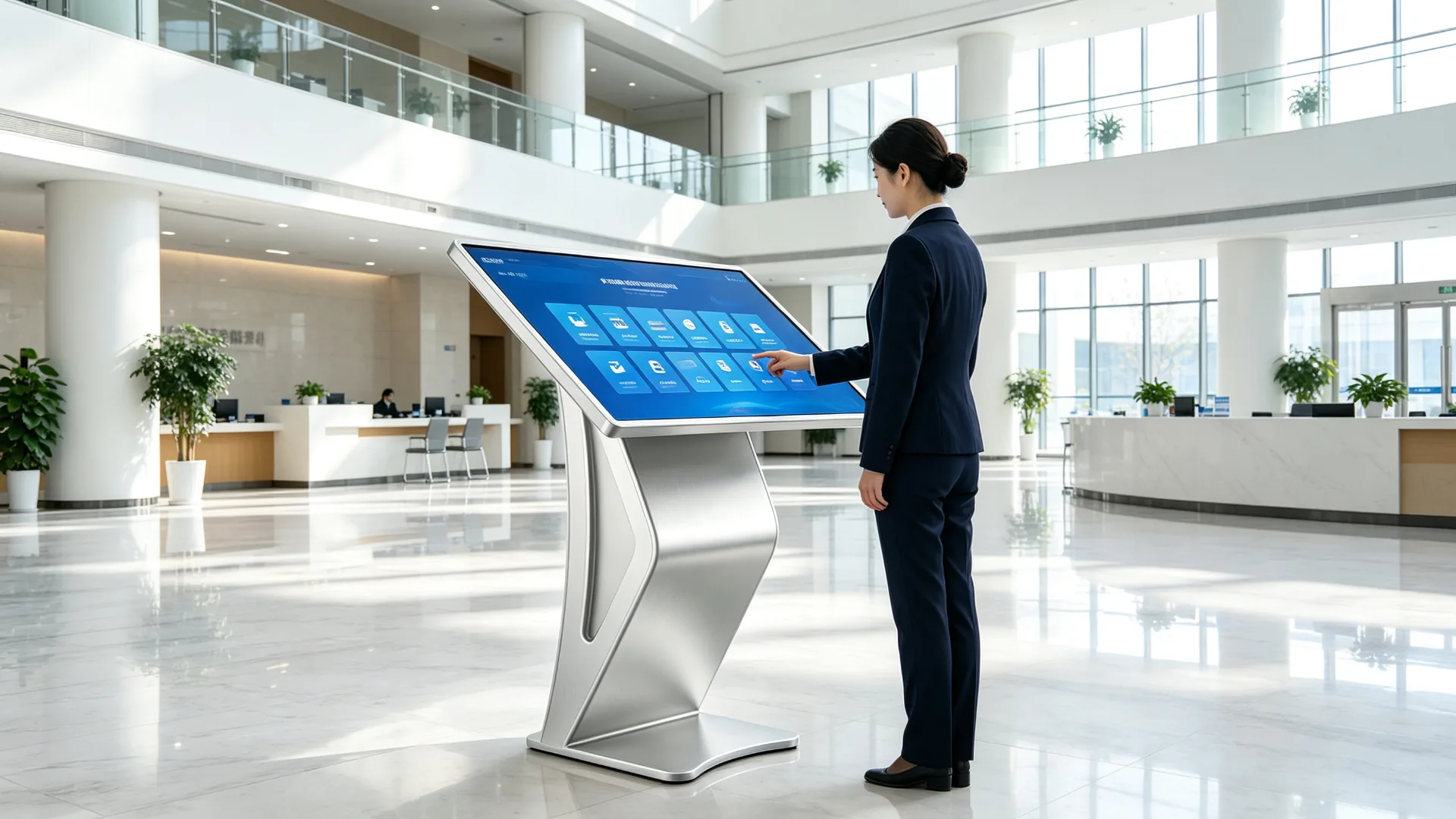
The government affairs hall is one of the most typical deployment scenarios of the K-type query machine. It can be read about the complete development of query category planning, UI aging specification, Xinchuang adaptation and bidding points.Government Application Scheme of K-type Query Machine。
Non-standard structure customization (such as bevel angle and machine height adjustment) usually involves tooling adjustment, so there is generally a corresponding minimum order threshold. If only the appearance of color and LOGO is customized, the minimum order quantity requirement is relatively loose. The specific threshold is recommended to be confirmed in writing with the engineering team at the requirements sorting stage, and the threshold corresponding to different customization depths is not the same.
The customization cycle consists of three sections: scheme confirmation and drawing freezing, proofing and testing, mass production and logistics. The appearance level customization cycle is short, and the non-standard structure customization will lengthen the proofing stage. The feasible space for expediting lies in the need to do the right thing at one time and reduce the repeated confirmation of the drawing freezing stage, which belongs to process optimization rather than skipping the necessary links.
This is something that needs to be clearly agreed in the terms of the contract, and different orders may be handled differently. It is suggested that before signing the customized contract, the relationship between the proofing fee and the unit price of mass production (whether it is apportioned and deductible) should be clearly written in written terms to avoid subsequent differences of understanding.
It is suggested to distinguish the warranty of the whole machine and the warranty of the core components (screen, motherboard and touch module), rather than the general "one-year warranty of the whole machine". The corresponding warranty period and responsibility division of structural parts, electronic components and software systems shall be specified item by item in the contract.
The ownership of intellectual property rights related to customized appearance, LOGO and software UI needs to be clearly defined in the contract: the VI element of the customer's brand belongs to the customer, the general structural design of the manufacturer and the underlying framework of the software usually belong to the manufacturer, and the ownership of customized parts shall be subject to the written terms.
Sure. As a hardware terminal, the K-type machine has docking capability. Systems such as government affairs database, progress inquiry, queuing and calling, hospital HIS, ticketing membership, etc. are integrated by the software layer. It is suggested to provide the system list, interface documents and network environment (intranet/extranet, trust creation) in the demand phase. The earlier the joint adjustment is made clear, the more controllable it will be.
Standard models can be directly selected according to point space and viewing distance in QUNMAO 32-inch to 85-inch horizontal infrared touch series (QM-C32XJ to QM-C85XJ). Modules such as card swiping, code scanning and printing support native integration rather than external modification. If the standard size does not meet the site conditions, then take the non-standard customization scheme.
Provide 3D renderings and electronic files of engineering drawings in the scheme stage; Keep real shot records and test item list in the proofing stage, and support video inspection machine; Provide factory inspection report before shipment. Acceptance criteria are locked in writing at the stage of demand confirmation, and foreign customers can complete node confirmation without going to the factory.
The K-type machine can be adapted to the industrial control motherboard scheme supporting the domestic operating system. Whether it meets the specific compliance requirements of Xinchuang needs to be confirmed in combination with the local procurement requirements and network deployment environment. It is suggested to confirm the adaptation of software and hardware with the manufacturer in the early stage of the project, so as to avoid finding that the system version does not meet the requirements after the equipment arrives.
The delivery includes installation and commissioning support and failure response within the warranty period. The rear maintenance door design of the K-type machine is convenient for unified operation and maintenance of multiple outlets. The operation and maintenance personnel can overhaul the main board, power supply and wiring without disassembling the shell of the whole machine. The time limit for fault response during the warranty period is suggested to be clearly stipulated in the contract.
Tell QUNMAO's engineering team about your usage scenario, size limits, appearance requirements, and functional requirements, and we will give a written customization plan, cycle scheduling, and acceptance criteria according to the process of this article, rather than a general quotation.
 Partner Links:
 en
 中文

 Previous:
 Return to list