Current location:
Home
> News > Product News > Interactive Flat Panel
 Release date: 2026-10-13
 Clicks:0
When import taxes, localization of government procurement and domestic substitution policies reshape market access, how can Qtenboard help partners find a more robust path between compliance, quality and delivery with 20 years of manufacturing experience, 330,000 ㎡ industrial park and CBU/SKD/CKD full-mode delivery capabilities?
In the past, customer inquiries only asked three things: FOB price, sea freight, customs duties. In 2026, more and more education digitization, smart conferences and public safety projects are dominated by governments, state-owned enterprises, school groups or large system integrators, and more non-price factors are being added to the bid evaluation logic:Local ingredient ratio, local assembly or local producer qualification, local aftermarket capability, energy efficiency, certification and compliance documentation, supply chain sustainability.The threshold for the export of interactive whiteboards is changing from "the number on the customs declaration list" to "whether you can read the procurement rules of the target country and come up with the corresponding delivery plan".
The competition in 2026 is no longer just "who can export the whole machine at a lower price", but "who can provide different countries with manufacturing and delivery models that better meet their procurement rules, tariff structures, quality requirements and localization goals".
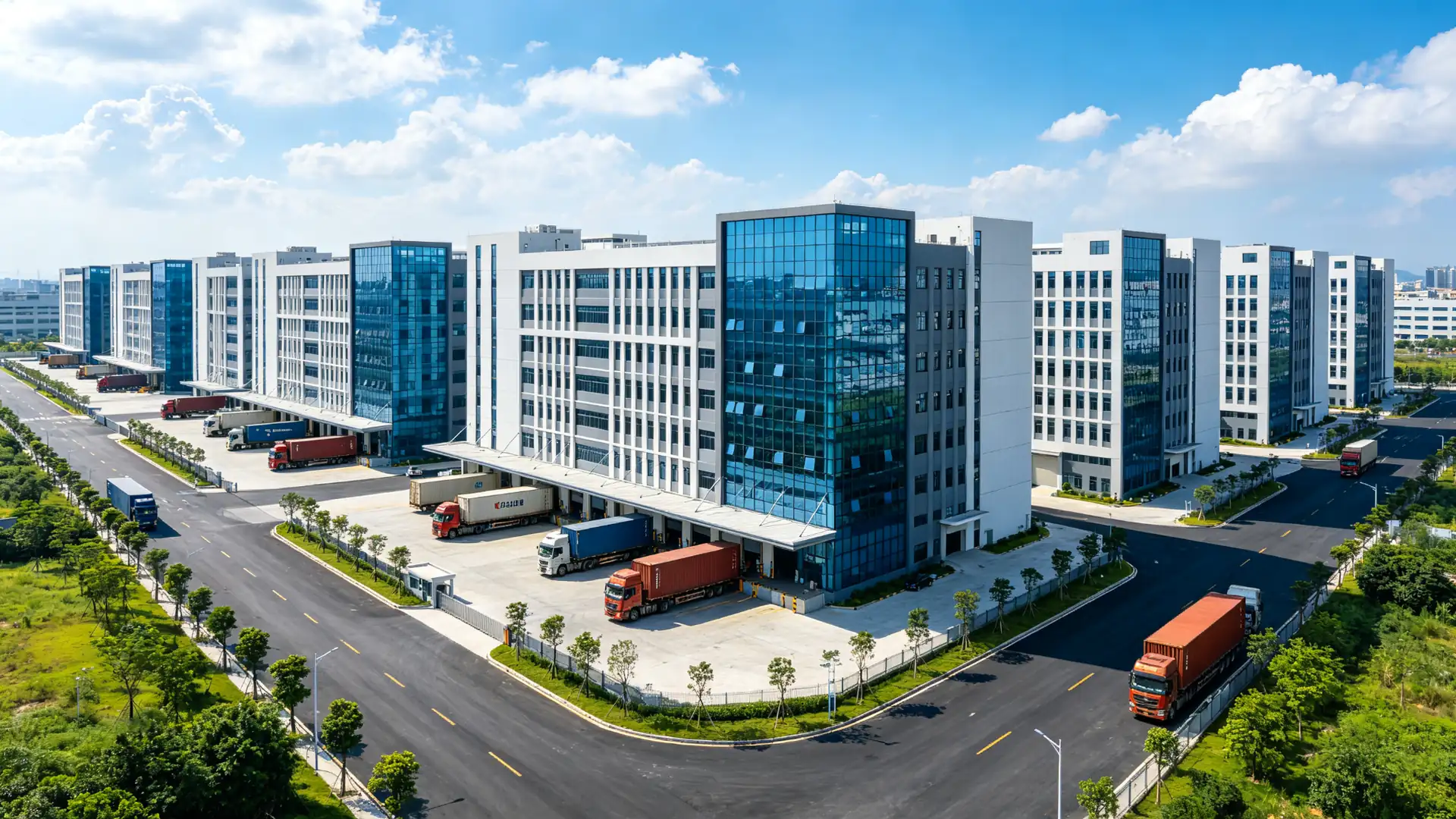
Qtenboard (Shenzhen Qunmao Display Technology Co., Ltd.) was established in 2005. It has been deeply engaged in interactive display manufacturing for 20 years. It has 330,000 ㎡ of intelligent manufacturing industrial parks, 16 modern factory buildings, 8 fully automatic production lines and a daily production capacity of 200 units in Shenzhen and Guangzhou. It serves 110 countries in the world and provides OEM, ODM, CKD (full parts) and SKD (semi-parts) full-mode delivery solutions. Unlike most factories that only export complete machines, the starting point of Qtenboard is exactlyCKD/SKD Display Unit Supply-Since 2005, it has been providing panel kits to assembly plants and local brands in India, Spain, Ecuador, Vietnam and other markets. This means that Qtenboard have accumulated 20 years of practical experience from kit design, tariff declaration to local assembly process, which can help partners flexibly switch between CBU complete machine export and local assembly.
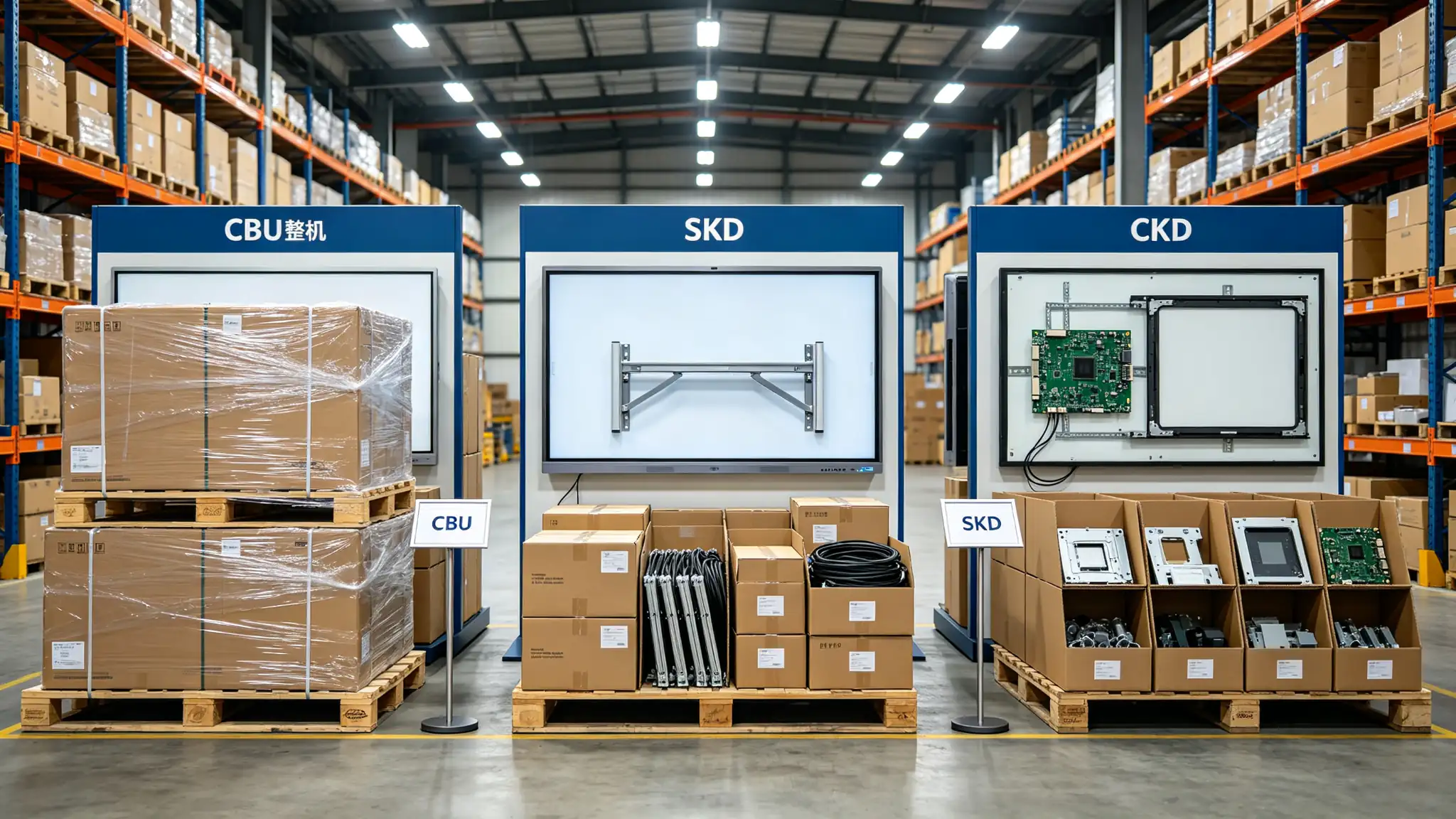
Before deciding whether to localize, it is important to understand what each of the four delivery models solves. Many buyers ask "what is the difference between CBU, SKD and CKD interactive whiteboard". the answer is not who is better, but who better matches the tariff structure and procurement rules of the target market.
Refers to the complete assembly, testing, packaging after the interactive whiteboard export. Suitable for private enterprise conference room projects, small batch orders, market testing phase, localization requirements are not strong commercial projects. The advantages are high product consistency, complete testing and aging of the whole machine in the factory, low initial investment and fast project start-up.
CBUQtenboard complete machine assembly, 48 hours high temperature aging test and packaging in China, suitable for fast delivery and standardized delivery. The one-time pass rate of the whole machine is ≥ 97%, and the aging abnormality rate is <1.5.
The core module has been pre-assembled or semi-finished, exported as a kit, and part of the final assembly, testing, packaging or accessory configuration is completed by the local partner. It is suitable for scenarios where there is a need for localization of government procurement, local partners have basic electronic assembly capabilities, project volume is stable, local components need to be improved, and the transport volume of the whole machine needs to be reduced. The advantage is to keep part of the value creation in the local, can be included in the local labor, packaging, support, wire or software services, conducive to building local after-sales and spare parts capacity.
SKDQtenboard SKD kit includes standardized components and assembly SOPs to support local partners to quickly build assembly capabilities. The kit design reduces shipping volume and import taxes while maintaining product consistency and quality control.
Split the product into more complete kits by core components, structural parts, wires, accessories, etc. for export, and complete a larger proportion of assembly, testing, packaging and partial local procurement in the local area. Suitable for scenarios where government projects explicitly require local manufacturing or high local content, where the market is large enough to support assembly lines and training inputs, and where local partners have more mature manufacturing and quality systems. The advantages are greater opportunities to increase local value, easier access to local manufacturer qualifications or local certification, improved local service response and availability of spare parts.
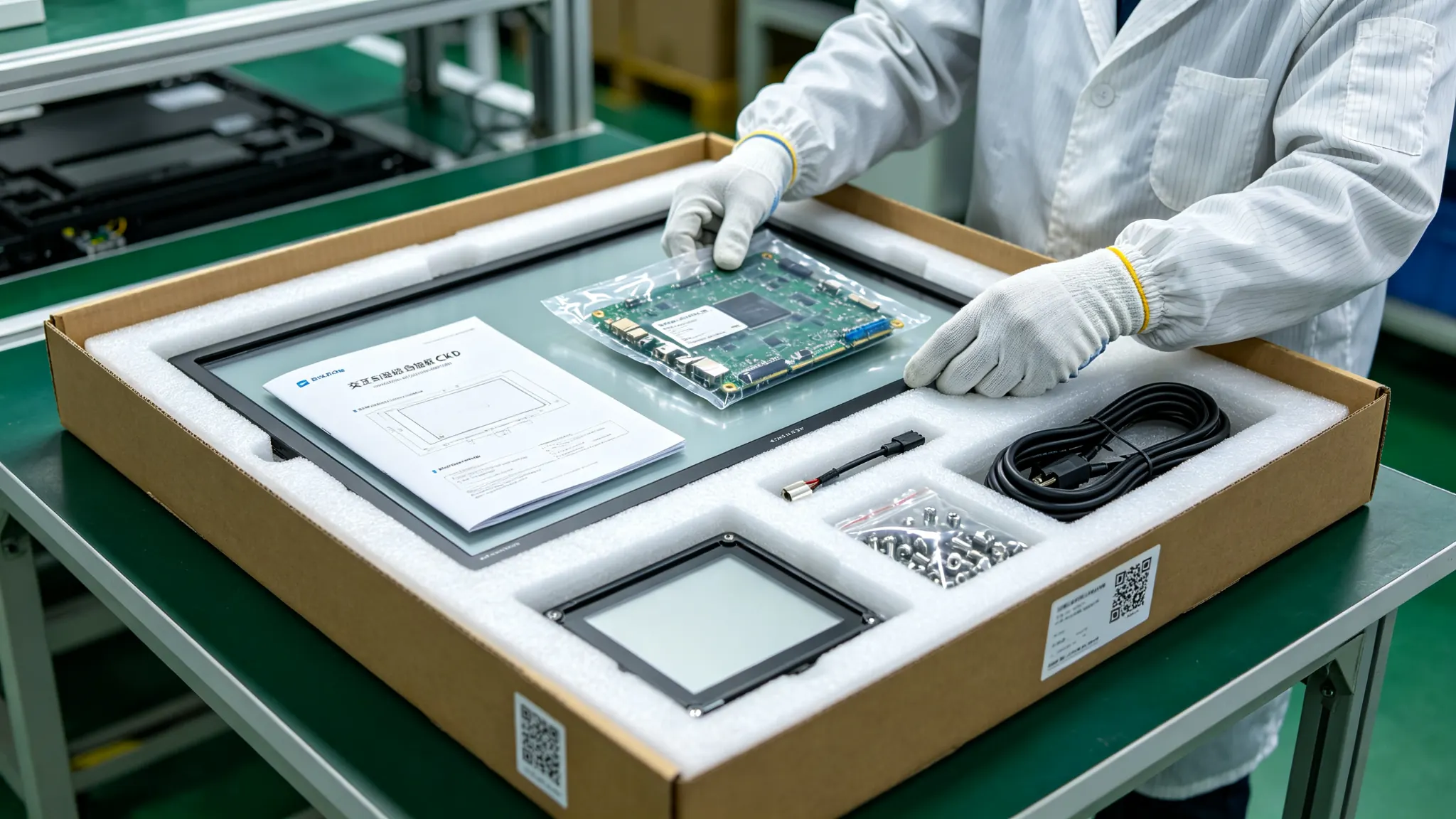
CKDThe Qtenboard provides CKD kit design, BOM and parts list, packaging and distribution scheme, assembly and quality inspection standards, software burning and calibration process and quality traceability scheme, supports partners to complete more in-depth assembly locally, and ensures batch traceability of core components such as panels, motherboards and touch controls through MES traceability system.
Further, product assembly, quality testing, packaging, after-sales and some parts procurement can be completed locally, and even local procurement of metal structural parts, brackets, packaging, wires, software services, etc. But please note:
There is no global definition of "locally made. Different countries may use different standards such as local ingredient ratios, adequate processing, certificates of origin, local producer lists, or industry certifications. The customer must be confirmed by the target country, product HS code and specific project rules.
| Comparison dimension | CBU complete machine export | SKD Semi-Parts Assembly | CKD Full Parts Assembly |
|---|---|---|---|
| Local component contribution | low | Medium (local labor, packaging, brackets, wires, software services) | High (greater proportion of assembly, testing, packaging and partial local procurement) |
| Typical applicable market | Private enterprises, commercial projects, market testing | Government/education programs with localized bonus points | Government Procurement with a Clear Threshold for Local Manufacturing |
| Impact of import taxes and fees | According to the overall tax rate | by component tax rate, usually lower | by component tax rate, usually lower |
| Starting threshold | low | Medium (requires foundation assembly capability) | High (production line and quality system required) |
| Qtenboard support | Whole machine certification logistics | Remote Training Kit Assembly SOP | BOM Quality Inspection Standard Software Burning MES Traceability |
Indonesian Ministry of Industry Adoption Permenperin No. 35 of 2025 A comprehensive reform of the TKDN (local component) policy, the new regulations have been implemented. December 11, 2025The new calculation framework will be fully applicable to government procurement in 2026.
CBUThe whole machine import model is suitable for private educational institutions, corporate conference rooms, commercial projects or small batch orders, but in government, state-owned enterprises or large-scale educational projects that emphasize TKDN, the scoring space for materials and labor is limited and may not be competitive.
SKD/CKDThe basis for the calculation of TKDN is created through local final assembly, local labor, local packaging, support and procurement of some structural parts. Qtenboard SKD/CKD kits enable partners to complete assembly locally, directly contributing material value and direct labor value. At the same time, it is necessary to pay attention to whether the bidding documents are accompanied by additional requirements such as e-Katalog (Indonesian government procurement electronic catalog) and SNI certification-these are usually bound to local assembly and local registration subjects, and the earlier the planning, the more active.
According to the Presidential Decree of October 15, 2025, from January 1, 2026, the Comprehensive Review Center for Projects and Import Contracts will review the procurement documents of electrical products to assess whether similar products are produced locally, and the results will be reflected in the expert opinion. In addition, in construction and infrastructure projects from 2026,The share of domestic electrical products must not be less than 30%; The local copper content of cable products and transformers is at least 70%, pumps and motors are at least 50%, and other electrical products are at least 30%. For intelligent devices such as interactive whiteboards, it means that the bidding documents must answer the question of "local substitution.
The traditional "bidding for imported complete machines" model will face three direct problems: the bidding documents may need to explain why imported products cannot be replaced by similar local products; Technical specifications cannot be designed as exclusive import parameters without reason; The advantages of brand and origin alone may not be able to form full competitiveness.
since January 1, 2026Since then, Kazakhstan has officially launched the "Unified Register of Kazakhstan Producers" (Реестр КТП), which completely replaces the original ST-KZ certificates of origin and industrial certificates. All ST-KZ and industrial certificates issued before January 1, 2026 will cease to be valid. Enterprises that already hold a valid industrial certificate will be automatically included in the unified register, subject to Before January 30, 2026Submit a confirmation application to retain eligibility; new entrants are required to complete production site verification through the e-ondiris.gov.kz platform and demonstrate the existence of technical operating procedures and compliance with localization standards.
The adjustment of Kazakhstan's public procurement rules, introduced at the end of 2025 and effective from January 2026, has incorporated local content, extended quality assurance, experience, financing conditions and energy efficiency into non-price assessments. For interactive whiteboard projects: the lowest offer is no longer the only competitive factor; local assembly or local production status may improve project scoring; extended warranty, local maintenance, spare parts supply and energy efficiency documents can improve bid credibility.
| Business objectives | Recommended mode | Qtenboard support |
|---|---|---|
| Private enterprise, commercial display project | CBU or light local service | 48-hour aging test for the export of the whole machine |
| Pilot small-scale government projects | CBU Local Integrator | Technical documents, service commitments, cases |
| Stable education or government projects | SKD Local Assembly Partner | Kit assembly SOP Remote training Quality traceability |
| Long-term public procurement | CKD Localization Service/Manufacturing Center | Deep Disassembly Kit MES Traceability Localization BOM |
Qtenboard (Shenzhen Qunmao) was established in 2005 and has been deeply engaged in interactive display manufacturing for 20 years. Unlike most factories, which "make the whole machine first and make up the supply chain later", Qtenboard started in CKD/SKD Display Unit SupplySince 2005, it has been providing panel kits for assembly plants and local brands in India, Spain, Ecuador, Vietnam and other markets. It is one of the few enterprises in the industry that really "enter the whole machine manufacturing from the component supply chain. Serve 110 countries around the world and have accumulated rich experience in overseas project delivery.
The Qtenboard has two world-class production parks in Shenzhen and Guangzhou, with a total construction area of 330,000 square meters, 16 modern factories and 1,000 employees. The park is equipped with automatic injection molding workshop, CNC precision stamping production line, SMT mounting center and 10,000-class clean room. The self-developed main board covers Genio 520, RK3588 and other platforms, building a complete internal ecosystem covering core component research and development, finished product manufacturing, software customization and customization services.
The Qtenboard provides a full set of delivery plans from CBU complete machine export to SKD semi-bulk parts and CKD full-bulk parts, and supports 55 "-110" full-size interactive whiteboards. SKD kit supports fast local assembly, CKD kit supports deep localization production, OEM/ODM supports full branding of UI customization, system language, Logo, packaging and boot animation. Interactive whiteboard full support Google Native EDLA Certification-Certified bound motherboard hardware is delivered at the factory, rather than the common "EDLA-Ready" software patch in the market, which is a key preliminary screening hard index in overseas K-12 government bidding.
Qtenboard established a separate OEM custom area, physically isolated from the standard production line. Custom orders are produced in parallel through independent production lines, without crowding out the main production line, supporting UI custom printing, chassis screen printing, boot animation programming, and extending the custom delivery period by only 3-5 days.
Qtenboard, four-layer quality control of IQC (incoming material) + IPQC (process) + FQC (finished product) + OQC (shipment) is implemented. The one-time pass rate of the whole machine is ≥ 97%, and the aging abnormality rate is <1.5. All products undergo a 48-hour high-temperature aging test (72 hours for some items). After aging, touch control, display, heat dissipation, system, audio and wireless are fully retested. The AI test line detects 20 parameters such as brightness, color and touch sensitivity one by one. Each device is bound with a unique serial number, and the material batch and test results are recorded through the MES system to support after-sales traceability and batch problem analysis.
CE, FCC, RoHS, ISO9001, CCC, EDLA and other certification is complete, to help customers quickly through the destination country compliance review. With DHL, FedEx, Maersk and other head logistics cooperation, service coverage of 110 countries, after-sales response ≤ 4 hours. Qtenboard has a dedicated global bid support team that has assisted partners in winning bids in Southeast Asia, the Middle East and Africa over the past two years. US$150 million government and enterprise projects, providing customized technical responses, certification packages, sample testing and even live demonstration support.
Challenge 1: Uncertainty about tariffs and landed costs.Tariff, VAT and import policies of various countries continue to adjust, and the distortion of quotations will directly lead to loss of orders or losses.
Response:Complete HS code prediction and local customs declaration consultation before quotation, and calculate the complete landed cost (including customs duty, value-added tax, logistics, local assembly and certification cost) of CBU, SKD and CKD modes at the same time, and select the mode with numbers instead of intuition.
Challenge 2: Localization requirements are constantly refined.From TKDN to the Harmonized Register, the identification of "local content" varies from country to country.
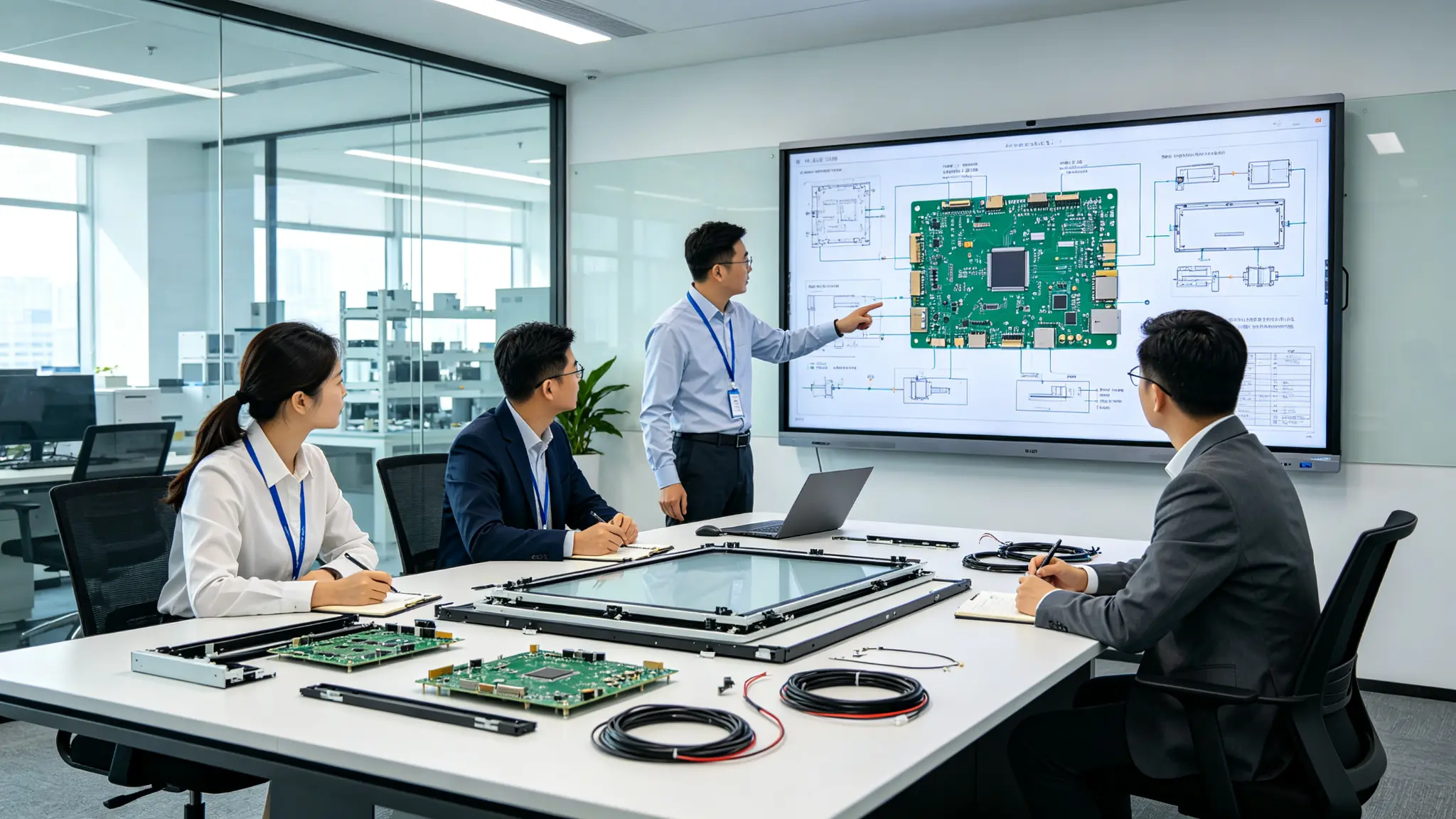
Response:Establish a "localized BOM" to identify which components can be purchased locally and which must be supplied by the original manufacturer. Qtenboard can assist clients in planning localized BOMs, document local labor, procurement, manufacturing and service contributions, and provide a chain of evidence for TKDN reviews, domestic substitution responses and register applications.
Challenge 3: Multi-base manufacturing may bring quality fluctuations.If local assembly lacks uniform standards, batch differences will erode brand reputation.
Response:Fixed BOM and engineering change process, kit two-dimensional code traceability, standardized assembly SOP, fixture, test software and packaging specifications. Qtenboard provide remote quality audit, first piece confirmation and batch sampling support.
Challenge 4: The contradiction between customization and delivery.White brand, local language, boot animation and other custom demand increased, but the project delivery date can not be delayed.
Response:Establish a standardized configuration platform, divide customization items into four categories: software customization, appearance customization, hardware customization and supply chain customization, and lock specifications at the sample stage. Independent OEM production line to ensure that custom orders and standard orders parallel production, custom delivery time is only extended by 3-5 days.
Challenge 5: After-sales capabilities change from "additional services" to bidding conditions.More and more tenders include local quality assurance, spare parts availability and response time in the scoring items.
Response:Establish local spare parts list, provide remote diagnosis, maintenance manual and technical training. Qtenboard provide spare parts support such as motherboards, touch frames, power supplies, etc., and track product batches and repair records by serial number.
| Decision-making problem | Core Judgment | Qtenboard support |
|---|---|---|
| Who is the target customer? | Private → CBU; Government → SKD/CKD | Full mode delivery |
| Is localization a preference or a threshold? | Bonus points → CBU service; threshold → SKD/CKD | Assist in localized BOM planning |
| Does market size support local assembly? | Annual Demand Project Continuity | 200 sets/Nissan can be flexible |
| Does the local partner have the ability to deliver? | Qualification Assembly Test After Sales | Assembly SOP Remote Training Quality Audit |
| Can the brand control quality and configuration? | BOM Lock Batch Tracing | MES Traceability Serial Number Management |
Case 1 Thailand: "Tripartite Closed-loop Customization" in 2000 Government Smart Education Bidding"
Open CasesThailandEDLA Certification
Background:Thailand's Ministry of Education launched the "Anywhere Anytime" digital education program in September 2025 (with a budget of about US $0.8 billion from 2026 to 2031). K-12 procurement shifted from "winning at the lowest price" to "compliance differentiation" competition, with a single government tender for 2000 75-inch interactive whiteboards in 2026.
Challenge:Local integrators face three obstacles: homogenization of complete machine products, lack of native Thai OS and curriculum software, and incomplete certification-especially EDLA certification has become a hard threshold for government bidding.
Plan:Qtenboard reached a strategic cooperation with Thai project integrators to provide a three-dimensional closed loop of "hardware customization (self-developed motherboard, 75" 4K, 40 touch points, white brand production) software customization (native Thai OS, course application, AI module, SDK open) tender specification control (native EDLA certification package, tender document support) "; At the same time, SKD/CKD local assembly mode is adopted, local assembly, testing and brand presentation are done to reduce import duties and meet local ingredients.
Result:Since 2020, Qtenboard has delivered a total of 30,000 + interactive whiteboards in Thailand, serving 200 + schools and 80 + enterprises. Public reports show that participation in classroom interaction has increased by 45%. The case shows that government bidding is not simply selling hardware, hardware parameter locking + software barriers + certification combination is the technical moat.
Source: Qtenboard official website Global Channel News (2026-08-27)
Case 2 Netherlands: 150 IFP cooperation and national distributor authorization
Open CasesEuropeOEM/ODM
Background:The European education and commercial display market is growing rapidly, and Dutch customers plan to enter the education and corporate conference market.
Plan:Qtenboard reaches 150 units with Dutch customersInteractive TabletCooperation (65 "and 86" 4K models, multi-touch, Android system, anti-glare tempered glass), and officially authorized it to become the exclusive distributor in the Netherlands. The cooperation includes localized software, installation guidance and remote technical support, while opening up the global market feedback mechanism and direct connection channels for R & D teams.
Support:This batch of orders is guaranteed by 8 full-automatic production lines-including SMT, injection molding and AI test lines. AI test lines check 20 parameters such as brightness, color and touch sensitivity one by one. The factory direct supply mode removes the middleman link.
Source: Qunmao Display Technology Official News (2026-07-01)
Case 3-Indonesia: SKD Local Assembly Path under New TKDN Regulations (Policy Deduce Schematic)
Schematic caseIndonesiaTKDN
Background:An education system integrator in Jakarta participated in the provincial smart classroom project. The bidding documents require TKDN to reach a certain score. The whole machine import mode has limited scoring space in materials and labor.
Plan:Local assembly of Qtenboard SKD kit (display module, motherboard, power supply, structural parts) is used instead, and packaging, bracket and part of structural parts are purchased locally. BOM and manual man-hour records are established synchronously as evidence documents for TKDN review.
Result:Improvements in both material value and direct labor scores, while achieving faster local delivery and after-sales response.
Note: This scenario is a typical deduction based on the new Indonesian TKDN regulations (Permenperin 35/2025), subject to the project bidding documents and local consultant's opinions.

Indonesia's new TKDN regulations, Uzbekistan's domestic substitution review, Kazakhstan's unified register-localization requirements for government procurement in 2026 are changing from "bonus points" to "entry thresholds". With 20 years of manufacturing experience, 330,000 ㎡ industrial park and CBU/SKD/CKD full-mode delivery capability, the Qtenboard helps partners find a balance between compliance, quality, cost, delivery date and after-sales service.
The trade challenge of 2026 does not mean that complete machine exports will be replaced, but that companies need to prepare different delivery tools for different markets. For private projects, CBU may still be an efficient choice; for government procurement or long-term scale markets, SKD, CKD and local service systems will gradually become the threshold of competition. Qtenboard have prepared CBU, SKD, CKD full-mode delivery capabilities, as well as a quality management system from BOM lock-in to batch traceability, and work with overseas partners to meet market access challenges.
Next, evaluate your target market with Qtenboard
Official website:www.szqunmao.cn | Business Consulting:info@szqunmao.com
Data source and caliber description:The policy information in this article (Permenperin No. 35 of 2025, Uzbekistan's presidential decree of October 15, 2025, Kazakhstan's unified register and adjustment of public procurement rules) comes from the public regulations and media reports of the target country, and the specific implementation is subject to the original official release and project bidding documents. The data and cases of Qtenboard companies come from their official websites and public press releases (qtenboard.com, szqunmao.com,2026). This article is for overseas distributors, system integrators and OEM/ODM brand decision-making reference, does not constitute legal, tax or bidding advice.
 Partner Links:
 en
 中文

 Previous:
 Return to list