Current location:
Home
> News > Product News > Interactive Flat Panel
 Release date: 2026-10-12
 Clicks:0

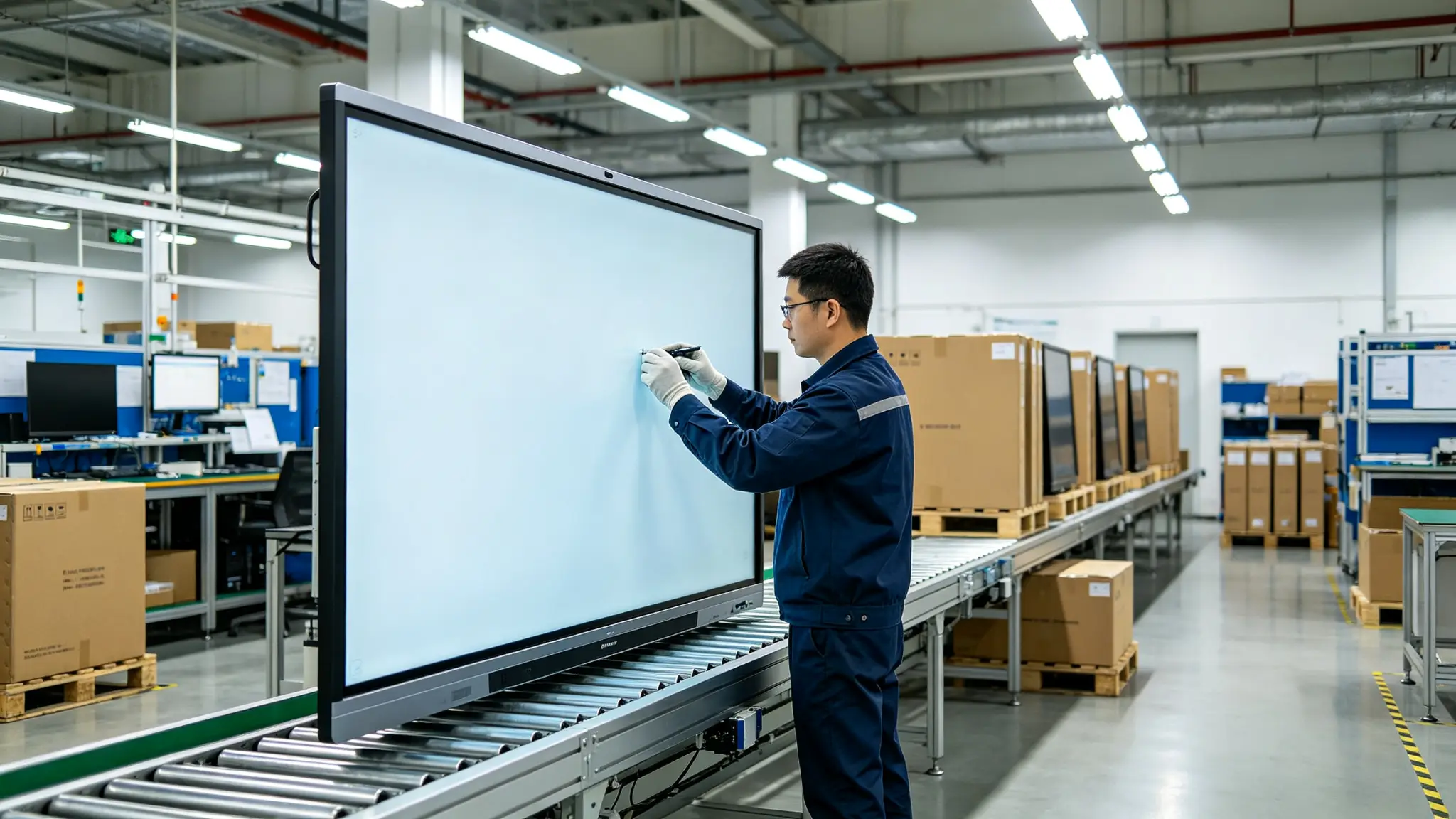
In the Qtenboard Shenzhen Longgang factory, quality is not a slogan, but every interactive whiteboard must pass 15 levels. From material inspection, SMT patch, optical bonding, to complete machine assembly, 48-hour aging test and factory final inspection, each level has clear standards and complete records. This 330000 square meter intelligent manufacturing base, with data and process, QunmaoInteractive Whiteboard Source Factory"Quality is life" is carved into every device.
An interactive whiteboard is not a device that sits in a warehouse and is occasionally powered on. It is installed in the classroom and is turned on for 6 to 8 hours a day, carrying the teacher's writing, screen projection and interaction throughout the class; it is hung in the conference room, almost endlessly throughout the year, supporting one demonstration after another And remote collaboration; it is also used in commercial scenarios such as airports, shopping malls, banks, etc., a problem directly affects the continuity of public services.
Because of this, the quality of an interactive whiteboard has never been as simple as "repairing a repair. An after-sales failure often means that on-site engineers come to the door, spare parts replacement, customers stop waiting-the combined cost is several times the manufacturing phase to find and deal with the problem in advance. This also explains why Qtenboard are willing to invest as much 15 quality inspection checkpointsQuality control is not a cost, but a commitment to the customer's "ready-to-use, long-term stability.
Below, let's take this quality control link from parts to finished products apart one by one.
Level 1-3: Do not allow problem materials to enter the production line
The core components of an interactive whiteboard-display panel, touch module and motherboard-determine more than 90% of the experience of the whole machine. If the problem material flows into the production line, no matter how strict the inspection in the back section is, it can only be "repaired afterwards". Therefore, Qtenboard quality control fromOutside the supplier's doorIt started.
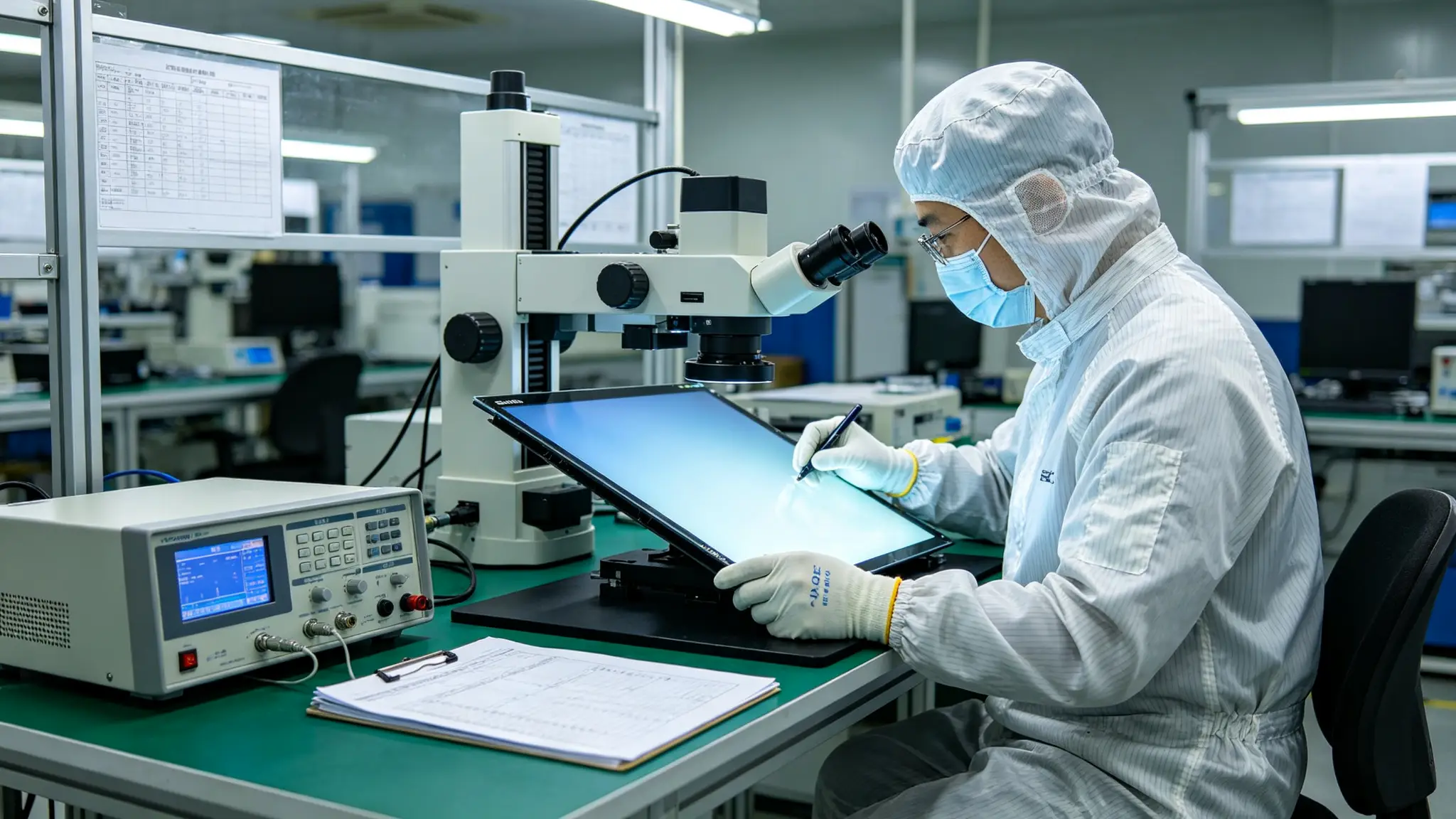
Quality management has a basic logic:Prevention cost
Qtenboard execution of incoming materials AQL (Acceptable Quality Level) Sampling Inspection: According to the internationally accepted sampling plan, the key parameters are sampled by batch, and the whole batch is returned if it exceeds the acceptable level, and the supplier is linked to trace the reason. At the same time, all electronic devices inElectrostatic Protection (ESD) EnvironmentUnpacking, handling and inspection to avoid the "invisible killer" of electrostatic damage ".
IQC (Incoming Material Quality Control) ensures that all key components complete parameter verification before warehousing, and bad batches are returned directly to reduce production risks from the source.
Level 4-6:SMT Patch and PCBA Test
The motherboard is the "brain" of the whiteboard ". The Qtenboard SMT production line is installed more than per hour. 120,000 componentsThe accuracy is up to micron level. Under high-speed operation, manual visual inspection alone is far from enough-it relies on the three-tier check of "equipment inspection machine vision function test.
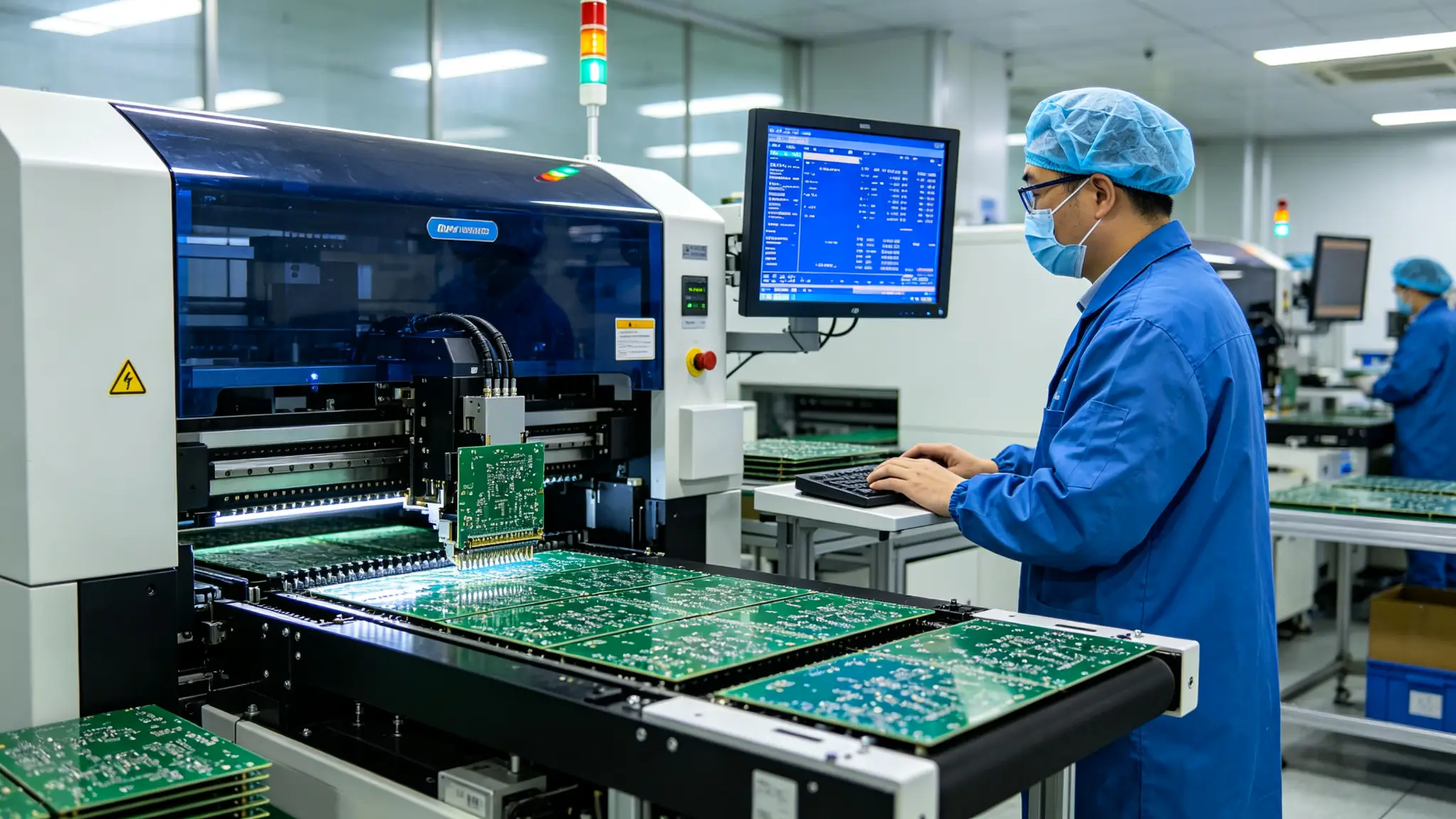
SPI (Solder Paste Print Inspection)Using optical and laser to do three-dimensional scanning of the printed solder paste, accurate measurement of thickness, volume and offset. Solder paste is the "bridge" between components and PCB. Even if the thickness deviates a few microns, it may cause virtual soldering or even tin.
AOI (Automated Optical Inspection)After patching and reflow soldering, high-definition images are taken and compared with standard templates point by point to automatically identify defects such as missing parts, wrong parts, offset, welding bridge, etc. The "NG board" determined by AOI will be automatically marked and transferred to review, so as not to let go or be wronged. The whole production line follows IPC-A-610(International Standard for Acceptability of Electronic Components) as the basis for judging solder joints and assembly quality.
Level 7-9: Precision Process in Dust-Free Clean Room
Touch is the soul of an interactive whiteboard that distinguishes it from an ordinary display. A layer of "optical bonding" between the touch module and the panel determines both the writing feel and the display clarity-and all this must be done in a nearly dust-free environment.
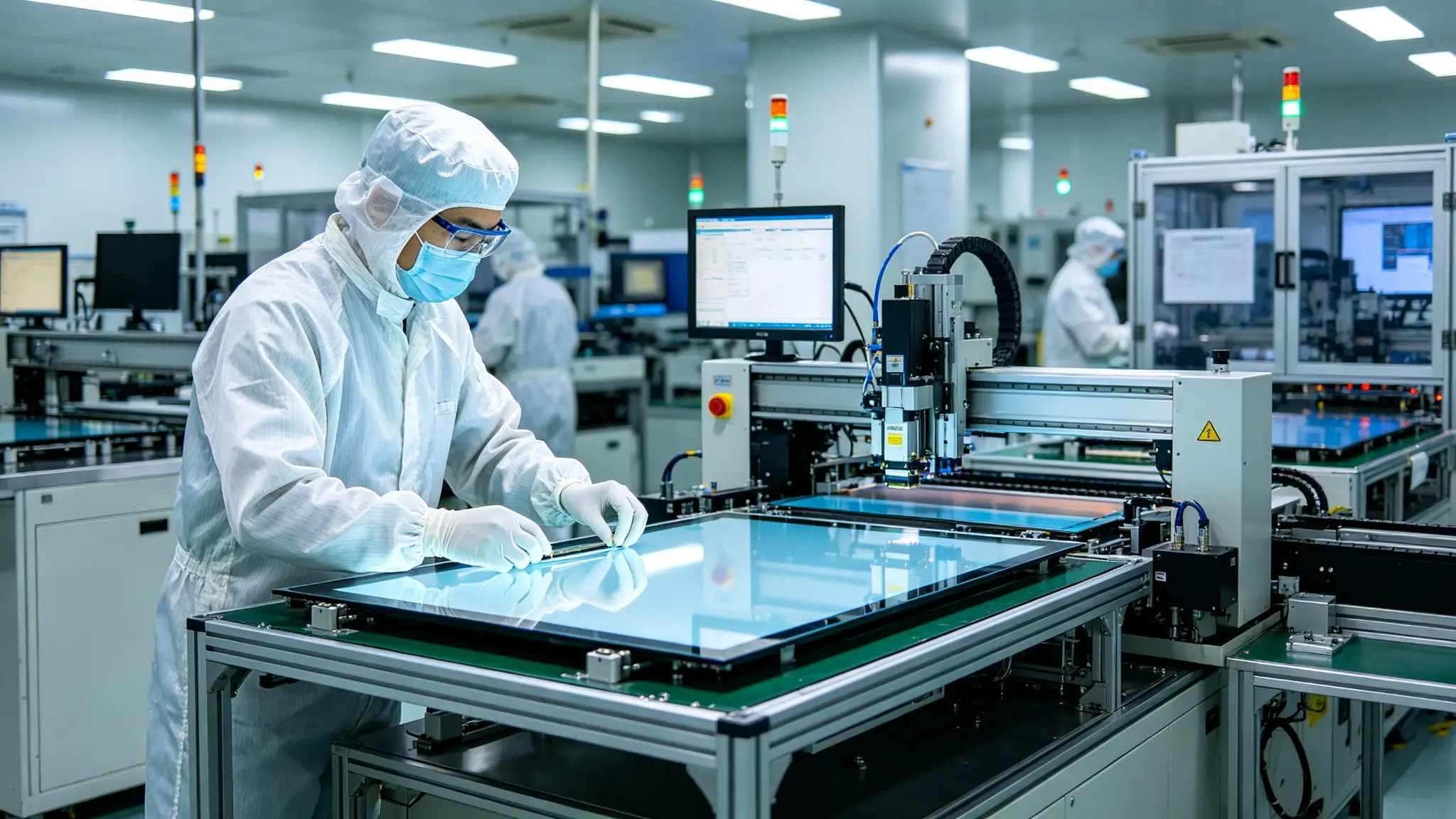
In the display industry, there is a gap between the panel and the protective glass. "Framing" and "Optical Bonding"Two processes. There is an air layer in the middle of the frame sticker, which has simple process but high reflectivity, low light transmittance and easy ash entry. Transparent optical adhesive is used to attach the panel to the glass for optical bonding.Full laminationEliminate the air layer, significantly improve the light transmittance and contrast, when writing handwriting "stick" on the glass, no sense of suspension.
The most afraid of full fit is dust and bubbles-a dust with a diameter of tens of microns, sandwiched between the glass and the panel, which is a striking white spot when the screen is bright. Therefore, this process must be completed in a Class-10,000 clean room with controlled temperature and humidity and anti-static environment, which is also the place where Qtenboard take the "writing experience" seriously.
Level 10-12: Structure Assembly and Full Function Inspection
When all the core modules are in place, the whiteboard begins to enter the assembly of the whole machine. At this stage, the test is no longer "whether a certain part is good or not", but "the whole equipment is unqualified"-structure, function, heat dissipation, and system.
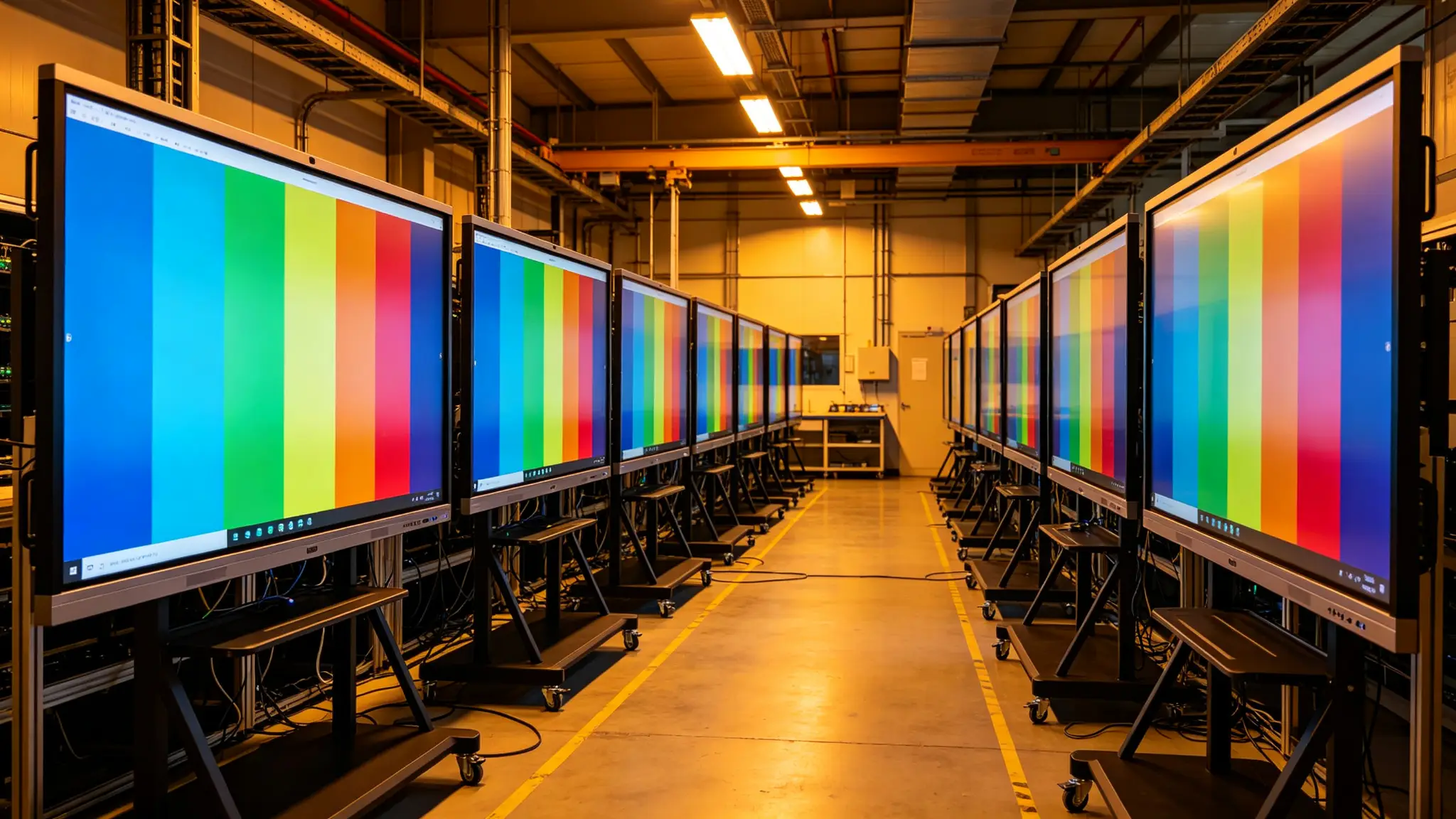
There is no fast-changing mechanical action in the burn-in test area, only rows of continuously running screens. For engineers, this is the area where patience is most needed-because many potential problems will not appear in the first minute of startup, but may only be exposed after long-term operation and continuous heating.
The failure rate of electronic products follows the reliability engineering. "Tub Curve": The product life cycle is divided into early failure period, stable period and loss failure period. Early failures are often due to component defects, assembly stress or welding defects, and the failure rate is high; after the early stage, the failure rate enters a stable low.
The role of continuous power aging (Burn-in) isActive "consumption" of early failures before leaving the factory-Use 48 hours or even 72 hours of high temperature and high load operation to expose the "sick" equipment in advance and intercept it in the factory, instead of letting it "strike in the first week" at the customer site ". This is why Qtenboard insist on doing another round after aging.Comprehensive retest: The state after thermal stress is the real deliverable state of the equipment.
Level 13-15:OQC and Quality Traceability
The equipment that has passed the aging and retest has to go through the last three locks before leaving the factory-appearance packaging, batch sampling inspection and traceability filing. These three levels determine that the customer receives not only "a usable device", but "a device that can be trusted and traced".
Factories without a traceability system can only "find a needle in a haystack" in the face of bulk customer complaints, while factories with complete traceability canFrom the serial number of a rework device, all the way back to which batch of panels it used, which production line, which operator, and which test results.。
This means three things: first, the problem positioning is shortened from "week" to "hour"; second, if there are common defects in a certain material batch, it can be the first timeLock the same batch of product range, active intervention rather than passive waiting; third, when customers purchase and bid, they can provideFull batch quality reportas trust credentials.
Qtenboard products meet the main international standards, and the manufacturing process strictly follows the quality management system:
| Certification/Standards | Description |
|---|---|
| CE | EU safety and electromagnetic compatibility certification |
| FCC | Federal Communications Commission Certification |
| RoHS | Restriction of Hazardous Substances Directive Compliance |
| ISO 9001 | International Quality Management System Standard |
| CCC | China Compulsory Certification |
Certification solves "compliance", while the system solves "continuity". ISO 9001 requires not only one-time compliance, but also the establishmentThe closed loop of "plan-execute-inspect-improve": Every customer complaint, every bad record, has to flow back into the process to become the input for the next improvement.
At the same time, the Qtenboard Vertical integration Capability (metal processing, plastic injection molding, SMT patch and touch bonding are completed in the same park) to ensure that all links are controlled by the same set of quality system and reduce quality fluctuation caused by outsourcing-the same park, the same set of standards and the same responsible person.
The quality control system will eventually fall on quantifiable indicators. In the electronics manufacturing industry, several "rulers" are commonly used to measure quality levels:
| Indicator | Meaning | Meaning to the customer |
|---|---|---|
| Pass-Through Rate (FPY) | Rate of passing all inspections at once without repair | Reflects the stability of the production line and indirectly determines the reliability of the delivery cycle. |
| Online bad rate | Proportion of defective products intercepted at each inspection level | The more bad is intercepted in the factory, the less it will flow into the market. |
| After-sales repair rate | Proportion of failure after delivery requiring repair | This is the customer's most direct perception of the "quality report card" |
| DPPM | Bad units per million units | Industry-wide caliber for easy horizontal comparison between different suppliers |
These numbers will not jump in one shot, but Day-to-day recording and rewinding of 15 checkpointsSlowly improving. Each level of the Qtenboard is essentially serving a goal: to keep the defective products within the walls of the factory and to deliver them stably and reliably to the customers.
✅Higher product consistencyThe difference in parameters of the same model of equipment is smaller, the batch project experience is stable, and there is no gap between "this one is easy to use and that one is Caton" in multi-classroom and multi-conference room deployment.
✅Lower field failure rateMulti-layer quality inspection blocks risks before leaving the factory, reduces the embarrassment of "finding problems only on site", and significantly reduces after-sales costs and project delay risks.
✅Faster after-sales responseOne object, one code traceability helps to quickly locate the cause, lock the batch range, shorten the maintenance time, and minimize the downtime waiting.
✅More reliable project deliveryComplete quality records and batch reports support acceptance, bidding and large purchases, so that every decision is based on evidence.
✅OEM/ODM customization is equally stringentThe independent OEM customization area is isolated from the main production line, and the customized orders enjoy the same quality control standards-the customer customizes not only the appearance, but also the same reliability.
No. The inspection level is designed synchronously with the production line beat, and the vast majority of inspections are completed by automated equipment at the same time of patch and assembly, without taking up additional waiting time. Strict inspection in exchange for lower rework and after-sales costs, the overall delivery is more controllable.
The aging test is carried out in parallel in batch-all devices in the same batch enter the aging zone at the same time, and 48 hours is "the total length of time each device is powered on" instead of waiting serially one by one. With the capacity arrangement, the normal order delivery period is not affected, and the 48 hours in exchange for a significantly lower early failure rate on the customer site.
Sure. Custom orders use independent custom areas and dedicated stations, but implement exactly the same inspection standards and traceability system as standard products. Customers can also obtain a complete batch quality report for their own acceptance and downstream delivery.
From IQC incoming inspection to 48-hour high-temperature aging test, and then to the digital traceability file of each equipment, 15 quality inspection checkpoints are Qtenboard used to build a complete quality control closed loop. This 330000 square meter intelligent manufacturing base not only carries the output of more than 200 interactive whiteboards every day, but also carries the commitment to the long-term stable operation of education, conference and commercial display customers.
Each of the 15 checkpoints corresponds to a real risk scenario-it may be a panel with a bad spot, a false welding, a grain of dust, and a hidden danger that is exposed only after continuous heating. Intercepting them one by one before leaving the factory is Qtenboard's simplest and most firm implementation of "quality is life.
Quality is not detected, but produced-in Qtenboard, every process is the guardian of quality.
 Partner Links:

 en
 中文

 Previous:
 Return to list