Current location:
Home
> News > Product News > Query machine
 Release date: 2026-09-24
 Clicks:0
The digital transformation of museums and cultural venues is changing the inquiry terminal from "optional auxiliary screen" to "the audience's first contact point": in addition to paper signs and manual explanations, the audience hopes to check the exhibits, listen to voice explanations and see the tour route by themselves. QUNMAO is configuring for Wenbo projects.L-type horizontal inquiry machineAt the same time, we can observe the common requirements-the horizontal table can not only carry touch queries, but also place catalogue, promotional leaflets and navigation manuals side by side. Touch and paper materials complement each other. From the perspective of the manufacturer, this paper makes clear the functional design, content planning, point-to-point dynamic line, durability requirements and CMS management under the museum scene, which can be directly referred by the integrator and the museum when writing the plan and making the bidding response.
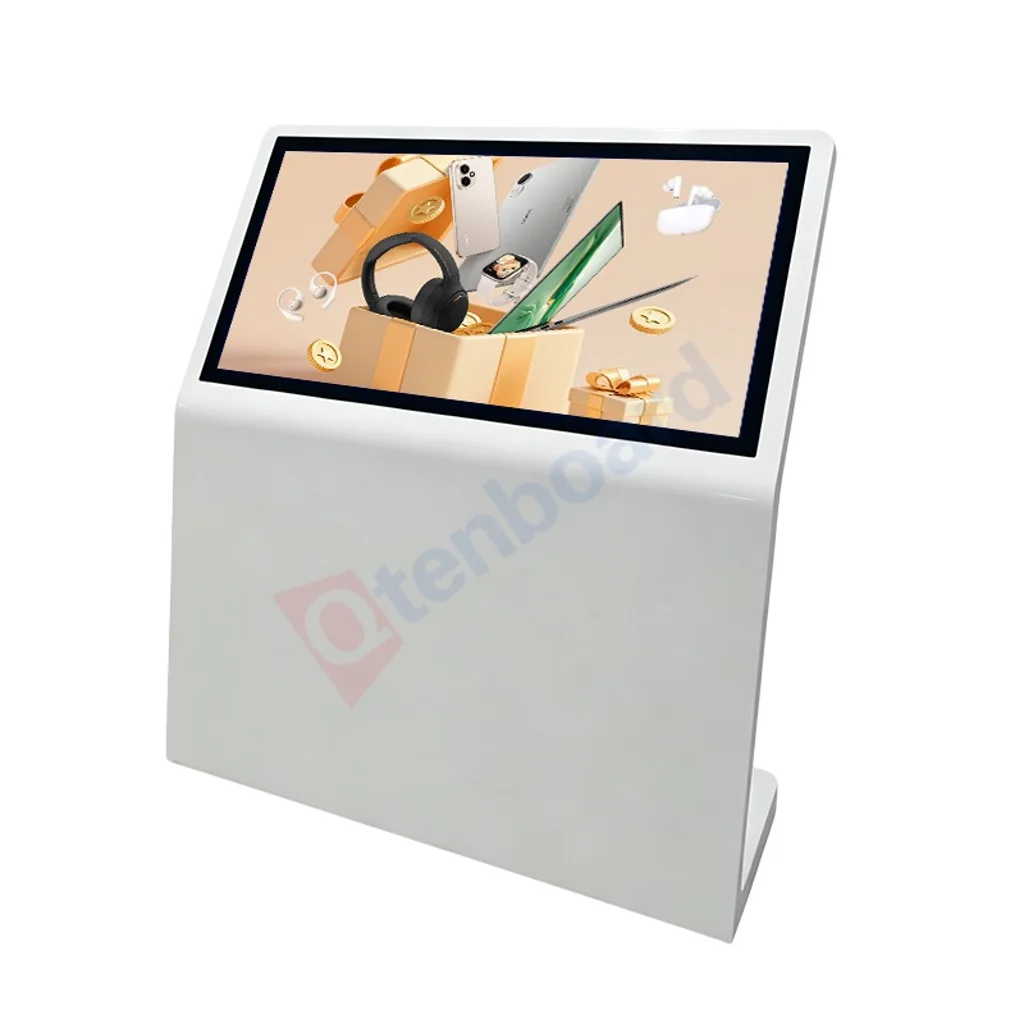
The L-type horizontal inquiry machine product form (real shot) described in this paper: horizontal operation table tilt touch screen
In the past ten years, most of the touch screens in the exhibition hall are "electronic copies of the exhibits": they are erected beside the display cabinets, the contents are repeated with the exhibition signs, and the audience passing rate is low. After digital transformation, the location of the query terminal is changing fromAuxiliary PresentationTurnActive Navigation and Content Distribution Hub-Undertake the detailed inquiry of exhibits, route recommendation, multilingual voice explanation, video and 3D display scheduling, and even become the content operation entrance between the museum and the audience.
In this transition,L-type horizontal inquiry machineIt is more suitable for cultural and cultural scenes than wall-mounted and vertical ones: its horizontal table top can display books, guide manuals and commemorative leaflets side by side, and the moving line of "turning paper first, then touching" is naturally established. At the same time, the height of the table top and the inclined screen face standing and wheelchair audiences, which meet the basic requirements of barrier-free visits to museums. This is also the reason why we are writing more and more L-type horizontal inquiry machines into the point list in cultural and cultural projects.
The functional design of the L-type horizontal inquiry machine for museum scenes is suggested to focus on three main lines: details of exhibits, route navigation and multimedia playback. The three lines share a set of content background to avoid separate maintenance of each exhibition item.
Details of exhibits are organized according to "name → age/material → background story → extended reading" level 4: only name, age and an introduction are placed on the first screen to ensure readable within 5 seconds; Click to expand the background story, related exhibits and collection location step by step. The search portal suggests that keywords, exhibit numbers and voice input are supported at the same time. When text search is not friendly to the elderly audience, voice and "browsing by exhibition hall" are more secure ways to get to the bottom.
The routine method of route navigation is to recommend 1-2 visiting lines ("classic 60-minute line" and "thematic depth line") at the entrance point, and the exhibition area node provides tips on "remaining exhibits in the current exhibition hall" and "direction of the next exhibition hall", and links with the zoning map. The linkage map should be downgraded to a static floor plan in a weak network environment to avoid the interruption of navigation caused by network fluctuations.
Multimedia materials are managed according to the strategy of "call and load, exit and release": voice explanation is pre-cached according to exhibits segments, video control is 1-3 minutes and triggered manually by default, 3D models have high hardware requirements, and it is recommended to enable them only at conditional points. In terms of loading priority, text> picture> audio> video> 3D model ensures that the first screen feedback is always the fastest after the audience touches.
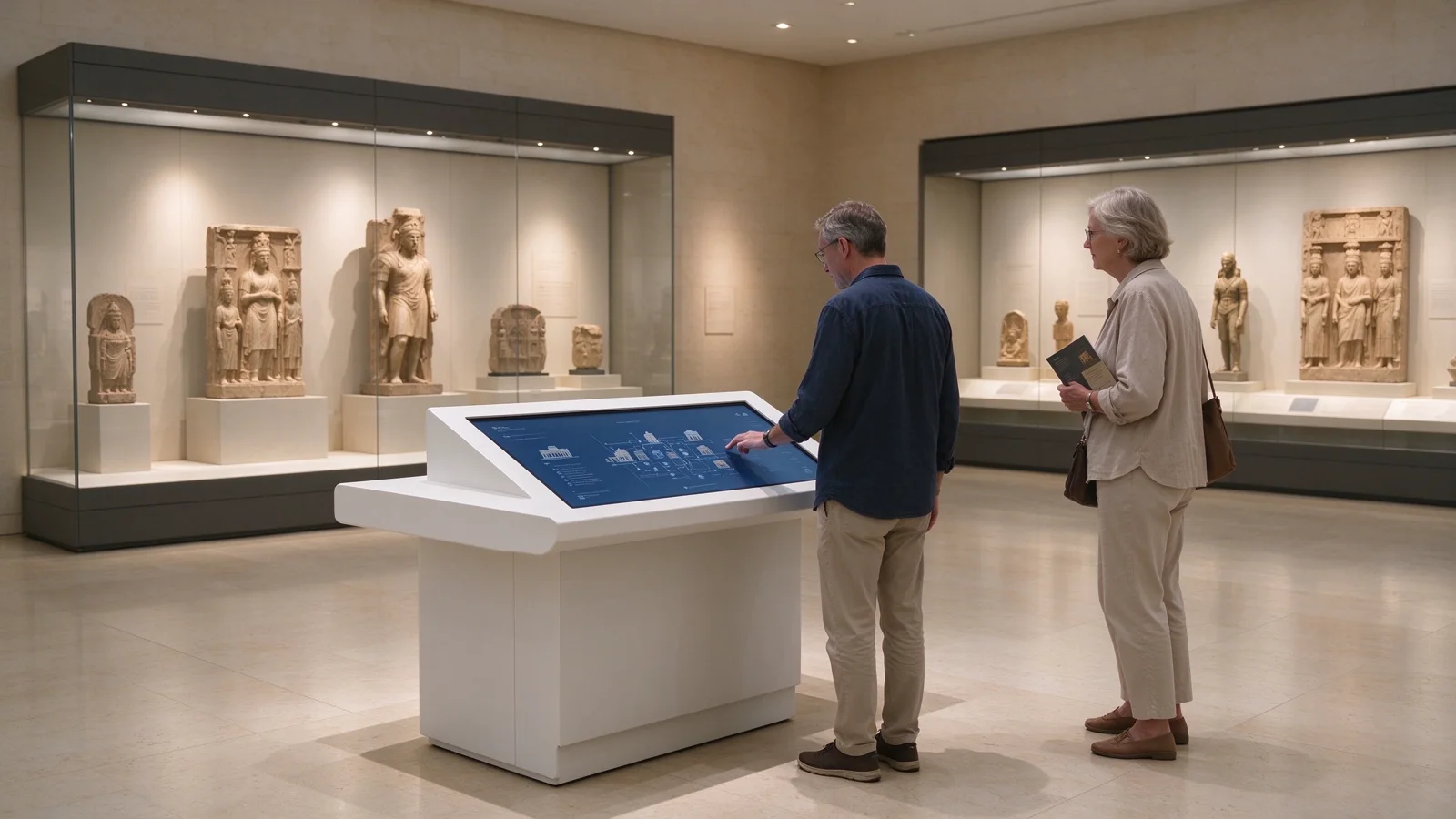
Schematic diagram of the museum exhibition hall scene: L-type horizontal inquiry machine undertakes the inquiry of exhibits and intelligent navigation.
Content planning directly determines whether the audience is willing to use the second time. QUNMAO has several experiences in the content planning of cultural and cultural projects:
In the content planning process, QUNMAO will provide the information architecture template, page copy specification and material list when delivering the plan: after the library organizes the content according to the template, we will complete the interface adaptation and joint adjustment, and only need to replace the material and do not need to redo the framework when changing the exhibition. This cooperation method has been verified in the content online process of several cultural and cultural projects.
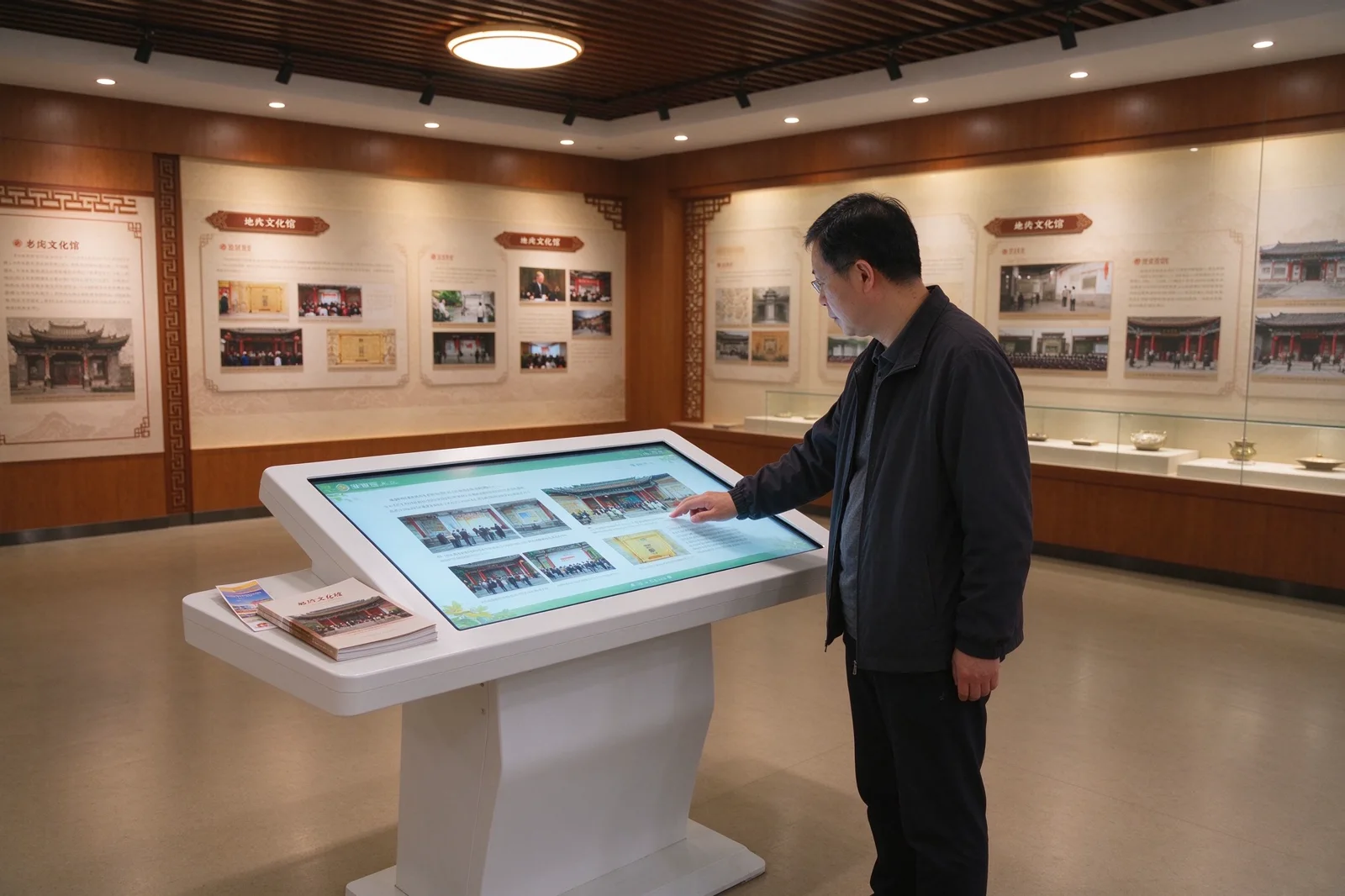
Scene diagram of the special exhibition hall of the cultural center: L-type horizontal inquiry machine is used as the entrance of exhibits inquiry and content.
If you choose the right position, the machine will be used. It is suggested to plan the scene according to three types of points:Inlet diversion point-- Place 1-2 sets, undertake overview introduction and route recommendation, and relieve the pressure on the service desk;Exhibition area node-The exhibition hall/floor shall be arranged at the intersection of the moving line, and the exhibition details and multimedia broadcasting shall be undertaken;Export summary point-Undertake feedback, derivatives tour and next visit appointment.
In terms of the relationship between the point position and the flow of people, three points should be paid attention to: first, the equipment should be placed at the position where the audience "naturally stops" instead of in the center of the moving line to avoid blocking the way; Second, the distance between adjacent points should not be less than 8-10 meters to prevent the audience from getting together and interfering with each other. The third is to estimate the residence time of the entrance and key exhibition area.
Before the start of each cultural and cultural project, the QUNMAO engineering team will go to the site to do a point survey according to the audience's moving line, and output a point map including the direction of the flow of people, the resident point, and the strong and weak current routing, and then determine the model, table size and quantity based on this. The purpose of this survey process is to avoid the rework of "the equipment is not found to be valid only when it is present.
The museum is a typical scene of high flow of people and long-term operation. The durability of the L-type horizontal inquiry machine is higher than that of ordinary commercial models. The core is four points:
For high-flow models, QUNMAO will perform touch life test, weather resistance test and structural anti-collision sampling before leaving the factory, and the test data will be provided with the factory report. Batch items support pre-assembly of the whole machine and delivery after full inspection. Integrators can obtain corresponding test records before signing the bill.
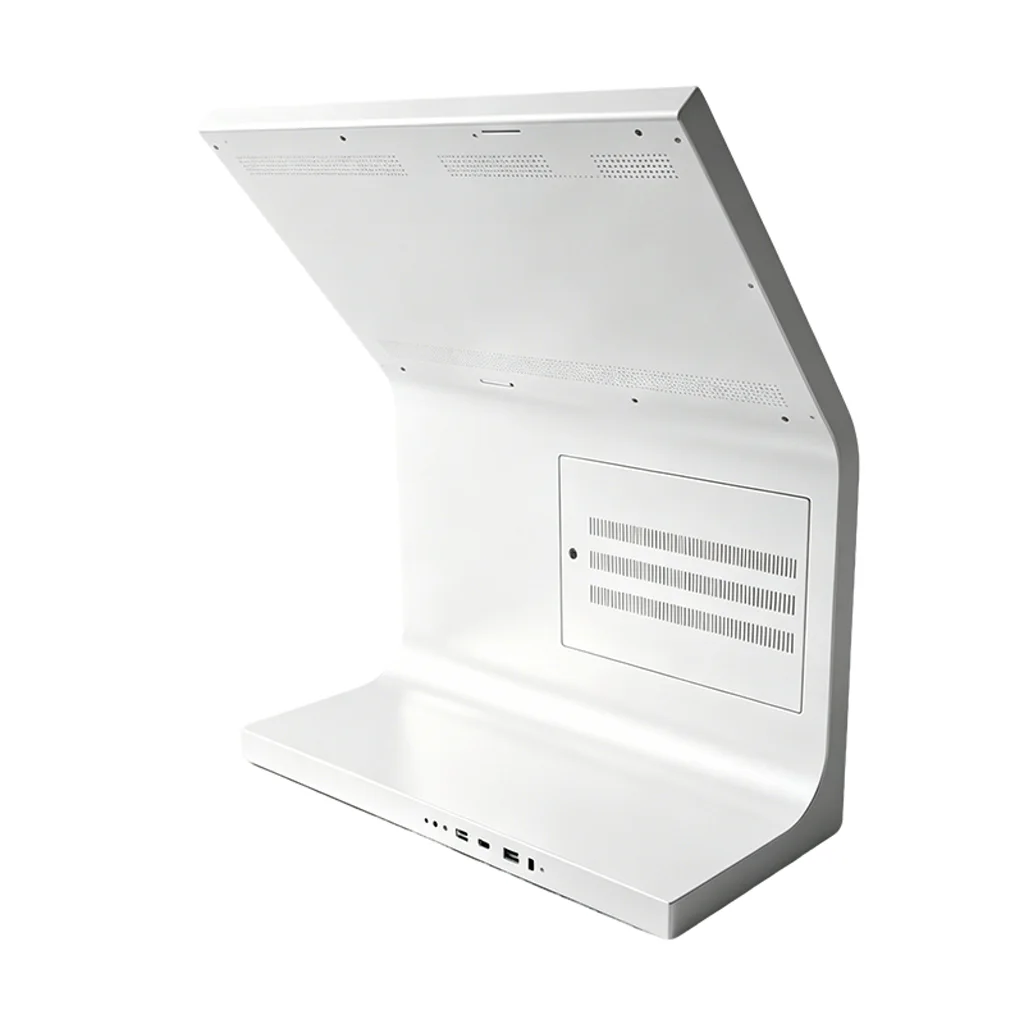
Body technology real shot: L-shaped bending structure, heat dissipation grid and bottom interface arrangement
The content of the museum changes with the exhibition cycle, and CMS is the base for the long-term operation of the L-type horizontal inquiry machine. Proposed Content Management Mechanism:
During the docking process, the content review process and interface opening cycle of the IT department of the library are often longer than the equipment production cycle-the earlier the docking evaluation is started, the more controllable the online time of the exhibition content is. QUNMAO provides technical solutions and joint debugging support for CMS docking, covering content format, material naming and version rollback conventions, and advances in the project according to this schedule.
In order to maintain credibility, this article does not make up specific customer names and performance figures, but instead usesTypical Deployment ScenariosThe framework presents the two most common types of cultural and cultural project configurations for the reference of integrators and libraries:
Typical configuration:There are 1-2 key exhibition area nodes at the entrance diversion point and 2-3 key exhibition area nodes, with functions covering detailed inquiry of exhibits, route navigation and bilingual voice explanation in Chinese and English. The table top displays the catalogue and the guide manual side by side.
Typical configuration:1-2 thematic exhibition halls, with functions covering thematic exhibit inquiries, video playback and audience feedback.
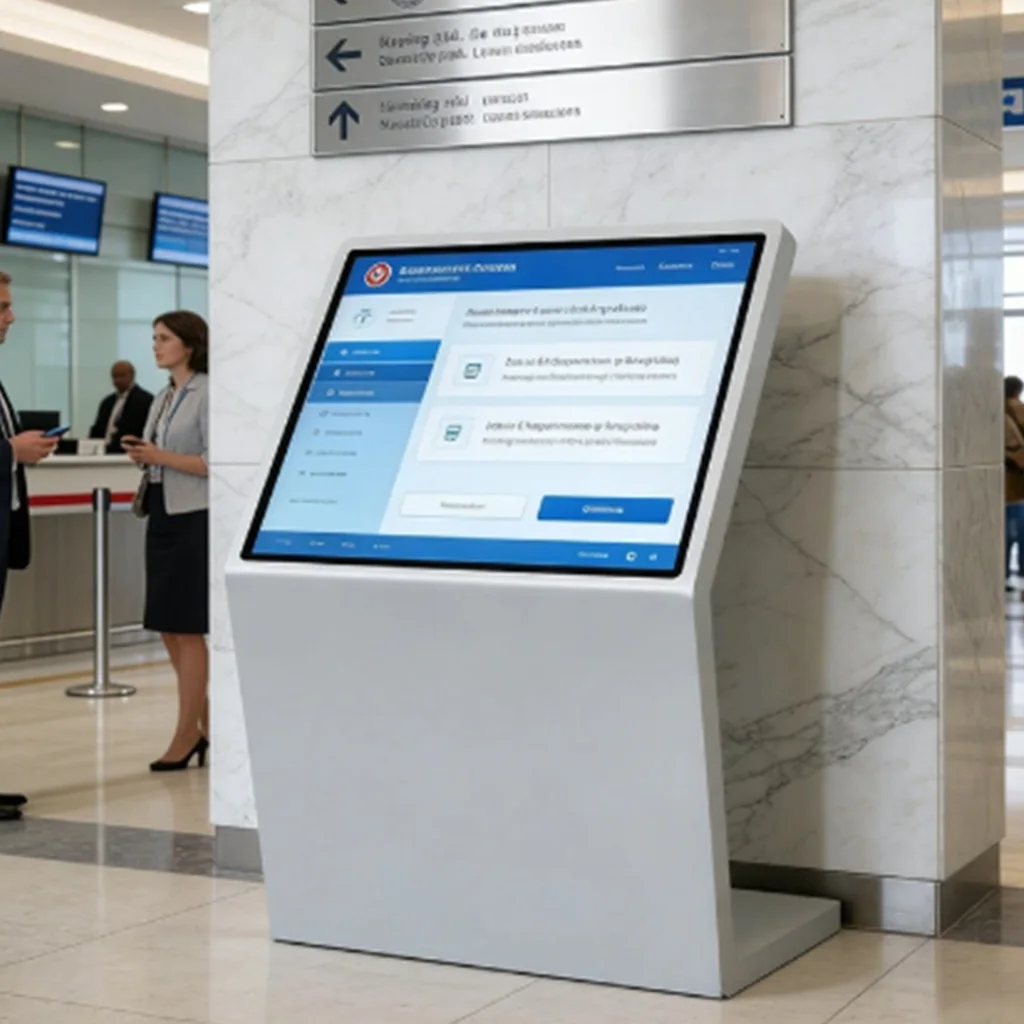
On-site deployment of similar horizontal terminals in public service scenes: vertical floor placement and hole-free installation
Note: The above is a typical deployment scenario framework and does not point to specific customers. Cases of similar cultural and cultural projects are usually open to the public. Integrators can contact QUNMAO project team to arrange on-site experience verification.
The museum project purchases L-type horizontal inquiry machine. The cost is suggested to be disassembled according to four logic to avoid only comparing the screen price:Screen specifications and durability levels(size, resolution, brightness, touch type and touch life),Table body material and process(cold rolled steel/aluminum profiles, spraying, corner treatment),Content planning and CMS docking service cost(information architecture, material arrangement, interface debugging),Customized point transformation(size, color, LOGO, opening). Each block has a clear price impact and should be itemized on the quotation to avoid late additions.
The fuselage adopts cold-rolled steel plate metal spraying process and aluminum profile frame to support customization of the whole machine size and appearance. Batch projects support factory pre-assembly and factory full inspection. Integrators can make an appointment for factory inspection and sign batch orders after checking the production process and quality inspection on the spot.
What is the difference in durability between the L-type horizontal inquiry machine of the museum scene and the ordinary commercial inquiry machine?
The difference is concentrated in four points: touch life (museum models are designed according to 60 million times, and ordinary commercial machines are usually one order of magnitude lower), body collision resistance (cold-rolled steel body anti-collision arc corner), anti-mistouch structure (table height and screen safety distance design, anti-mistouch and children climbing), long-term operation (7 × 24-hour operation and low-power standby). The touch and power consumption parameters corresponding to QUNMAO 43-inch QM-C43XJ-P are subject to the factory test report.
When changing the exhibition, does the content in the inquiry machine need to be redeveloped?
No need. As long as the content is organized according to the classification of "permanent exhibition/special exhibition/temporary exhibition" and managed through CMS background, only the exhibit library, voice package and video material need to be replaced when changing the exhibition, and synchronized to the whole museum equipment with one key after permission review. If special material types such as 3D models of exhibits need to be added, separate development evaluation is involved.
Interactive table and L-type horizontal inquiry machine in the museum scene how to match the choice?
The division of labor is different and can be complementary: the L-type horizontal inquiry machine is suitable for "single-person self-service" scenes such as entrance guide, exhibit inquiry and route recommendation, and the horizontal table can also display paper catalogue; The interactive table is suitable for "multi-person collaboration" scenes such as cultural relic interaction and digital exhibition items, and is suitable for thematic interaction areas. The common combination is L-type horizontal inquiry machine for entrance and exhibition node, and interactive table for thematic interactive area. The selection logic and landing matching of the two forms can be referred to our collocation.Application of Interactive Table in Exhibition Hall and MuseumOne article.
Covering the museum/cultural venues of the exhibits query, intelligent navigation, content planning, point-to-point dynamic line and CMS management function planning and point map template.
 Partner Links:

 en
 中文

 Previous:
 Return to list