Qtenboard-Craft Feature
Dust-free workshop, burn-in test and optical calibration:
The unseen kung fu in the factory
From particle control to 48-hour high-temperature verification to fine-tuning of display and touch,
Visit the key processes in the Qtenboard interactive whiteboard factory that determine quality but are little known.
Walking into Qtenboard manufacturing base in Longgang, Shenzhen, the first thing you feel is not the roar of the machine, but the air-clean, constant temperature, constant humidity, with a slight negative pressure. Engineers in dust-free clothes finished changing clothes in front of the wind shower room, and rows of running screens flashed silently in the aging room. This is not a hospital, but a production site for interactive whiteboard optical bonding and reliability verification.
AtEducation touch screen manufacturers direct supplyIn the factory, what really determines the quality is often not the visible assembly line, but the "invisible kung fu" hidden in the dust-free workshop, aging room and calibration laboratory ". 4K has become standard in professional environments, with high-end evolving to OLED/mini-LED, and commercial interactive tablets shipped +31.2 year-on-year in 2025-customers' expectations for stability, display effect and touch accuracy continue to improve. These expectations are supported by three inconspicuous but vital processes in the factory:Dust-free workshop, aging test and optical calibration。

48hHigh Temperature Aging Test (Standard)
72hSome projects can be extended
Class 10,000Dust-free clean room (ISO Class 7)
97%One-time pass rate of the whole machine
1.5%abnormal rate of aging
20+Touch Point Verification
1. dust-free workshop: display and fit "clean line of defense"
A speck of dust can destroy a screen.
When the display panel is attached to the touch module, a micron-level dust particle will cause bubbles, bright spots or touch blind areas. More seriously, dust may spread after long-term use, affecting the uniformity of the entire screen. This is why the manufacture of interactive whiteboards requiresDust-free clean room-It is not the icing on the cake, but the quality of the ticket.
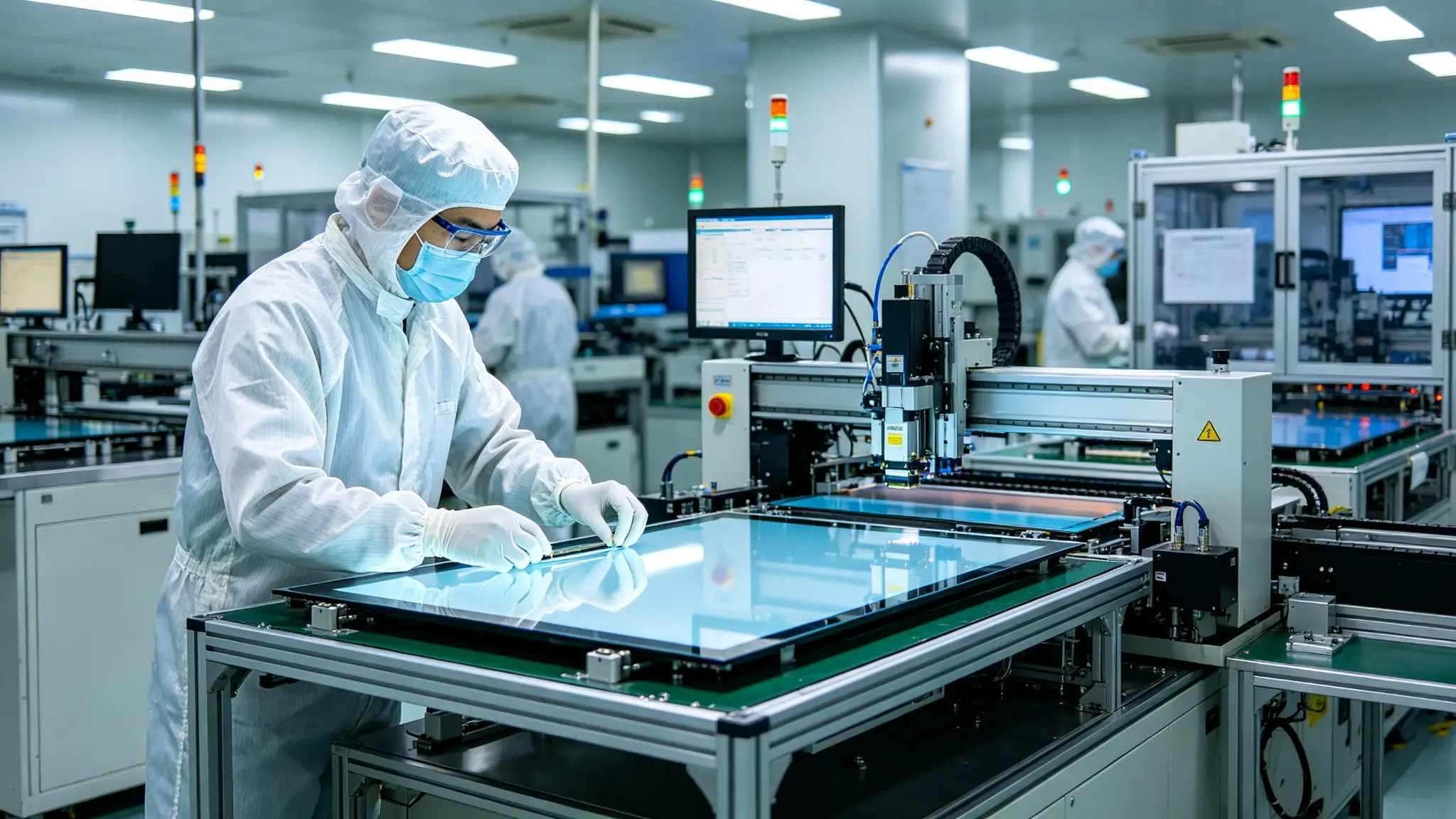
Qtenboard cleanliness standard: Class 10,000(ISO level 7)
In Qtenboard, touch panel manufacturing and optical bonding are all in Class-10,000(ISO 7级) Dust-free clean indoor finish. This means that there are no more than 352,000 particles ≥ 0.5 μm per cubic meter of air-equivalent to 1/100 of the cleanliness of ordinary office air. To maintain this standard, the plant has invested in:
- Three-stage air filtration system: initial effect + medium effect + HEPA high efficiency filter, filtration efficiency of 0.3μm particles ≥ 99.97
- Temperature and humidity control: Temperature 22±2°C, humidity 45-65% RH, prevent static electricity and material deformation
- Strict personnel management: Dust-free clothes, masks, gloves and shoe covers can be entered only after dust removal in the air shower room.
- Material cleaning process: All materials are cleaned and surface dusted before entering the clean room
In the dust-free workshop, every fit is a precision surgery. The dust particle counter and temperature and humidity monitoring screen in the environment beat in real time-these data not only record the current environment, but also relate to the bonding batch of each product, which can be traced and verified.
🏭Additional benefits of vertical integration: Qtenboard touch bonding is completed in the same park as metal processing, injection molding and SMT. Materials do not need long-distance transportation, reduce the risk of secondary pollution, higher fitting yield and stronger quality consistency.
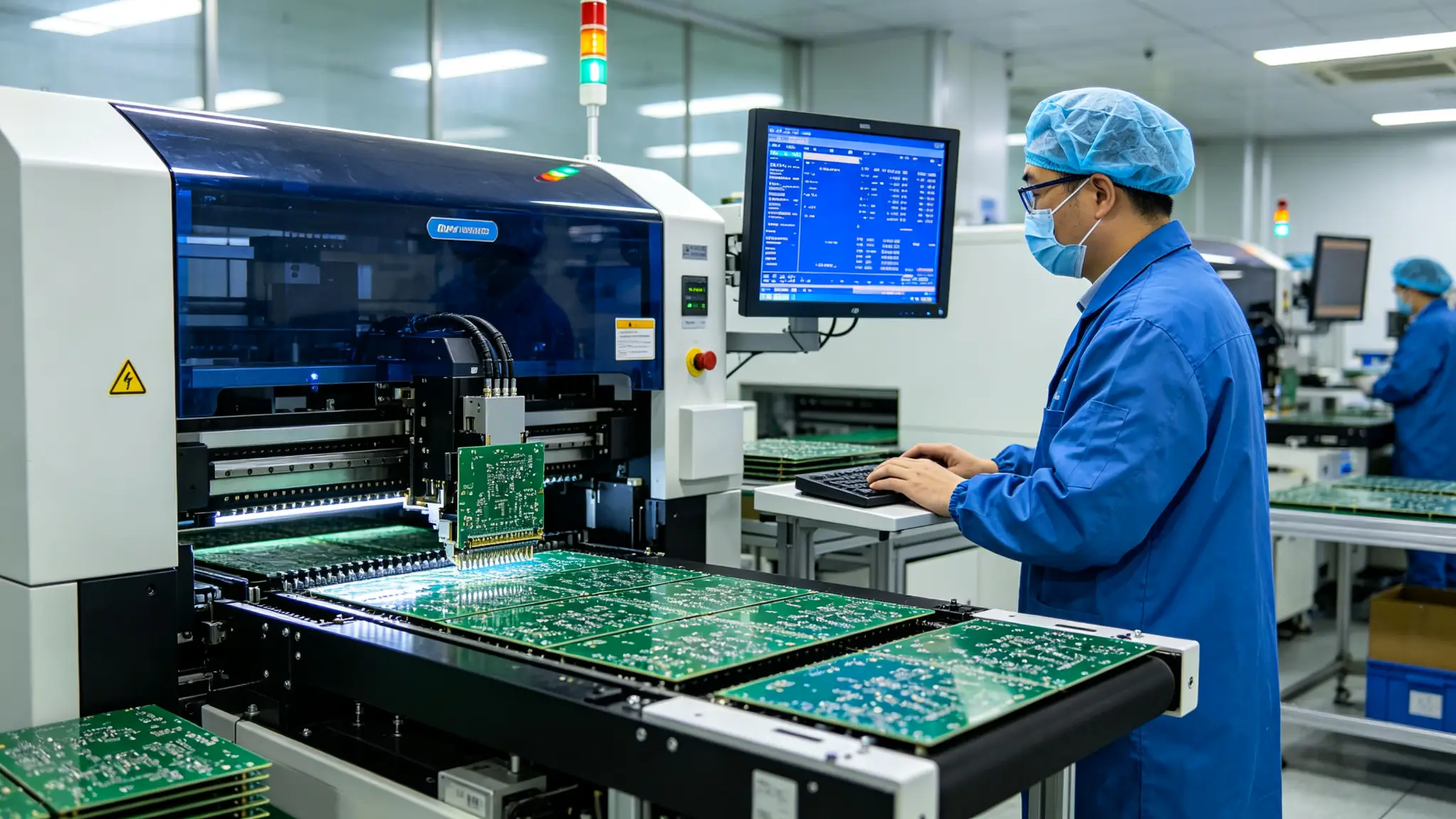
The actual impact of dust-free workshop on products
- Reduce bubbles and dust spots -- After bonding, the defective rate of the eye inspection is reduced by more than 60%
- Improve display uniformity -- Better screen brightness and color consistency
- Improve touch accuracy -- Dust-free environment to ensure that the touch sensor is not interfered by pollution
- Reduce repair rate -The repair caused by the sticking problem is reduced, and the one-time pass rate of the whole machine is ≥ 97%
2. aging test: let the problem in the factory exposed
Let the problem arise in the factory, not at the customer site.
In the Qtenboard aging room, there are no fast-moving robotic arms, only rows of screens that run continuously. They play videos, show pictures, run applications-everything is like real usage scenarios. The engineer's eyes scanned the temperature, current, and system logs on the monitor screen. This is the most patient area, because many potential problems will not appear in the first minute of startup, but may be exposed after 24 hours, 48 hours or even longer of continuous operation.
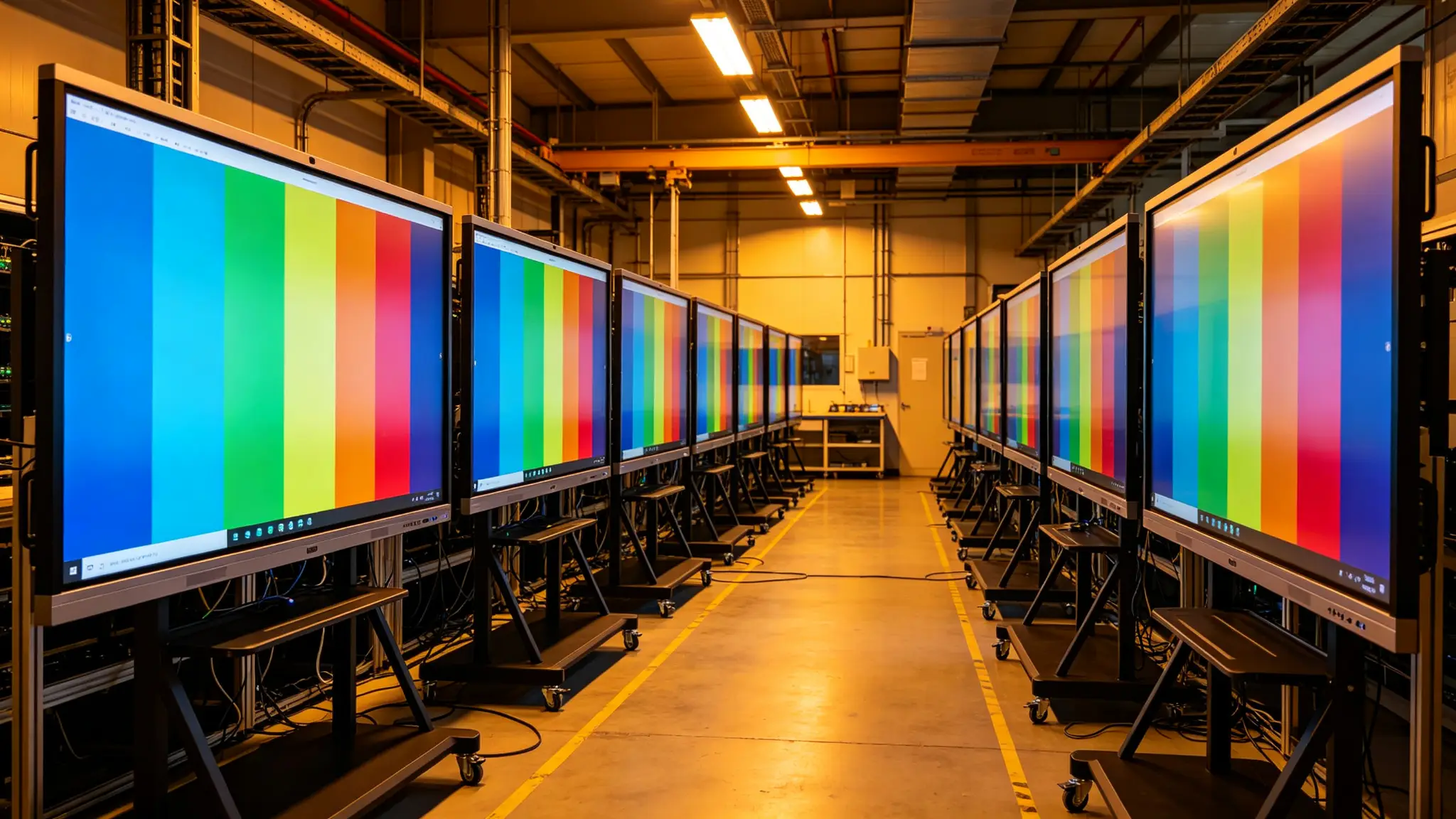
Why do you need a burn-in test?
After the electronic components, display panels, and touch modules run for a long time, problems such as excessively high temperature rise, system crash, touch drift, and interface looseness may occur. The aging test exposes these hidden problems in advance by simulating long-term use, so as to prevent them from becoming a problem for customers.
Aging Test Standard for Qtenboard
- Standard test duration: 48 hours Continuous operation at high temperature (some projects can be extended to 72 hours)
- Test environment: Temperature 40±2°C, humidity 40-60% RH, accelerated aging
- Test contents:
- Display: loop playback 4K video, still images, text switching
- Touch: continuous writing, multi-touch, edge area repeated touch
- System: application switching, multitasking operation, wireless screen projection
- Interface: HDMI, USB, network port and other hot plug test
- Monitoring metrics: Internal temperature, current, voltage, system log, touch response time
The real value of the aging test is not "pass after running", but "re-verify after running". In Qtenboard, every device that has completed 48 hours of aging must go through a comprehensive retest of touch accuracy, display brightness, thermal management, system stability, speaker output and wireless connection-all qualified before entering the packaging process.
📊Qtenboard aging data: Abnormal rate of aging test <1.5%, one-time pass rate of the whole machine ≥97%. Abnormal products are automatically isolated, the engineer analyzes the cause (material, process or design), re-aging test after repair, and all records are filed for continuous improvement.
Elimination and improvement of aging test closed loop
- Automatic isolation: Abnormal equipment is automatically marked and removed from the production line
- Cause analysis: Traceability to material batches, production processes, or design defects
- Repair and retest: Re-enter the aging process after repair
- Data archiving: For batch quality analysis and process optimization
3. optical calibration: "fine tuning" of display and touch"
A good screen needs to be "tuned" out.
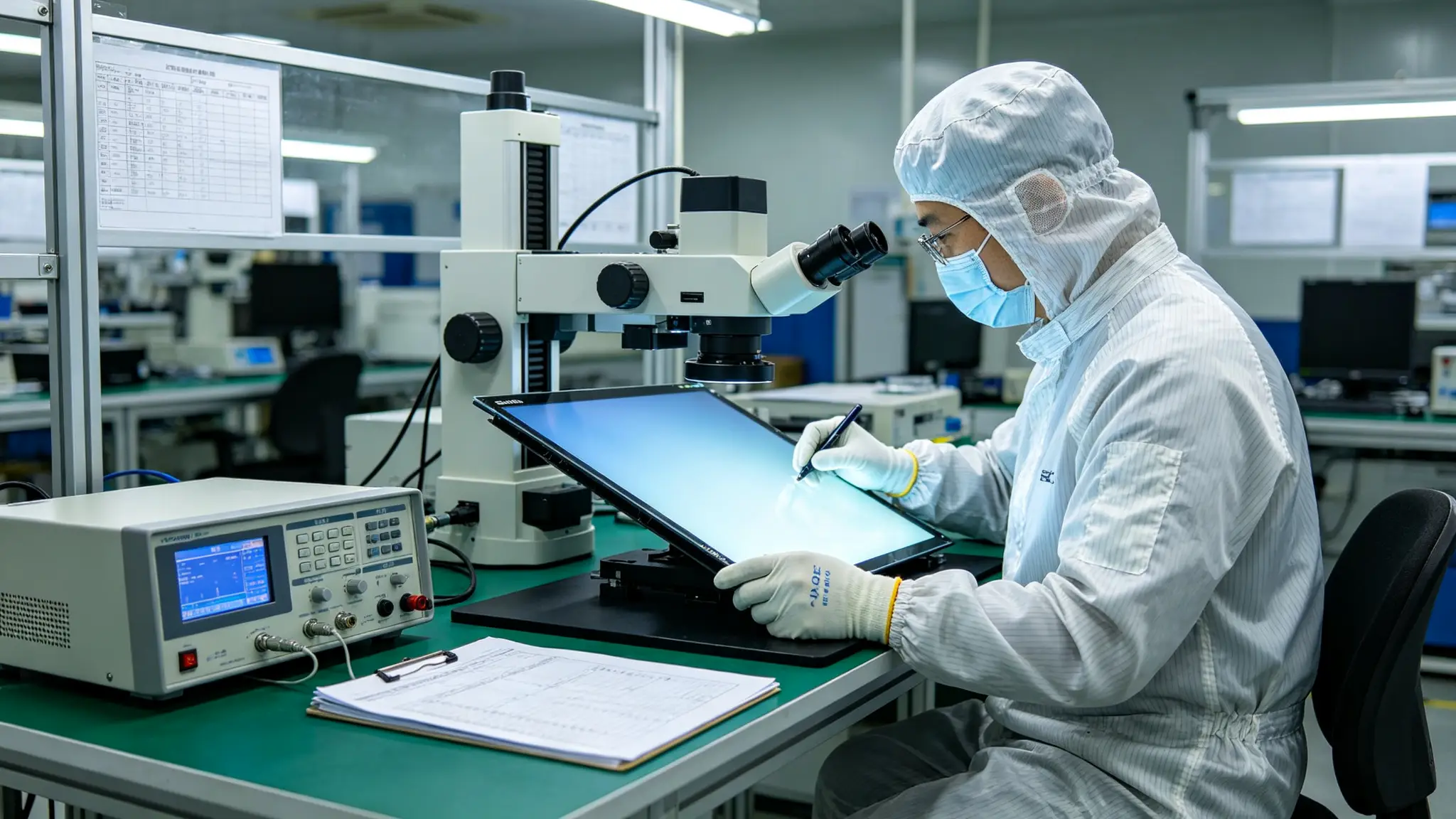
In the Qtenboard calibration lab, the color analyzer is moving slowly toward the screen, measuring the brightness and chromaticity of 25 points. Engineers adjust the gamma curve and white balance according to the readings until the ΔE value (color deviation) of each block is controlled within a very small range. On the other side, touch calibration software is verifying the accuracy of the edge area-every interactive whiteboard has to go through such fine tuning to obtain a "graduation certificate".
Why do you need optical calibration?
Even if the display panel of the same model, there are batch differences in factory parameters. If it is not calibrated, uneven brightness, color deviation, touch coordinate offset and other problems may occur between the screens. The objectives of optical calibration are:Make the display and touch of each product consistent and accurate。
Display calibration: let the color real, uniform brightness
- Brightness uniformity adjustment: Use 9 o'clock/13 o'clock/25 o'clock measurement method to ensure that the brightness difference between the center and the edge is less than or equal to 5%
- Color calibration: Color temperature (standard 6500K), color gamut (sRGB coverage ≥ 99%), ΔE value (≤ 2)
- Gamma curve optimization: Ensure smooth gray transition, no fault
- Bad Point Compensation: Pixel compensation for individual dead points (if applicable)
Touch Calibration: Make writing smooth and touch precise
- Multi-touch recognition: Verification 20 Touch PointsTo ensure that multiple people write at the same time without conflict
- Edge touch accuracy: Edge area touch error ≤ ±1.5mm
- Writing Linearity and Delay: Smooth writing track, delay ≤ 10ms
- Coordinate consistency: Touch points exactly correspond to the display cursor position
Optical calibration is not a question of "whether or not", but a question of "whether or not. An interactive whiteboard that has not been carefully calibrated may "reach the standard" in terms of parameters, but handwriting deviation and edge touch failure during actual writing-these differences can only be perceived after experience, and Qtenboard choose to eliminate them in the factory.
🔬Calibration equipment: Qtenboard Calibration Laboratory Equipped Konica Minolta CA-410 Color Analyzer、luminance meter、Touch automation calibration softwareAll data is archived and bound to the serial number, supporting stand-alone traceability.
4. three synergy: from a single point of excellence to system stability
Dust-free, aging, calibration, is not an isolated process, but a complete quality chain.
1. Dust-free → Laying/assembly
- Clean environment to ensure that the fit without bubbles, no dust
- Provide a "clean canvas" for subsequent calibration"
- Reduce touch failure due to contamination
2. Aging → Reliability Verification
- Expose the hidden dangers of electronic components, touch control and display in advance
- Ensure that calibrated equipment will not fail due to aging
- "Aging retest" forms quality closed loop
3. Calibration → Final Experience
- Fine-tuning based on clean manufacturing and aging validation
- Ensure consistent display and accurate touch of each device
- Provide stable and reliable interactive experience for education and conference scenes
4. Data traceability → continuous improvement
- Dust-free workshop dust particle data, aging operation log, calibration parameters are all archived
- Three data links for batch analysis and process optimization
- Provide a complete chain of evidence for after-sales traceability
5. International Certification and Quality System
These "invisible kung fu" do not exist in isolation, they are in line with the Qtenboard international certification system:
| Authentication | Association with Invisible Operations |
|---|
| ISO 9001 | Dust-free workshop operation management, aging test process, calibration operations are incorporated into the quality management system |
| EC / FCC | Optical calibration ensures electromagnetic compatibility and display performance in line with European and American standards |
| RoHS | The bonding materials and electronic parts shall meet the requirements of hazardous substance restriction. |
| CCC | Aging test and calibration is a necessary part of compulsory certification |
What can customers gain 6. these invisible inputs?
✅Higher product consistency -- The same model of equipment display, touch difference is very small, batch project experience is stable.
✅Lower field failure rate -- aging test in advance to eliminate hidden dangers, reduce after-sales costs
✅Better use experience -True color, smooth writing, accurate touch, multi-person collaboration is still stable
✅Faster after-sales response -Traceability system to quickly locate the root cause of the problem, shorten the maintenance time
✅Greater long-term reliability -- 48 hours of aging retest, to ensure that the equipment in the real use of the environment lasting stability
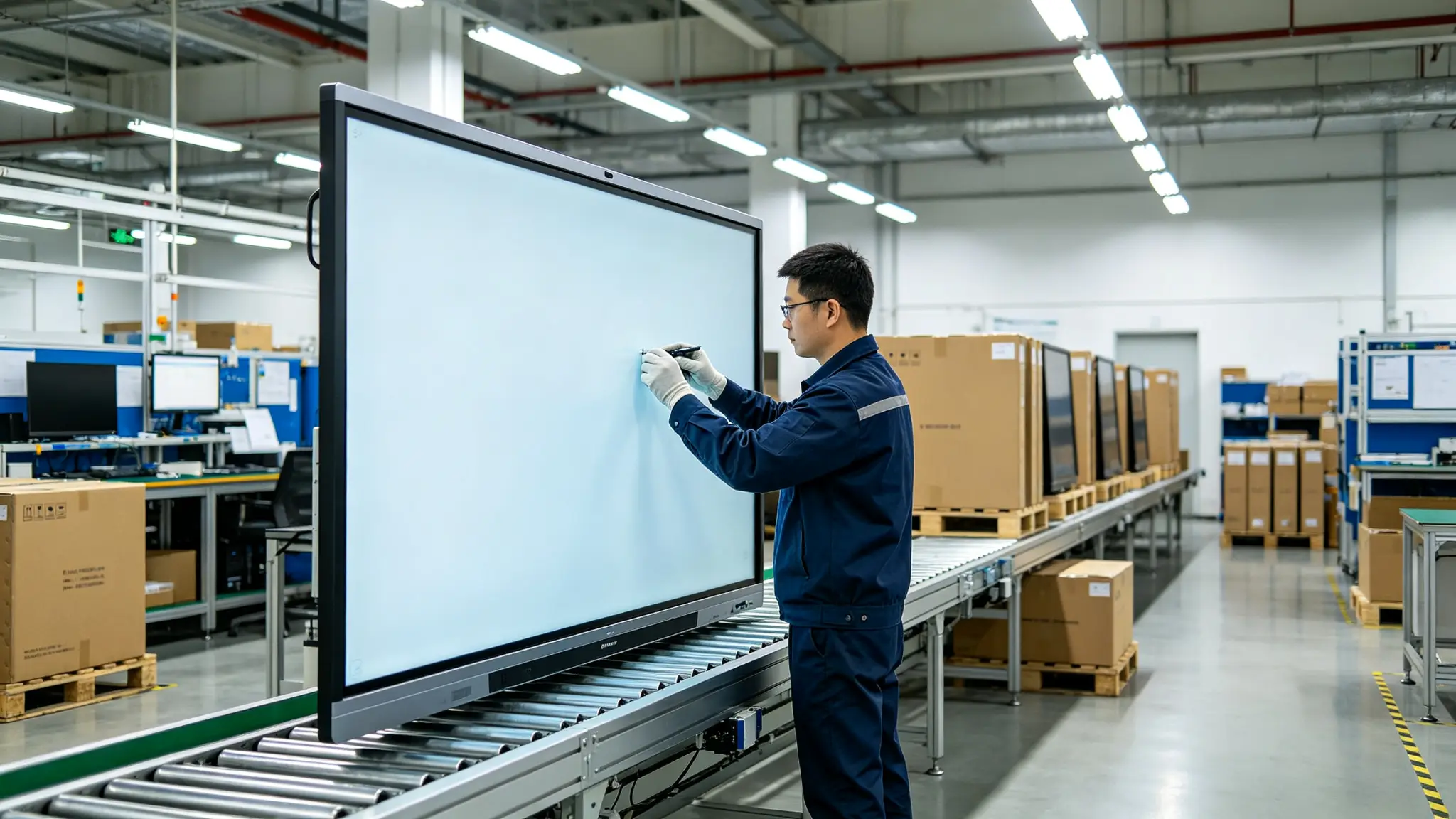
Conclusion: quality, hidden in the invisible place
Meticulous air filtration in the dust-free workshop, continuous high-temperature operation in the aging room, and precision fine-tuned optical data in the calibration laboratory-most of these processes do not appear in the product brochure, but determine the feedback of each touch, the color of each frame, and the stable performance of each equipment in the classroom or conference room for several years.
Qtenboard see these "unseen kung fu" as the cornerstone of quality. From Class-10,000 dust-free clean room to 48-hour high temperature aging test, from color analyzer to touch precision calibration, every process has standards, records and traceability. These inputs will not make the product "look better" on the parameter table, but will allow customers to "feel more at ease" in long-term use ".
If you want to see these "invisible kung fu" with your own eyes, please make an appointment for a factory visit or a cloud visit-we will take you into the dust-free workshop, aging room and calibration laboratory to feel the details behind the quality.
📅September 2026
🏭Shenzhen Qunmao · Qtenboard
📄Process Feature
 Current location:
Home
> News > Product News > Interactive Flat Panel
 Release date: 2026-10-12
 Clicks:0
 Partner Links:

 en
 中文

 Previous:
 Return to list