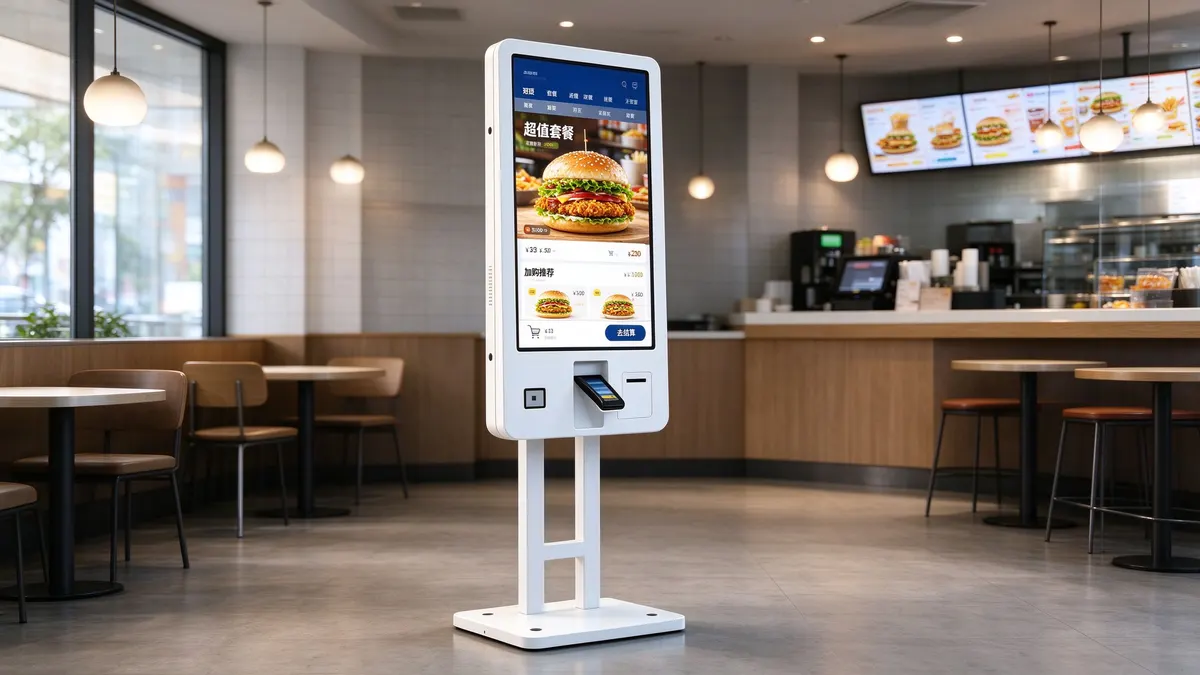
Conclusion summary:Whether the self-service ordering machine can increase the unit price depends onInterface Design and Marketing Rule DesignIt does not depend on the device itself. The ordering machine provides the hardware foundation: large-screen dish display, bar code and two-dimensional code scanning (for member identification and coupon verification), 80mm thermal receipt (for printing re-touch information), prompt tone and time switch machine. Package design, additional purchase recommendation, member play and time menu are realized by ordering software. QUNMAO is the source manufacturer of self-service ordering machine products in China,Ordering software support customized according to customer needsYou can also run customer-owned software.
QUNMAO self-service ordering machine: improving customer unit price through interface and marketing rule design
The basis of self-service ordering marketing in 1.: why there is room for ordering machines to increase unit price
Key pointsThe marketing space of the self-service ordering machine comes from four mechanisms: the menu is completely visible, the recommended actions are consistent, the customers are not subject to time pressure, and the whole process data can be recorded. The effect size needs to be verified with the store's own data.
The menu is fully visible.MechanismWhen ordering manually, the employee's verbal recommendation is limited by space and time;ordering machineThe screen can fully display the dish map, package and feeding options, and customers can browse by themselves. QUNMAO ordering machine adopts 21.5 "-32" 1920 × 1080 vertical screen (desktop model 15.6 "), and the display area of the dish map is large.
The recommended action is consistent.MechanismThe ordering software will implement the same recommended rules for each order and will not miss it because employees are busy or inconvenient to speak.
Customers are not under time pressure.MechanismAt the ordering machine, customers can decide for themselves whether to add, upgrade or add, without the pressure of being watched or urged.
The whole process data can be recorded.MechanismHome page clicks, product browsing, additional purchases, abandonment, and payments can all be recorded to provide a basis for resumption.
around these four mechanisms,Buffet Ordering MarketingIt can be split into five types of actions: package, additional purchase, recommendation, membership and time period, which together constitute the landing point of digital catering marketing on the store site. QUNMAO organizes these five types of actions into configurable rules such as ordering machine package design and ordering machine member play, which are customized through ordering software.
Boundaries:Self-test requiredWhether the above four mechanisms bring about changes in the unit price of visitors, and how much, depends on the menu structure, price band, customer group and region, this paper does not pre-set conclusions.
2. define the indicator first: unit price is not the only target.
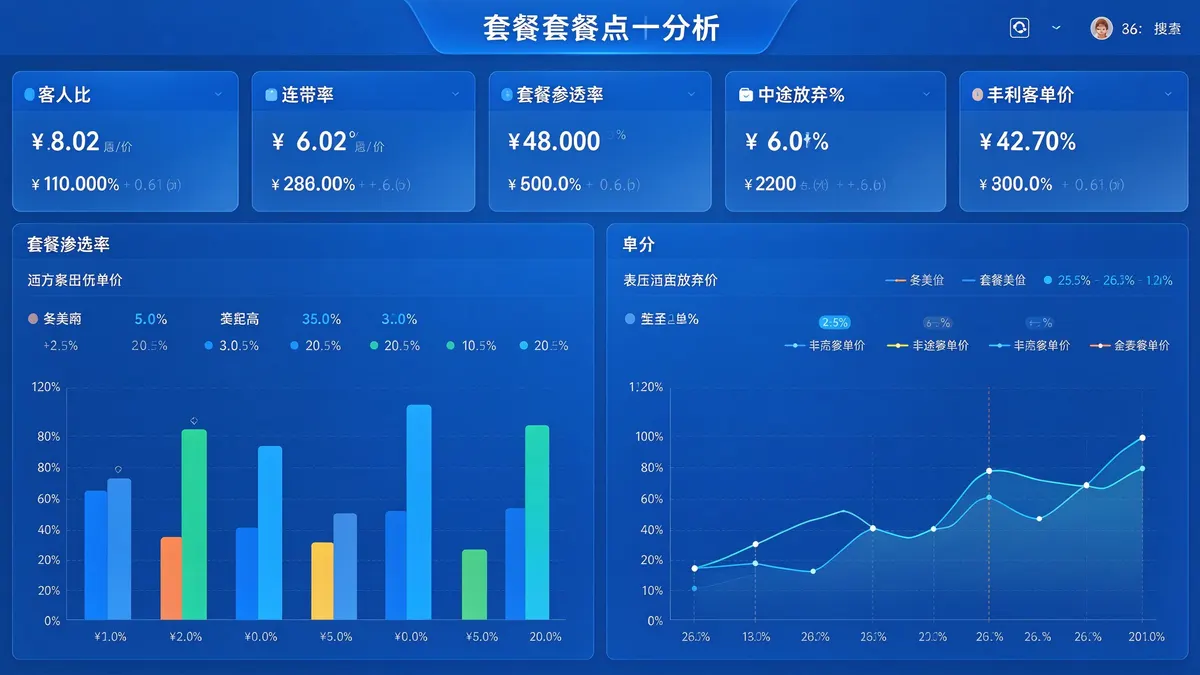
Key pointsThe evaluation of the marketing effect of the order should be based on the unit price of the customer, the joint rate, the acceptance rate of the purchase, the waiver rate and the gross profit unit price at the same time. Looking only at the unit price of the customer may draw the wrong conclusion because of the increase in the abandonment rate.
Table 1 Recommended evaluation indicators and calculation caliber
Indicator
Definition
Calculation method
Purpose
Unit price per customer (AOV)
Average sales per order
Total Sales ÷ Number of Orders
overall level
Co-borrowing rate
Average number of items per order
Total number of goods ÷ number of orders
Package and additional purchase effect
Package Penetration
Package orders as a percentage of total orders
Package Orders ÷ Total Orders
Package design effect
additional purchase acceptance rate
The proportion of customers accepting additional purchases after the additional purchase prompt appears
Number of orders accepted ÷ Number of orders prompted
Prompt effect of additional purchase
Recommended bit conversion rate
Proportion of recommended bits clicked and added to cart
times of adding to cart ÷ times of presentation of recommended positions
Home page and recommended position effect
Abandonment rate
Percentage of starting order but not completing payment
Incomplete Orders ÷ Orders started odd
Experience risk
Percentable of Member Orders
Member orders as a percentage of total orders
Member Orders ÷ Total Orders
Member Play Effect
30-day repurchase rate
Percentage of members placing orders again within 30 days after the first order was placed
Number of re-purchased members ÷ Number of first purchased members
Rereach effect
Gross profit unit price
Average gross profit per order
Total Order Gross Profit ÷ Number of Orders
The basis for the evaluation of "profit products first".
Special reminder: The goal of the ordering machine to increase the unit price of the customer should not be at the expense of gross profit or experience. Raising the unit price of customers and lowering the gross margin, or raising the abandonment rate, is not an effective optimization. Therefore, each design adjustment should be observed at the same time.Gross profit unit pricewithAbandonment rate。
3. six touch points: the customer's conversion path on the ordering machine
Key pointsThe customer's behavior path on the ordering machine can be divided into six contacts: home page, classification and merchandise, package and additional purchase, customized options, shopping cart and settlement, receipt and member re-contact. Each contact corresponds to a set of design actions and metrics.
① Home PageMain Pushing and Entry
② Classified goodsRanking and recommendation
③ Package plus purchasePackage, snack, exchange purchase
④ Customization optionsFeeding, Cup, Upgrade
⑤ Shopping cartGather Orders and Settlement
⑥ Member with receiptRereach and repurchase
The following is a contact-by-contact description of the design action, mechanism, basis and measurement. QUNMAO ordering software supports customization according to customer needs. The above rules can be configured according to the menu structure of the brand. If the customer uses self-ordering software,ordering machineThe same can run.
3.1 contact 1: Home-Decide what the customer sees first
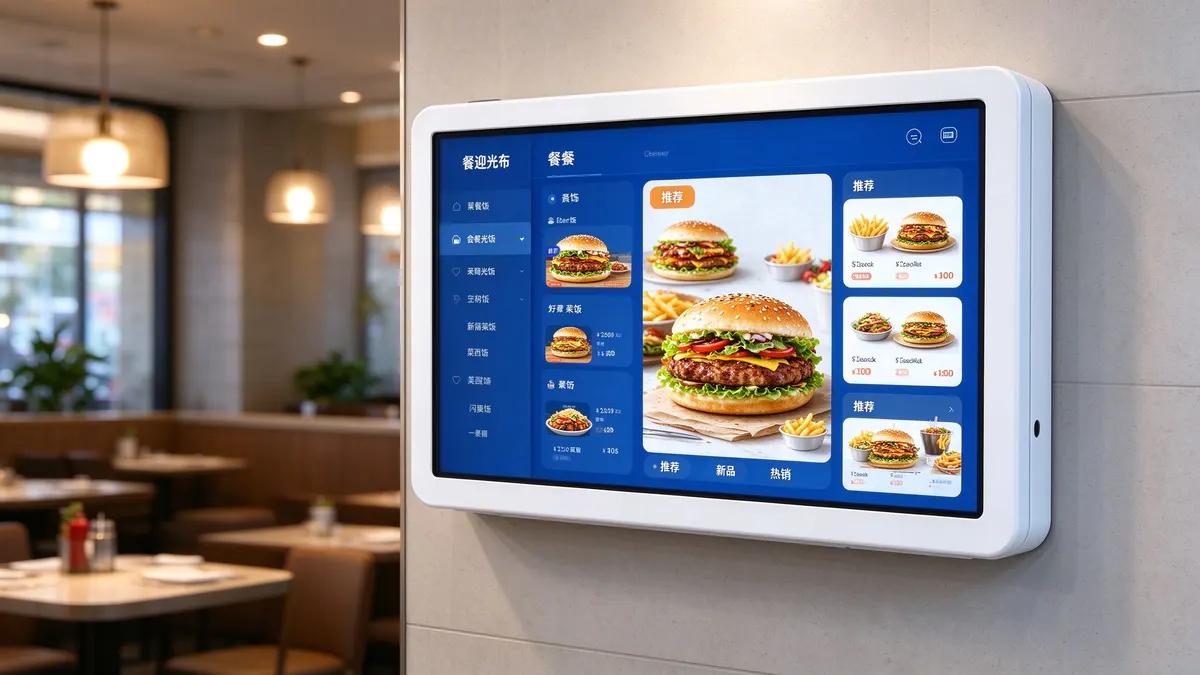
Key pointsThe first page should be information restraint: a main push position, a few classified entrances, and a clear "hall food/take-out" choice to allow customers to start adding shopping carts for the first time as soon as possible.
Brand & Language Switch
Main Push: Seasonal Package/New Product
Hall Food-Tape
Best-sellingPackageSnackBeverage
Shopping Cart · Total · Go to Settlement
Fig. 1 schematic diagram of the partition wireframe of the home page of the ordering machine (vertical screen, schematic layout, specific design adjusted according to brand)
Design action:Only one current main push is placed in the main push position; The number of classified entrances is restrained; The first step of "hall food/take-out" is put to determine the subsequent process.
Mechanism:MechanismThe less information on the first page, the easier it is for customers to start ordering. The main push position bears the first recommendation.
Hardware Basis:Specification sheetQUNMAO ordering machine has a 1920 × 1080 IPS vertical screen with brightness ≥ 300cd/㎡(15.6 "desktop model ≥ 280cd/㎡), capacitance G G touch control and 20 points, which is convenient for large picture and large button operation. The interface supports multiple languages.
Metric:Conversion from home page to first addition to shopping cart, recommended bit conversion rate.
3.2 contact 2: classification and commodity sorting-"profit goods first" how to do it.
Key pointsThe premise of "profit product priority" is to stratify the product according to the three dimensions of gross profit, sales volume and production time, and then put the profit payment in the position where the customer's line of sight is most concentrated, while retaining the visibility of the basic payment.
Table 2 The principle of correspondence between product layering and screen position (in principle, the specific proportion needs to be tested according to the store)
Product type
Feature
Screen Position Principle
Design attention
Drainage
High sales volume, average gross profit, familiar to customers
Keep it conspicuous for quick ordering.
Don't hide, otherwise the rate of abandonment rises
Profit item
High gross profit, suitable for matching recommendation
Put it on the first screen and the hot spot of the line of sight, the picture is big
With a clear description of the value
image
For brand display and new products
Main push position or "new product" area
Quantity restraint to avoid interference with the main process
Matching style
snacks, drinks, desserts
It appears in the additional purchase link.
Recommend only one at a time
Mechanism:MechanismCustomers are more likely to click on items that are higher and have larger pictures.
Risk:Hiding the basic payment or piling up the profit payment on the first screen will reduce the browsing efficiency and increase the rate of giving up halfway.
Metric:Click-through rate, add-to-cart rate, gross customer unit price for each tier of goods.Self-test required
3.3 contact 3: ordering machine package design and additional purchase recommendation-the most direct unit price lever
Key pointsPackage design and purchase recommendation are the two actions that most directly affect the unit price and joint rate of customers. Design principle: push only one at a time, position before placing an order, can be rejected with one key, and does not interrupt the main process.
Table 3 Four types of packages and additional purchase design
Design type
Action
Applicable scenarios
risk and countermeasure
Great-value package
Set the common single-point combination as a package, and clearly display the difference with the single-point total.
Fast food, simple meal
Too many packages will increase the burden of choice; control in a few
Snap plus purchase
After choosing the main meal, a snack recommendation will pop up.
Fast food, tea, coffee
Continuous pop-up will increase the abandonment rate; only play once
Upgrade and Swap
Upgrade large cup, add materials, collect orders for purchase
Tea, coffee, baking
Upgrade options to clearly mark the price difference
Recommended combinations
Recommended collocation based on selected items
Multi-category stores
Recommended rules need to be adjusted periodically by data
Metric:Package penetration rate, plus purchase acceptance rate, joint rate.Self-test required
Software Description:The ordering machine set meal design and the additional purchase rules are implemented by the ordering software. QUNMAO ordering software supports customizing these rules, such as trigger conditions, recommended products, placement and times.
3.4 Contact 4: Customized Options-Invisible Unit Price for Tea and Coffee
Key pointsThe refilling, cup and upgrade options for tea, coffee and roasting stores can be presented as "visible options" on the ordering machine, making it easier for customers to see and choose, while retaining the free basic options.
Design action:The cup shape, sugar content, ice quantity and feeding are displayed step by step, one screen for each step; the feeding item shows the unit price; the basic option is always optional.
Mechanism:MechanismThe options are visible on the screen and the customer does not need to ask the employee item by item at the peak.
Metric:Feeding acceptance rate, cup upgrade rate, single order duration.
Undertake:The configuration ideas of each format can be referred to QUNMAO'sFormat selection content; The ordering machine runs Windows 10/11 and supports the installation of QUNMAO ordering software or customer-owned software.
3.5 Contact 5: Shopping Cart and Settlement Page-Last Recommendation
Design action:The shopping cart is equipped with "order collection prompt" (for example, one more item can be enjoyed as a discount) and "often matched" goods. Before settlement, the discount usage status and payable amount are clearly displayed.
Mechanism:MechanismThe shopping cart is the node where the customer confirms the order and is the natural place to receive the order prompt.
Metric:Gather orders to prompt acceptance rate, shopping cart to payment conversion.
Tone:Specification sheetThe device has built-in dual speakers, which can play a prompt tone in key steps to assist customers to complete the operation.
3.6 Contact 6: Small Tickets and Members-Extending Marketing Outside the Store
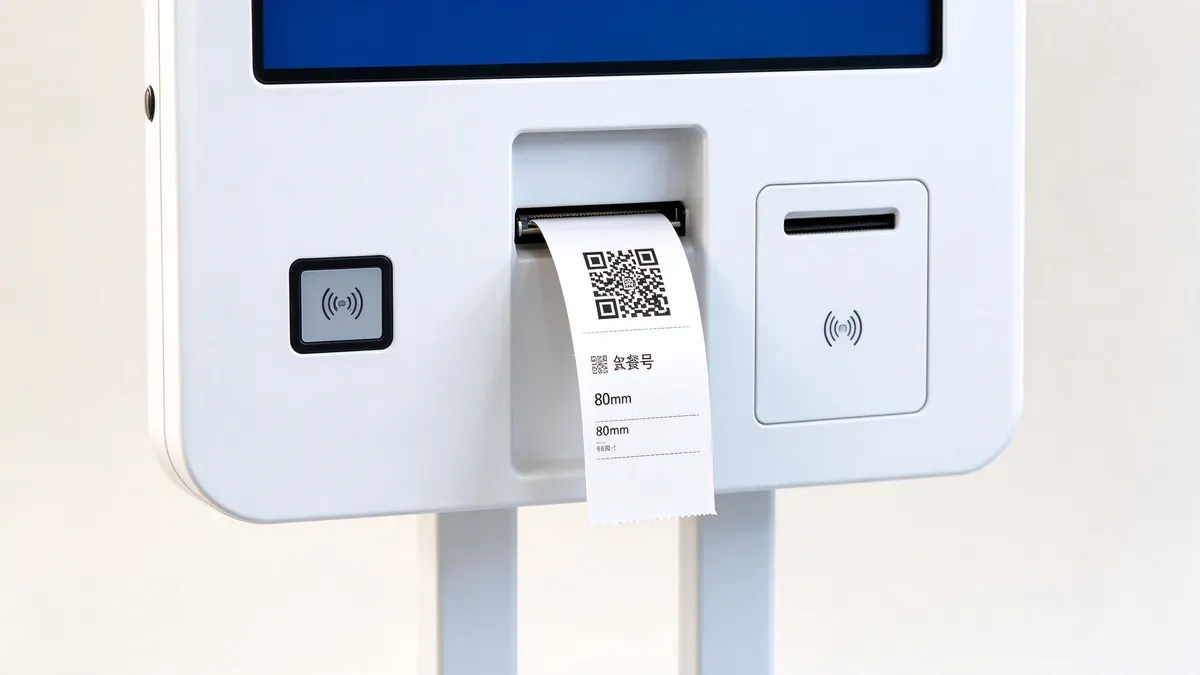
Key pointsThe 80mm thermal receipt is not only a voucher for taking meals, but also can carry the next store discount, member QR code and comment QR code, extending the re-touch to after the customer leaves the store.
Hardware Basis:Specification sheetQUNMAO ordering machine supports 80mm thermal printer, bar code and two-dimensional code scanning, and reserves POS terminal holes.
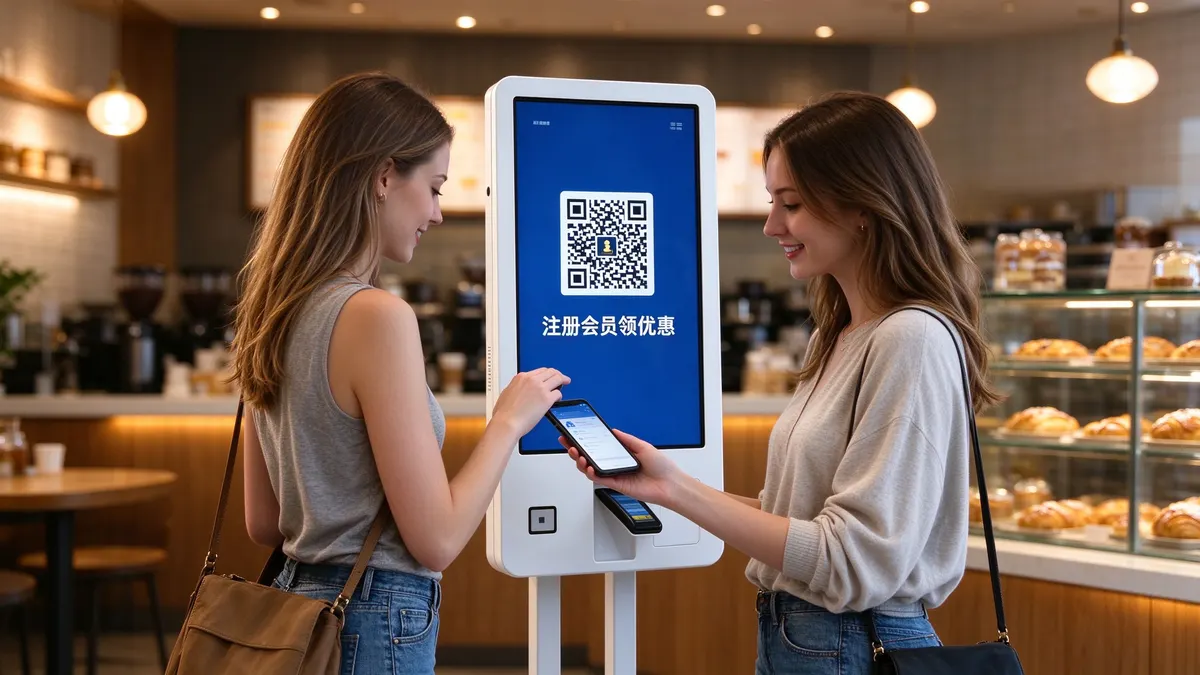
Design action:The receipt is printed with the meal number, the next ticket to the store, and the two-dimensional code for member registration. The member code can be scanned and identified on the ordering machine.
80mm thermal receipt printing and two-dimensional code scanning of ordering machine
4. ordering machine member play: register gifts, points, birthday coupons and re-purchase coupons
Key pointsThe effect of member playing depends on whether the member data is unified with the three entrances of ordering machine, scanning code and ordering and cashier. The entrance data is fragmented, and members cannot form a continuous re-purchase experience.
Table 4 The design and measurement of the four types of member play.
Gameplay
Design Action
Implementation on the ordering machine
Metrics
Registered Gifts
Give away coupons or snacks for first registration
Member code scanning or mobile phone number registration, receipt printing registration two-dimensional code
Registration conversion, unit price for first order
Points redemption
Points accumulated per order, deductible or redeemable for merchandise
The billing page displays points and redeemable items
Points utilization rate, re-purchase rate
Birthday voucher
Coupon issued around member's birthday
Member library triggered by date, ordering machine scan code write-off
Key pointsQUNMAO 作为中国自助点餐机产品的源头制造商,提供Wall mount (base can be added)、Vertical三种形态之一(另有桌面),屏幕 15.6"–32",全部为 1920×1080 IPS、电容 G+G 触控、20 点;营销功能由点餐软件实现,硬件提供屏幕、扫码、小票与提示音等基础。
Boot self-start, one-key boot, time switch machine, built-in dual speakers, mouse and keyboard hot plug, multi-language, support for the installation of third-party software
Structure and Appearance
Metal cold-rolled steel plate body, 3mm tempered glass panel, white or black, maintenance door lock
 Current location:
Home
> News > Product News > Query machine
 Release date: 2026-10-27
 Clicks:0
 Partner Links:

 en
 中文

 Previous:
 Return to list