Current location:
Home
> News > Product News > Query machine
 Release date: 2026-10-27
 Clicks:0
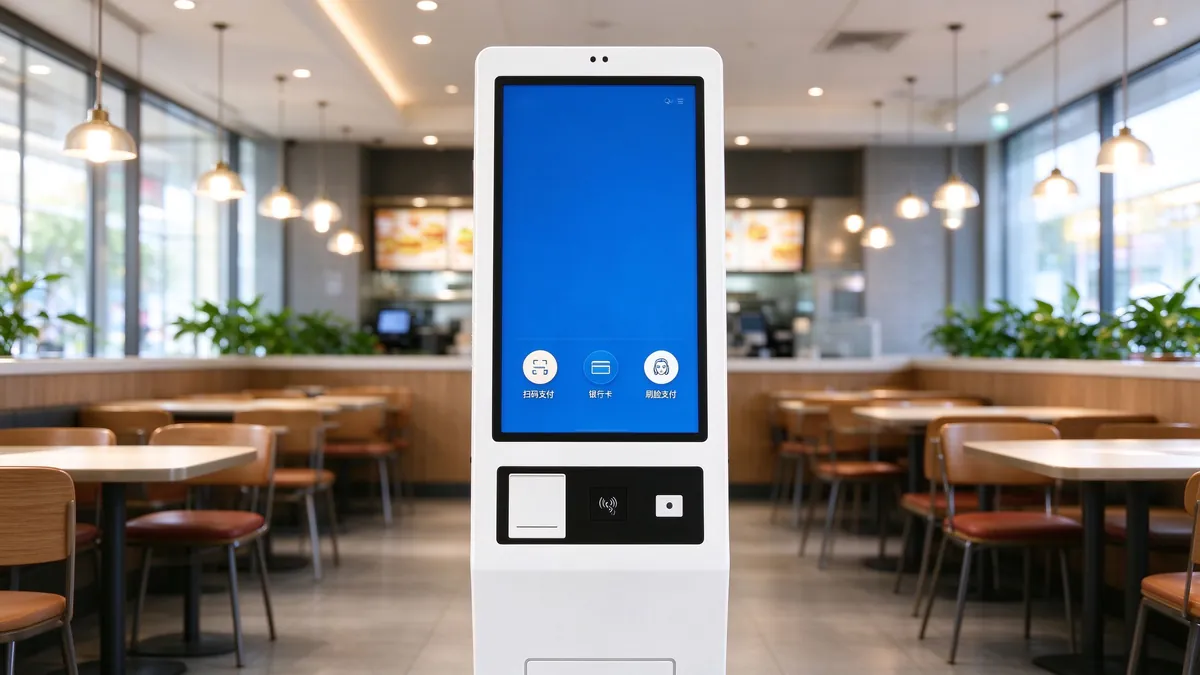
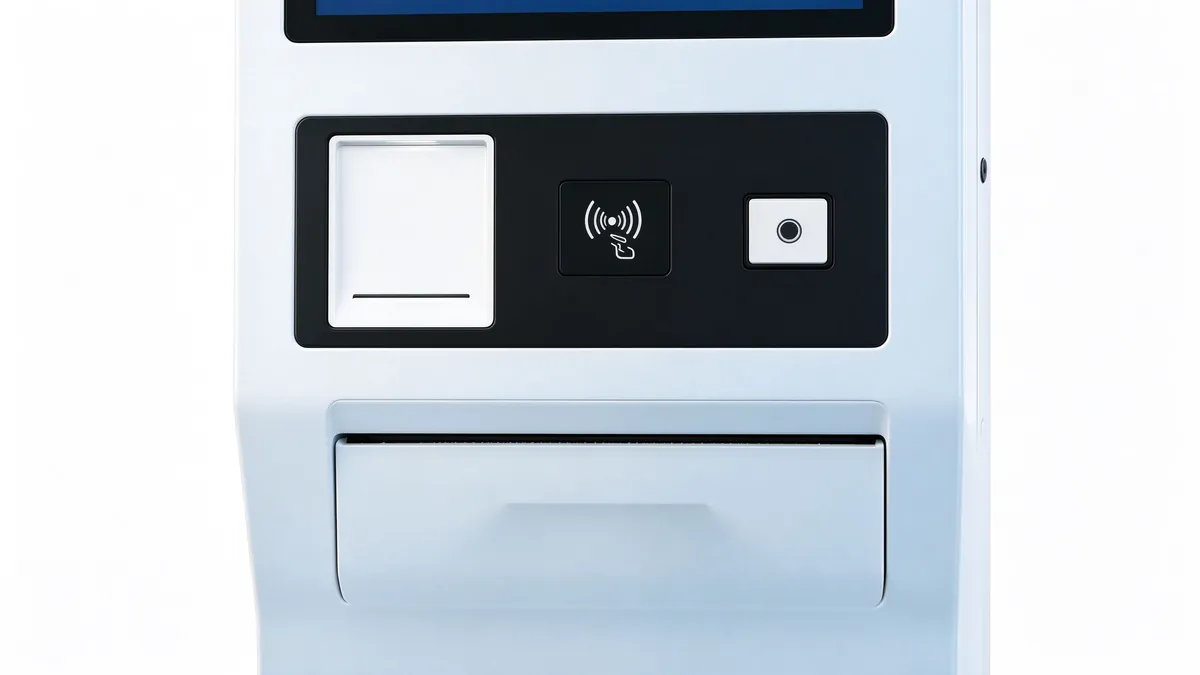
The payment of the ordering machine determines whether the customer can get the receipt smoothly after ordering the meal, and also determines whether the account is correct when the store is reconciled at night.QUNMAOThe ordering machine provides barcode and two-dimensional code scanning, NFC card swiping (21.5 inches and 32 inches), reserved holes in POS terminals and 5MP camera matching. With QUNMAO's ordering software customization capability, it can cover mainstream collection methods such as WeChat, Alipay, cloud flash payment, aggregate payment and face brush payment.
In this paper, according to the order of "mode panorama, scan code docking, brush face compliance, aggregate payment, transaction security, exception handling, reconciliation, online list", the problems that need to be clarified from payment selection to stable operation of a food ordering machine are fully described. The hardware parameters are all from QUNMAO factory specifications.
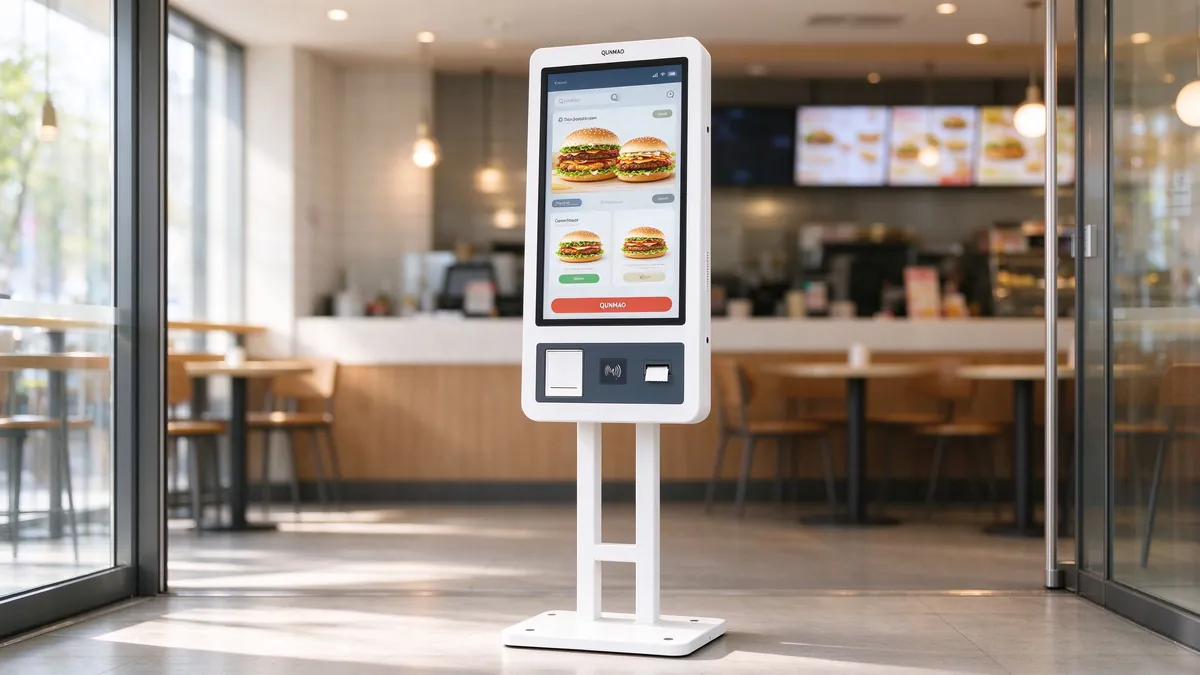
Many stores focus on the screen size, appearance and price when purchasing ordering machines. Only at the installation and debugging stage do they find that the payment has not been clearly thought out: the merchant number has not been opened, the concept of face brushing sounds very new but there is no preparation for compliance, the customer withheld the money but did not issue the ticket, and the channel bill and ordering order were several times different during the evening reconciliation. These problems are not big in isolation, and when superimposed on the peak of business, they will become the burden of queuing, complaints and manual checking.
Payment is the only part of the ordering process that involves funds, and it is also the part where stores are least willing to make mistakes. The payment method, docking path, exception handling and reconciliation method are determined together in the early stage of the project, which can make the subsequent equipment deployment, software launch and store training much smoother.
QUNMAOIt is the LCD commercial display OEM/ODM source factory under Shenzhen qunmao display technology co., ltd. the ordering machine can be customized according to the project from the whole machine structure, peripheral module to ordering software. This means that the hardware configuration, interface process and docking method related to payment can be designed together in the scheme stage, rather than being remedied after the equipment arrives. If you don't know the overall configuration of the ordering machine, it is recommended to know it first.Self-service ordering machine products; Has determined the procurement, care about landing rhythm, can be combinedSelf-service ordering machine store deployment guideLook together.
At present, there are five common collection methods in catering stores: WeChat payment, Alipay, cloud flash payment and bank card, aggregate collection, and brush face payment. They have different requirements for terminals, docking paths and suitable store types.
| Payment method | Customer operation | The terminal needs to have | Suitable for stores |
|---|---|---|---|
| WeChat Pay | Show the payment code to be scanned, or scan the screen QR code to pay | Code scanning module, networking | Almost all food and beverage outlets |
| Alipay | Show the payment code to be scanned, or scan the screen QR code to pay | Code scanning module, networking | Almost all food and beverage outlets |
| Cloud Flash Payment and Bank Card | Mobile phone induction, bank card insertion or card swing | NFC or POS terminal installation position | Shopping malls, chain restaurants, stores with credit card demand |
| Aggregate Receipts | One QR code or one interface covers multiple channels | Software Docking by Aggregation Interface | Multi-store chain, brand requiring unified reconciliation |
| Face payment | Face the camera to complete the recognition after the payment | Platform-certified face-brushing module, authorized service provider | Stores with mature membership system and stable passenger flow, as an alternative |
The opening of payment methods such as digital RMB depends on the region and acquiring channel, and can be confirmed with the payment service provider in the early stage of the project.
The capabilities of the terminal determine which payment methods can be received. The following are the payment-related configurations in the QUNMAO ordering machine specifications. The commonalities and differences of the four models are listed together:
The specifications of the four models all list bar code and two-dimensional code scanning capabilities, which are used to read customers' payment codes, as well as to write off member codes and coupon codes.
The 21.5-inch and 32-inch specifications list NFC card swiping capability, which can be used for mobile phone sensing payment or membership card swiping. If there is such a requirement for 15.6 inches and 27 inches, customization can be confirmed at the project stage.
The fuselage reserves the installation location of POS terminals. Stores that need bank card payment can fix POS in the fuselage with neat wiring and prevent POS from being moved by customers.
The specification lists a 5 million-pixel camera that supports face recognition. It is an optional item and can be used as the hardware basis for the face brushing scheme.
Support WiFi and Ethernet two kinds of networking mode, optional 3G/4G. Payment requires high network stability. It is recommended that wired is the main and wireless is the backup. Conditional stores can add cellular network as the third link.
After the payment is successful, the receipt will be issued immediately, and the refund voucher can also be printed when refunding, so that customers and shop assistants can check it.
In addition, the whole machine is pre-installed with Windows 10/11, which supports the installation of third-party software and self-starting. QUNMAO also supports the customization of ordering software. Stores can not only use QUNMAO's ordering software, but also customize the payment process according to their own cash register and member system requirements. Stores that need to use cash register equipment with ordering terminals can be further understood.POS terminalwithCashier Solution。
What kind of payment combination to choose is also related to the store format. Fast food and tea are mainly used to scan codes. Shopping malls and restaurants often have to take into account cloud flash payment and bank cards. Chain brands pay more attention to unified reconciliation. How to choose an ordering machine in different formats can be referred.Fast food restaurant, dinner, milk tea shop ordering machine how to choose; What is the difference between the ordering machine in the payment process compared with the scanning code ordering can be seen.Which is better, self-service ordering machine or scanning code ordering?. Tea, baking and other stalls with small high-frequency orders can be matched with desktop ordering all-in-one machine and digital menu board, for reference.Milk Tea Shop, Coffee Shop & Restaurant Desktop Digital Menu BoardandDesktop digital menu board/desktop ordering all-in-one machine, and the vertical ordering machine forms a complete closed loop of ordering-paying-serving.
Sweep code payment is currently the most mainstream collection method for ordering machines. WeChat and Alipay both provide mature interfaces. The scanning payment on the ordering machine is divided into two types: the scanned and the main scanning, with different business processes and docking priorities.
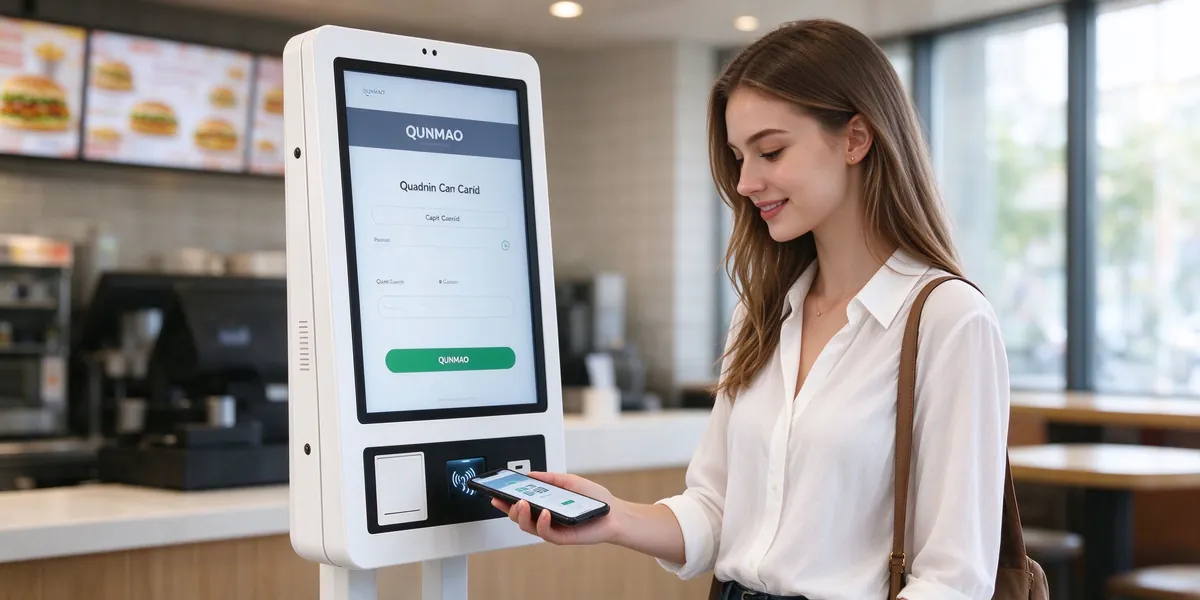
The customer opens the payment code of WeChat or Alipay on the mobile phone, points at the code scanning window of the ordering machine, the terminal reads the payment code and calls the payment interface for deduction, and the order status is updated and the receipt is printed after the deduction result is returned. The advantage of this method is that customers do not need to turn on the camera, do not need to manually enter the amount, the operation steps are few, in the fast food store peak is very common.
In the process of being scanned, the recognition speed of the code scanning module and the adaptability to the brightness of the mobile phone screen and the film sticking are very important. The code scanning module of the QUNMAO ordering machine is integrated in the body, and the position is fixed and the alignment is convenient. Customers do not need to find the code scanning position.
After confirming the order, the terminal generates a two-dimensional code bound to the order on the screen. The customer scans WeChat or Alipay to complete the payment, and the terminal confirms the order status through the payment result notification or active check-up. This method does not rely on scanning hardware, but also applies to the customer's mobile phone is not convenient to show the payment code.
The focus of the main scan is the binding of the order and the two-dimensional code, the setting of the validity period, and the confirmation mechanism of the payment result. When the design is not good, it is easy to appear that the customer has paid but the terminal has not updated the status in time. This kind of problem is explained in detail in the "payment exception handling" later.
Before docking, it is necessary to confirm the basic configuration such as merchant number, application identification, key and certificate, callback address, etc. For multi-store brands, it is also necessary to determine the merchant system of store dimensions to avoid the inability to distinguish stores during subsequent reconciliation.
Each payment order must have a globally unique order number. When payment requests are repeatedly submitted for the same order, the system should be able to identify and return the same result to avoid repeated deductions.
Both requests and callbacks require signature verification to prevent data tampering or forgery of callbacks. The key is recommended to be kept at the server and not stored in clear text on the terminal.
The unit, decimal place and actual amount paid after discount should be consistent with the ordering system, and the amount at the time of refund should also correspond to the original amount paid.
The time for the terminal to wait for the payment result should be clearly set. After the timeout, the failure cannot be directly determined. Instead, the terminal should check the order before processing. This will be expanded in the exception processing section.
QUNMAO supports customization of ordering software. Stores can customize the corresponding payment process and interface in ordering software according to their own payment channels, membership system and cash register process. Customers who already have a mature cash register system can also deploy their own programs in the Windows 10/11 environment, and QUNMAO will cooperate to complete peripheral debugging. Both paths use the same set of hardware platforms, and there is no need to re-evaluate the equipment for payment methods.
Want to know the right payment plan for your store?QUNMAO can provide ordering machine payment docking suggestions according to the format, number of stores and existing systems. Welcome to passContact Uspage for information.
Brush face payment saves the step of "taking out the mobile phone", and customers pay after facing the camera to complete the identification. Its experience is very intuitive, but if the store only sees convenience and ignores the equipment conditions and compliance requirements, it is easy to encounter troubles in the later period.
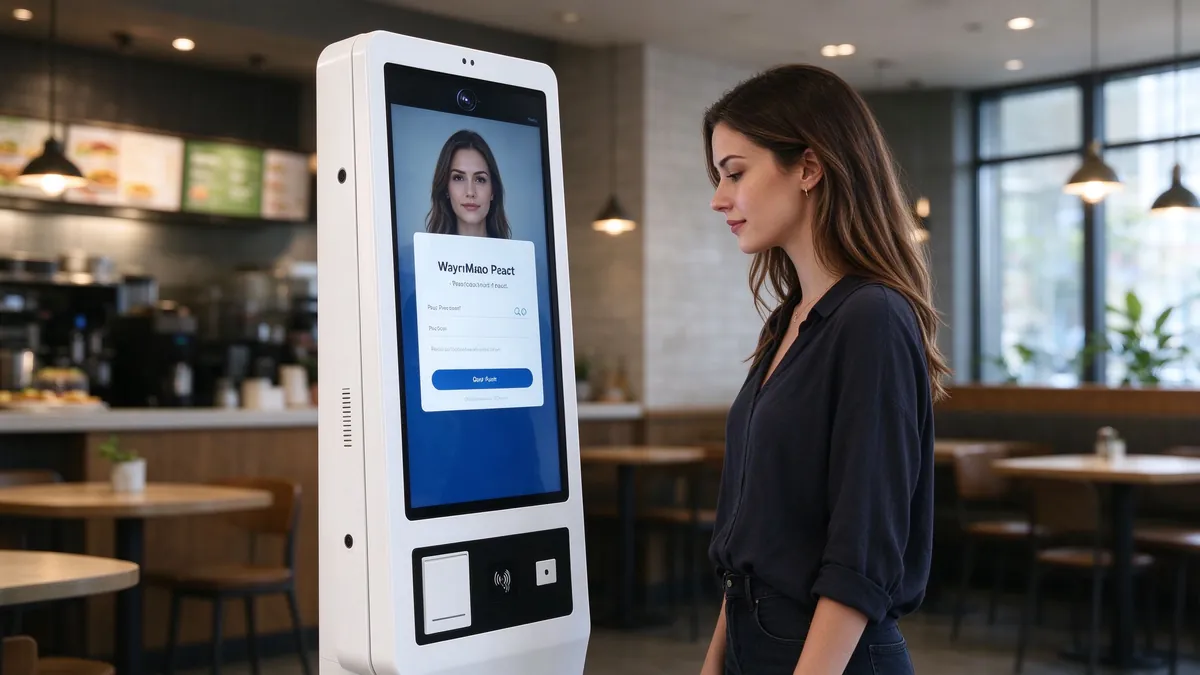
After confirming the order, the customer chooses to brush the face for payment. The terminal camera collects the face image, compares it with the identity information of the payment platform after living body detection, completes the deduction after the comparison passes, and returns the payment result. The whole process depends on the imaging quality of the camera, the light condition and the recognition service on the platform side.
WeChat payment and Alipay's face-brushing payment are both carried out through their respective authorized service provider systems. The equipment needs to use the face-brushing module approved by the platform and complete the access, instead of installing a camera on the ordering machine to use it directly. The QUNMAO ordering machine specification lists a 5MP camera (optional, supporting face recognition), which provides a hardware basis for the face brushing scheme. In specific projects, QUNMAO can customize the integration and software docking of the face brushing module according to requirements, and stores need to obtain the service provider authorization of the selected payment platform simultaneously.
Therefore, three things should be confirmed in the scheme stage: which platform to choose, who provides the module and who is the authorized service provider. After these three things are determined, equipment selection and software customization have a clear basis.
Face information is sensitive personal information. On March 21, 2025, the State Internet Information Office and the Ministry of Public Security announced the "measures for the Security Management of the Application of face Recognition Technology", which will come into effect on June 1, 2025. Together with the "personal Information Protection Law", it constitutes the main rules that need to be paid attention to when face-brushing payment falls on the ground. In conjunction with these regulations, stores should pay attention to the following points:
For the processing of face information based on personal consent, it is necessary to obtain the individual's voluntary and explicit consent on the premise of full notification. The content of the notification, including the purpose, method and shelf life of the processing, shall be presented in a prominent manner and in a clear and easy-to-understand language.
Before using face recognition technology to process face information, a personal information protection impact assessment shall be conducted and the processing shall be recorded. The assessment report and processing records shall be kept for at least 3 years.
When there are other non-face recognition methods to achieve the same purpose, face recognition shall not be used as the only verification method. Falling on the ordering machine means that while providing face brushing, alternative payment methods such as code scanning and credit card must be retained.
Unless otherwise provided by laws and administrative regulations or with individual consent, face information shall be stored in face recognition equipment and shall not be transmitted to the Internet; when the number of face information stored reaches 100000 people, it shall be filed with the network information department at or above the provincial level within 30 working days.
The above contents are arranged according to the documents published by the National Network Information Office. Before the actual deployment of the store, it is suggested to confirm it in combination with the regulatory requirements of the region and its own legal opinions.
In combination with the actual conditions of equipment and compliance, QUNMAO suggested that stores should use face-brushing payment as an alternative method instead of the only entrance: code-scanning payment should remain the main process, and face-brushing should provide faster choices for members and high-frequency customers; There should be a clear notification copy and consent to operation on the screen. Do field tests under different light conditions to confirm that the recognition success rate meets the peak demand of stores before expanding the use.
Aggregate payment is through an interface or a two-dimensional code, covering WeChat, Alipay, cloud flash payment and other channels, by the acquiring agency or service provider in the background unified processing of fund clearing and channel docking. For stores, the terminal only needs to be docked once to support multiple channels, reducing the work of opening and maintaining multiple channels separately.
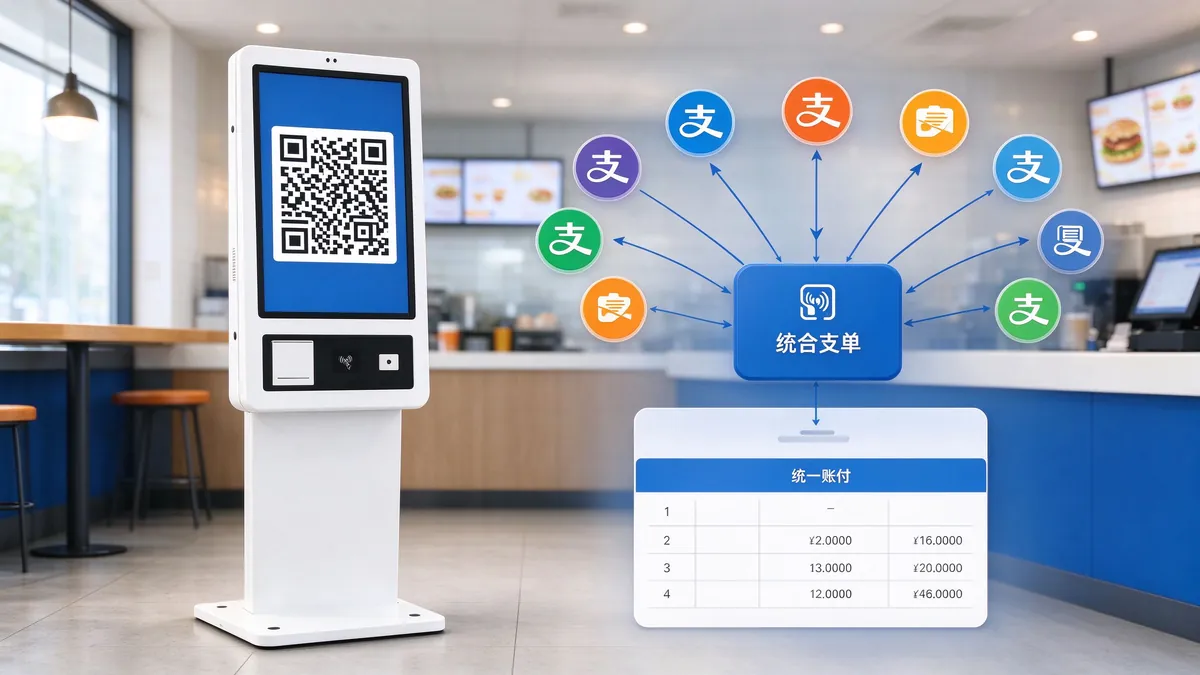
| Contrast Item | Direct connection to WeChat and Alipay | Aggregated payment |
|---|---|---|
| Docking workload | Each channel is docked and tested separately | Docking a set of interfaces, covering multiple channels |
| Channel coverage | Depends on which channels are opened. | Depends on the range of channels supported by the service provider |
| Settlement and Reconciliation | Separate bills for each channel, which need to be summarized by themselves | Uniform billing for easy summary by store |
| Suitable for stores | Small number of single stores or stores, single channel | Multi-store chains, brands that require unified settlement and split accounts |
| Precautions | Interface upgrades for each channel need to be followed up separately | Need to check the service provider's qualification, rate and settlement cycle |
Chain brands often have direct stores and franchise stores co-exist, the flow of funds, accounting methods and reconciliation dimensions vary. Ordering software needs to bring store, terminal and channel information to the order, so that reconciliation data can be issued by store, time period and channel. QUNMAO supports ordering software customization, and can design order fields and reconciliation reports according to the brand's merchant system and division rules. For brands that require batch settlement and unified reconciliation for multiple stores and multiple stalls, please referCanteen self-service ordering machine solutionwithFast food restaurant self-service ordering machine solution, put vertical ordering, desktop cashier and background report in the same system for planning. The overall selection of ordering software can be further understood.Supporting Scheme of Cashier and Ordering System。
Payment security is also reflected in the device itself. The QUNMAO ordering machine body is reserved for maintenance door locks, which need to be opened when maintaining the power supply and circuit board to avoid direct contact with internal components. The whole machine is pre-installed with Windows 10/11, which can combine the system account authority, peripheral access restriction and program startup self-starting, so that the terminal can only run the ordering and payment programs. Remote monitoring, equipment status and software update management methods, you can referSelf-service terminal solution。
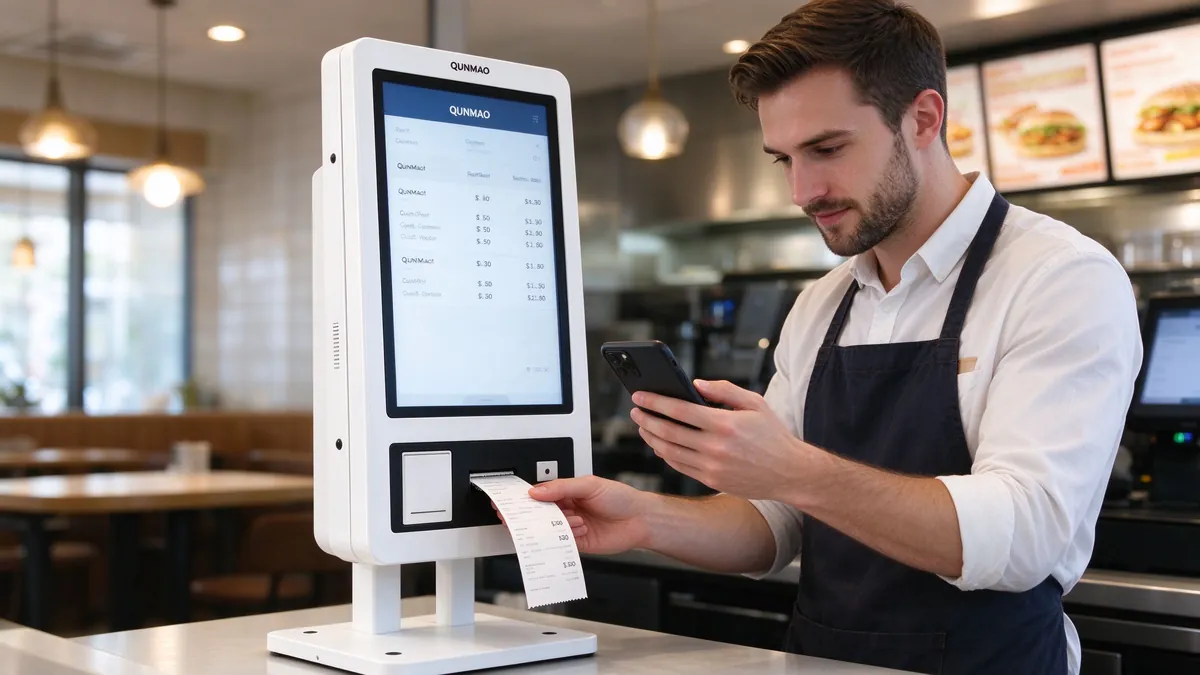
Refund is a necessary link in the daily operation of the ordering machine. Several issues need to be considered when designing:
What bothers the store most about the payment of the ordering machine is not the conventional success or failure, but the "uncertain status": the customer said that the money was deducted, but there was no money in the order. The terminal prompt failed, but the channel bill showed success. The following is a table of common phenomena and a description of the design ideas behind it.
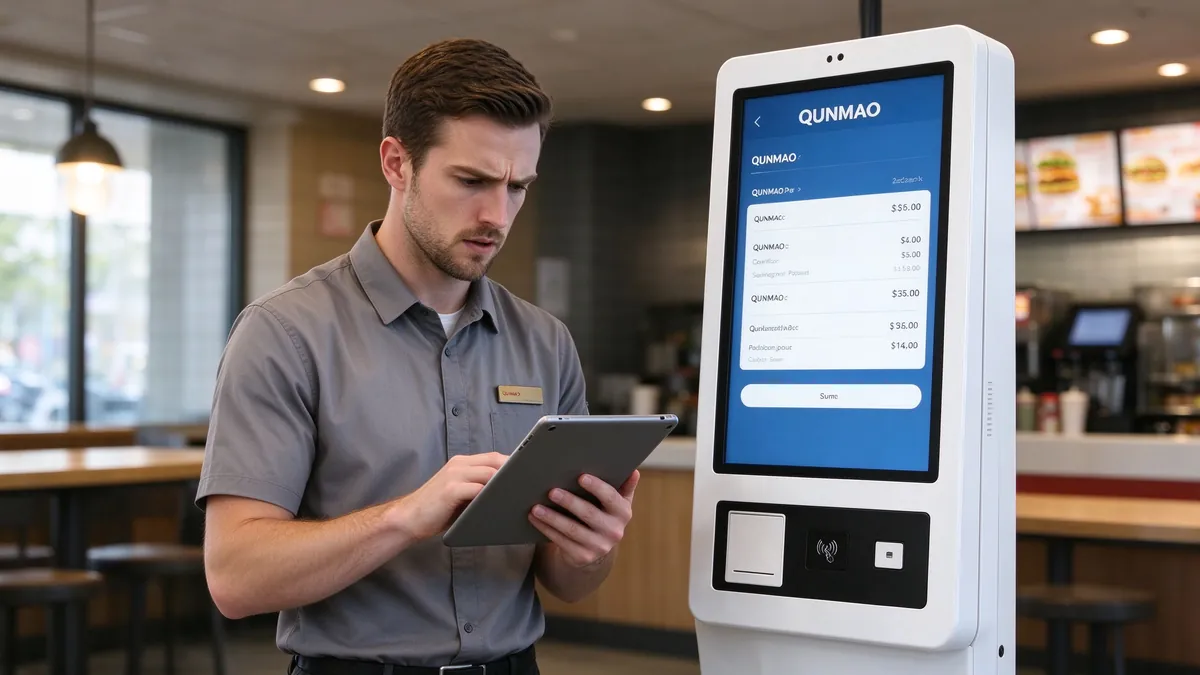
| Abnormal phenomenon | Common causes | Handling method |
|---|---|---|
| Order cancellation: the customer has deducted money, but the order has not been generated. | Payment result notification lost, network jitter, program closed while waiting | Actively call the check order interface to confirm the status; Make up the order and issue the ticket after confirming that the payment has been made; Automatically refund the order that cannot be made up. |
| Timeout: The page has been closed over time and the customer has actually paid. | The payment waiting time is set too short, or the customer completes the payment at the last minute. | After timeout, do not directly determine the failure, check the order first; The order enters the "to be confirmed" state and will be processed after confirmation. |
| Repeated charges | The customer scans the code repeatedly, or the terminal submits the request repeatedly. | Order number idempotent; for multiple payments of the same order, one is reserved and the rest is automatically refunded. |
| Disconnected: Payment Successful but Terminal Offline | Wired network disconnection, unstable WiFi signal | Cable-based, WiFi standby, optional 3G/4G as the third link; automatic check-up and synchronization after network recovery |
| Printing failed: payment has been made but the receipt has not been issued. | Out of paper, paper jam, printer offline | The screen displays the meal number and provides a re-print entrance. The clerk can make up the order number. |
| Restart: terminal crash or power failure during payment | Abnormal power supply, system stuck | Automatically resume the program after startup and check the outstanding orders; The equipment supports time switch machine to reduce the risk of long-term operation. |
The core of exception handling is "don't draw conclusions based on the terminal's own judgment". The payment result shall be subject to the payment channel. The terminal shall take the initiative to check the order before closing the order regardless of whether it receives the notice or not. For orders that have not been confirmed for a long time, regular tasks will continue to check the order until a clear result is obtained. All status changes are logged for later verification. These logics can be written into the process when the ordering software is customized. QUNMAO will design the corresponding supplement and refund rules according to the order process and payment channel of the store.
Faults at the equipment level, such as touch, paper jam and unstable network, will also affect the payment experience. Troubleshooting in daily use can be checked item by item in combination with the fuselage maintenance door lock, thermal printer and network settings.
Transaction bills provided by WeChat, Alipay, cloud flash payment or aggregation service providers are the basis for the receipt of funds.
Order data in the ordering system records what the customer ordered, how much he paid, and what payment method he used.
Store daily settlement data, check with channel bills and order orders to confirm the day's turnover.
三方数据不一致的原因通常集中在几类:渠道手续费造成的到账金额差异、退款的时间差、跨日订单的归属、异常订单(掉单、补单)的状态变化。点餐软件如果能在订单中保留渠道流水号、支付时间和状态变更记录,对账时就可以按流水号逐笔核对,缩短排查时间。
已有收银系统的门店,需要把点餐机的订单和支付数据同步到收银系统,常见的方式是由点餐软件通过接口推送,或由收银系统定时拉取。QUNMAO支持软件定制,可以按收银系统提供的接口规范调整数据格式与同步频率;需要把前台收银设备和点餐机一起规划的门店,可以参考Cashier SolutionwithDesktop cash register。取餐叫号环节需要和支付状态衔接的,可以结合Queue calling machineandSolution of queuing number calling machine in restaurant设计。
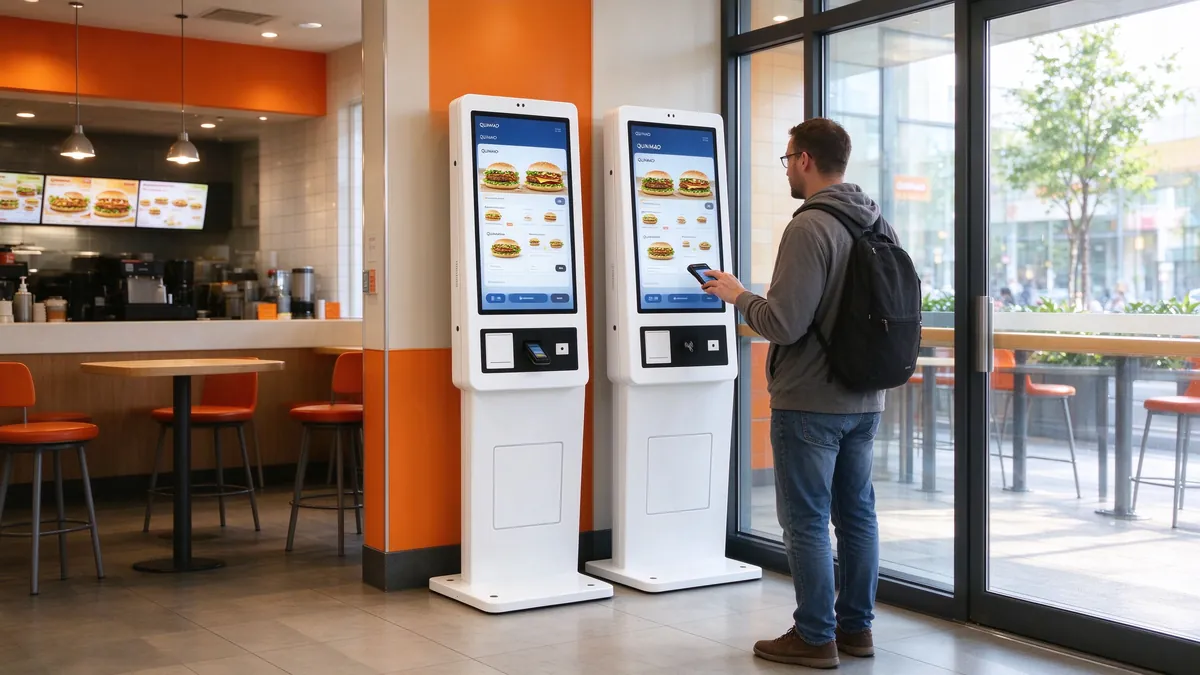
以一个拥有20家门店的连锁快餐品牌为例:每家门店配置2台QUNMAO 21.5寸落地点餐机,全品牌共40台,支付方式为微信、支付宝扫码,并在机身预留位安装POS终端以支持银行卡;各门店通过聚合支付统一商户体系,点餐软件由QUNMAO按品牌的菜单与结算流程定制。部署按“先选1家试点门店,验证支付与对账,再分批铺开”的节奏推进。试点阶段重点记录三项数据:扫码一次成功率、掉单与重复扣款的笔数、日结报表与渠道账单的差异笔数。三项数据稳定、店员也熟悉了补打小票和退款流程之后,再把同一套配置复制到其余门店,这样即使个别环节需要调整,影响范围也控制在一家店之内。同类连锁快餐厅的完整设备方案与部署流程,可参考Fast food restaurant self-service ordering machine solution。
下面四种配置是依据QUNMAO各机型规格书与餐饮门店常见的支付需求整理的示例,用于说明不同业态如何搭配支付方式,不代表特定客户项目。
| Scene | 推荐机型与外设 | 支付组合 | 上线验收重点 |
|---|---|---|---|
| Fast Food Outlets | 21.5寸落地,扫码模块、80mm打印机 | 微信、支付宝扫码为主,预留POS位 | 高峰时段连续下单;断网恢复后订单同步 |
| 茶饮与烘焙档口 | 15.6寸台式或27寸壁挂,扫码模块、打印机 | 扫码支付,订单量大、金额小 | 小额订单支付速度;打印小票字号与取餐号 |
| 连锁多门店 | 27寸或32寸,聚合支付接口 | 聚合支付统一商户体系 | 各门店对账数据按门店拆分;退款权限设置 |
| 商场餐饮 | 21.5寸或32寸,扫码、NFC、POS位 | 扫码为主,兼顾云闪付与银行卡;刷脸作为备选 | 银行卡支付流程;刷脸告知与同意界面 |
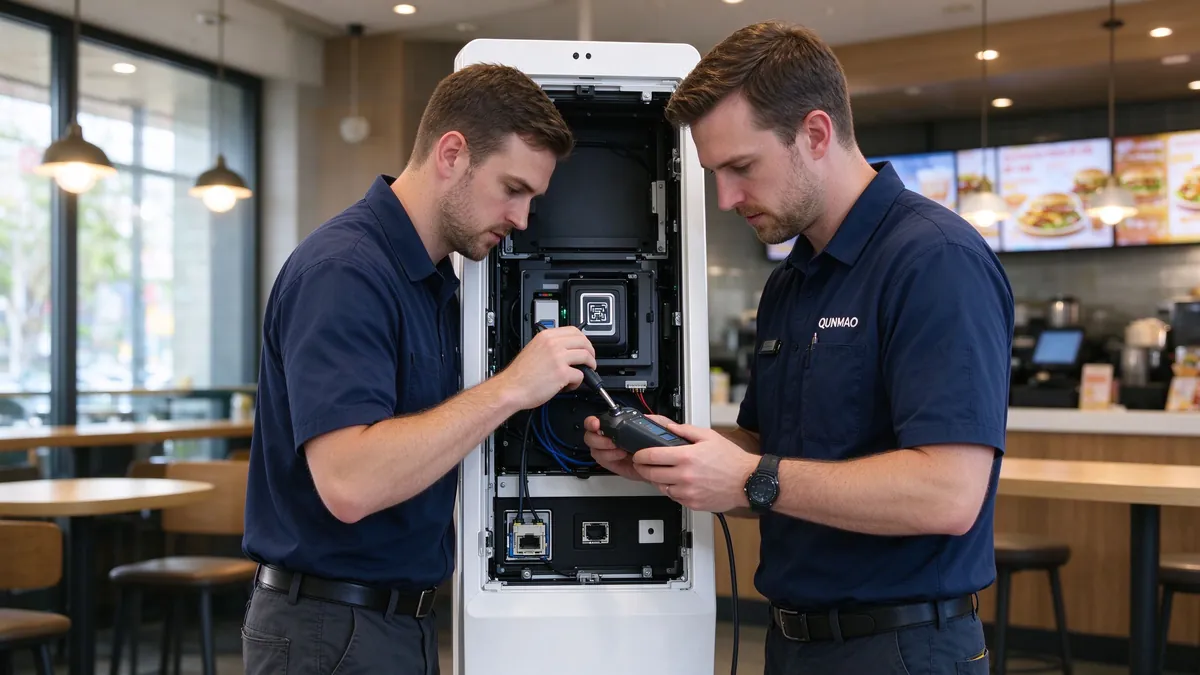
支付功能的上线,建议按“资质、联调、真机验收、异常演练、对账演练”的顺序推进,每一项完成后再进入下一项。
设备点位、供电网络与安装固定方面的要求,可以对照Self-service ordering machine store deployment guide一并确认。更多自助终端设备与行业方案,可以查看自助终端机产品withSelf-service terminal solution。
QUNMAO点餐机具备条码与二维码扫描、NFC刷卡(21.5寸、32寸)、POS终端预留孔位和可选摄像头,配合点餐软件定制,可以对接微信、支付宝、云闪付、聚合支付,以及按项目定制刷脸支付。
被扫是终端扫顾客的付款码,步骤少、速度快,适合高峰客流的快餐门店;主扫是顾客扫终端屏幕上的二维码,不依赖扫码硬件,适合作为补充。多数门店会同时提供两种方式。
不能仅靠加装摄像头使用。需要选用平台认可的刷脸模组,取得支付平台服务商授权,并完成告知、单独同意与影响评估等合规工作,同时保留扫码等替代支付方式。
单店或渠道单一的门店可以直连;多门店连锁需要统一商户体系与对账时,聚合支付更方便。选择时需要核对服务商的资质、支持渠道、费率与结算周期。
先通过订单号查单确认支付状态,已支付的订单补打小票或补单;终端屏幕应同时显示取餐号,避免顾客无凭证等待。打印机缺纸或离线时,更换纸卷或恢复连接后可重新打印。
可以。QUNMAO点餐机预装Windows 10/11,支持第三方软件和开机自启,也支持点餐软件定制,可以按已有收银系统的接口规范对接订单与支付数据。
QUNMAO可根据你的业态、门店数量与现有收银系统,提供点餐机选型、支付对接与软件定制的方案建议。提交需求后,我们会整理对应的方案资料与机型规格书。
 Partner Links:

 en
 中文

 Previous:
 Return to list