Current location:
Home
> News > Product News > Query machine
 Published: 2026-10-23
 Clicks:0
This is the question that system integrators, brands and overseas buyers ask us the most. The answer is divided into two steps: first determine which level of customization you need, and then follow the seven levels step by step.
Customization is not "changing the Logo". Some projects only need to change the startup screen and color, and can be delivered in a few weeks. Some projects need to redesign the structure, develop software, and connect business systems. The cycle and investment are completely different. Without a clear first, it is easy to appear "want the effect of ODM, but only according to the configuration level quotation" dislocation.
AsSource manufacturer of China touch query all-in-one machine, QUNMAO Qunmao with its brand Qtenboard Service global system integrators and brands, from configuration, OEM to ODM are completed in their own system, no subcontracting is required. This article takes our customization process apart: what each level does, what it delivers, and what you need to confirm.
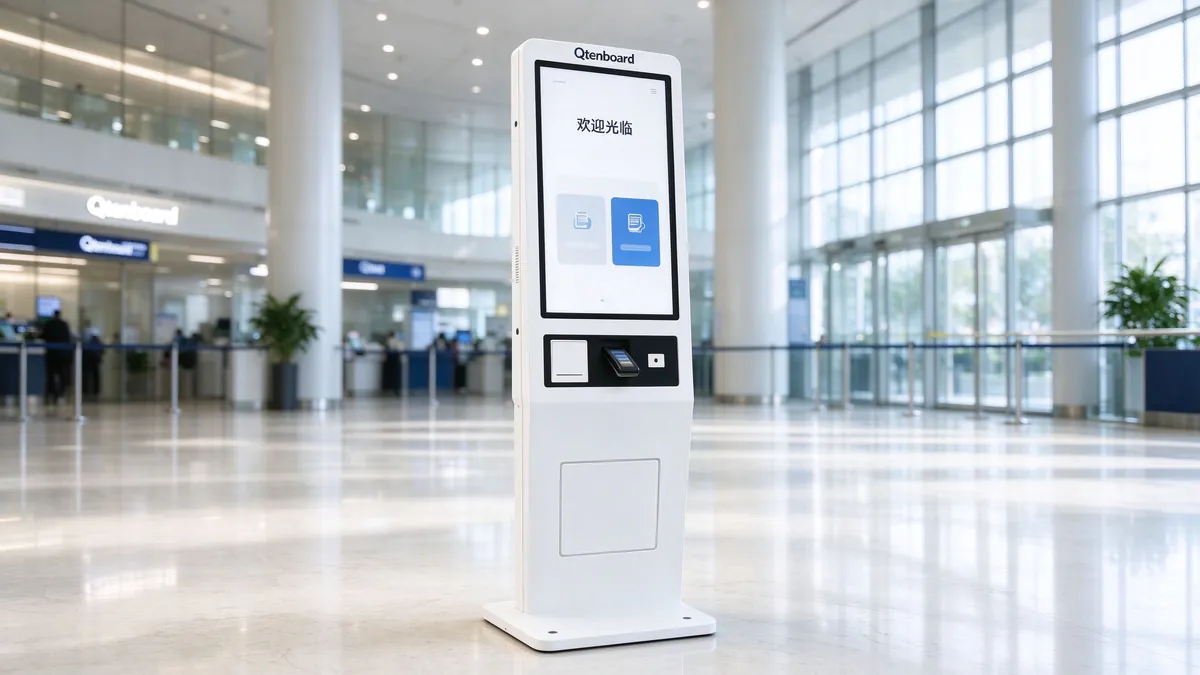
Customization is divided into three levels, different levels, whether new design, new development, cycle and investment are different.
What to do:Optional on existing models, such as system, memory, storage, peripherals, colors.
Features:No need for new design and new development, fastest delivery.
What to do:Brand logo, exclusive colors, boot screen, interface theme, pre-installed applications, packaging and nameplate.
Features:Based on a mature platform, the customer retains the brand and intellectual property.
What to do:Structure and appearance design, software customization development, system and interface docking.
Features:More investment in design and development, longer cycle.
Qtenboard is the source manufacturer of touch query all-in-one machines in China. The design, production and testing of the equipment are all in its own system, so it can be completed in one stop from the configuration level to the ODM level. Please refer to the product overview "Touch query machine product details"。
We split the custom project into seven levels. Each level has clear deliverables and customer confirmations so that buyers can clearly know where the project is going and when to lock in demand.
| Level | What to do? | Deliverable | Customer Confirmation Item |
|---|---|---|---|
| 1 Clarification of requirements | Organize scenes, quantity, appearance, software and docking requirements | Demand book | Content of demand book |
| 2 Proposal and quotation | Give configuration, custom scope, cycle and quote | proposal and quotation | Custom Scope and Commercial Terms |
| 3 Specification freeze | Lock specifications, then modify and go through the change process. | Specification Confirmation Sheet | Sign and confirm. |
| 4 Prototype | Prototype to verify appearance, interface and function | Prototype and test feedback | Prototype Confirmation Sheet |
| 5 Testing and certification | Functional and reliability testing; assessment of certification impact | Test report, certification assessment | Test Results and Certification Arrangements |
| 6 Mass production | Mass production as confirmed sample, factory test one by one | Factory test record | Factory acceptance |
| 7 Shipping and after-sales | Packaging and shipping, installation guidance, training, after-sales | With the box data, training records | Arrival acceptance |
The industry often refers to the stages of structural customization projects as ID (industrial design), EP (engineering prototype), DVT (design verification), PVT (mass production verification) and MP (mass production). For pure OEM-level projects, these stages are usually combined into two rounds of prototypes.
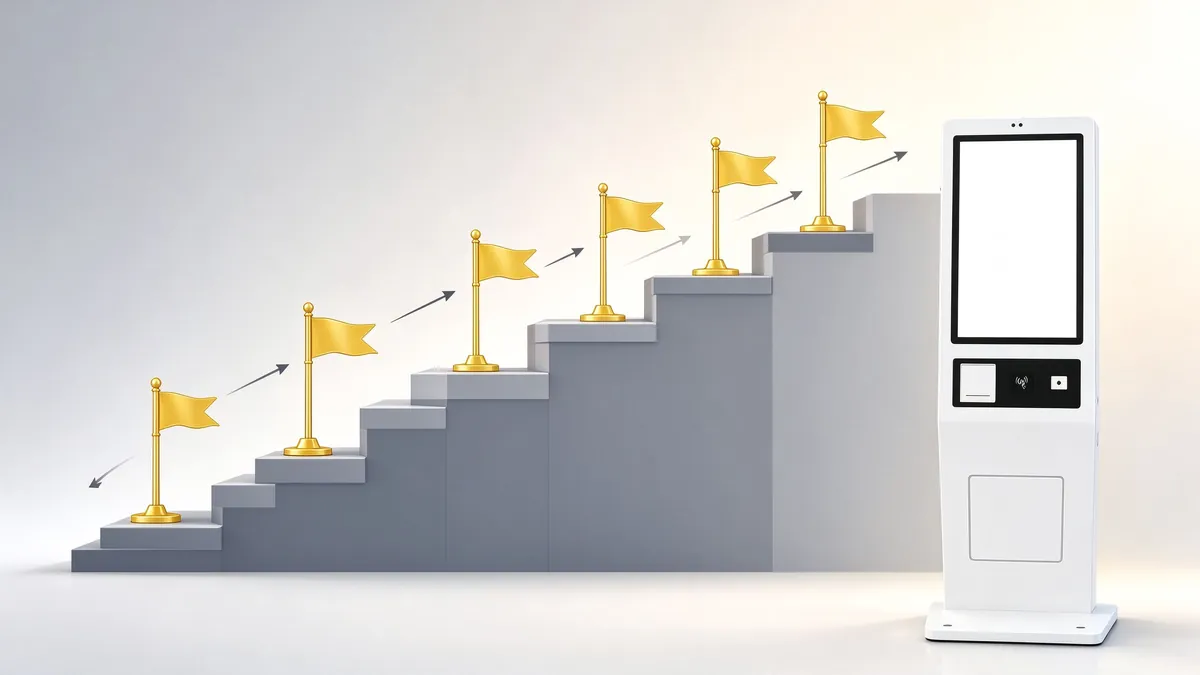
If the requirements are clearly written, the latter half of the communication problems will not occur. Here are our commonly used demand book templates:
There are two common omissions: only write "custom Logo", not location, size and file format; Only write "bilingual", not specific languages and who provides the document. These details are only discovered at the prototype stage and often have to be reworked.

Appearance customization should first judge whether it is "changing the surface" or "changing the structure".
Color, Logo, silk screen, label, etc. are adjusted based on the existing male mold, and no mold fee is required. Make minor adjustments to the existing structure, or it can be completed based on the male mold. Only when a brand-new structure is used and a private mold is needed can mold development be involved. For specific inputs, see "MOQ, Mold and Cycle" below ".
The customization of special-shaped and special screens is another example of Qtenboard ODM capabilities. Circular Advertising Machine | Special-shaped Touch Display Customization. K-type horizontal inquiry machine appearance and size customization, can read Customization Process of K-type Horizontal Inquiry Machine。
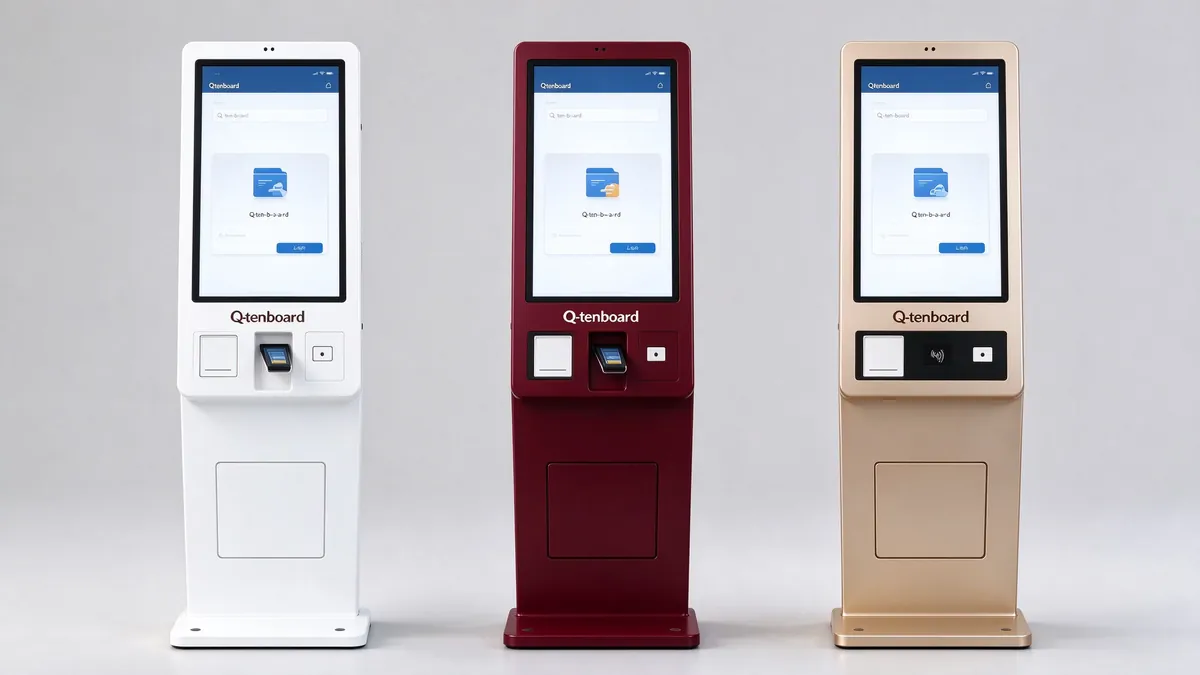
Includes power-on animations, desktop (Launcher) themes and wallpapers, idle screens, colors, fonts and icons, and pre-installed apps. The brand interface allows the device to be aligned with the customer's overall image.
The design of the interaction process should consider the depth of the hierarchy (it is recommended to reach the answer within three clicks), font size and contrast, aging and accessibility, as well as error prompt and timeout return.
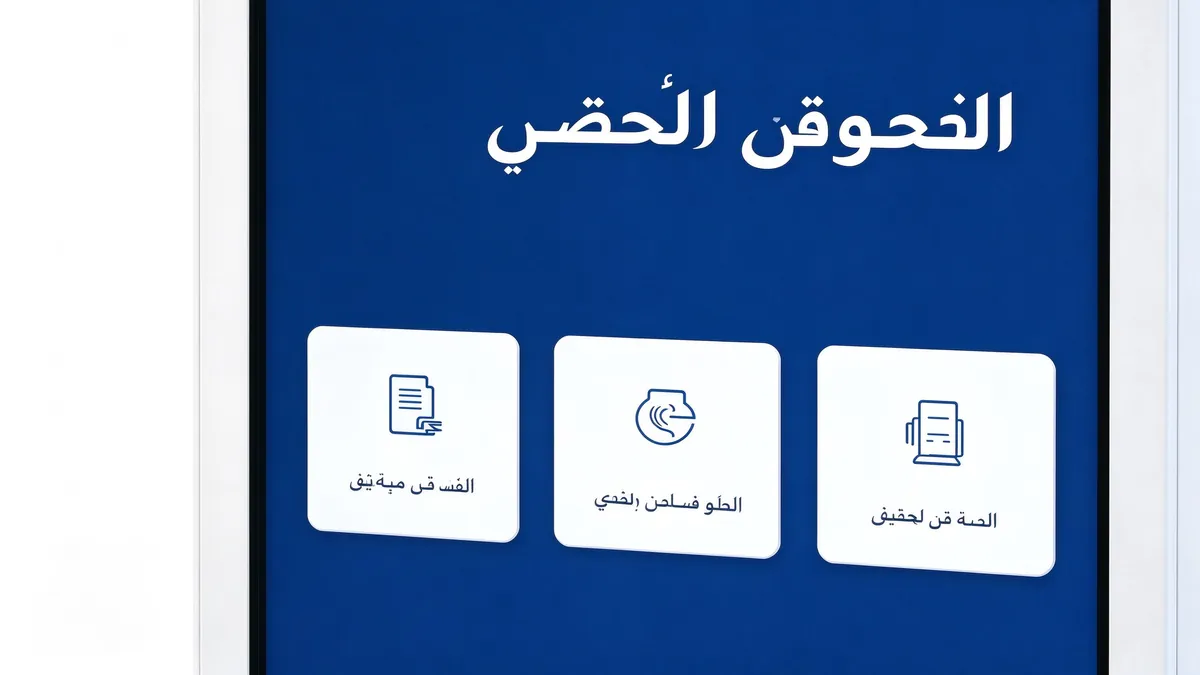
Multilingual interfaces require confirmation of specific languages, copywriting sources, and fonts in advance. For languages written from right to left (such as Arabic), verify the display of button order, text alignment, numbers, and shuffling during the prototype phase.
The Android solution is delivered as APK, and the Windows solution is delivered as installation package and system image. Content management is uniformly released through the cloud backend. For more information, see Digital Signage CMS Solutions。
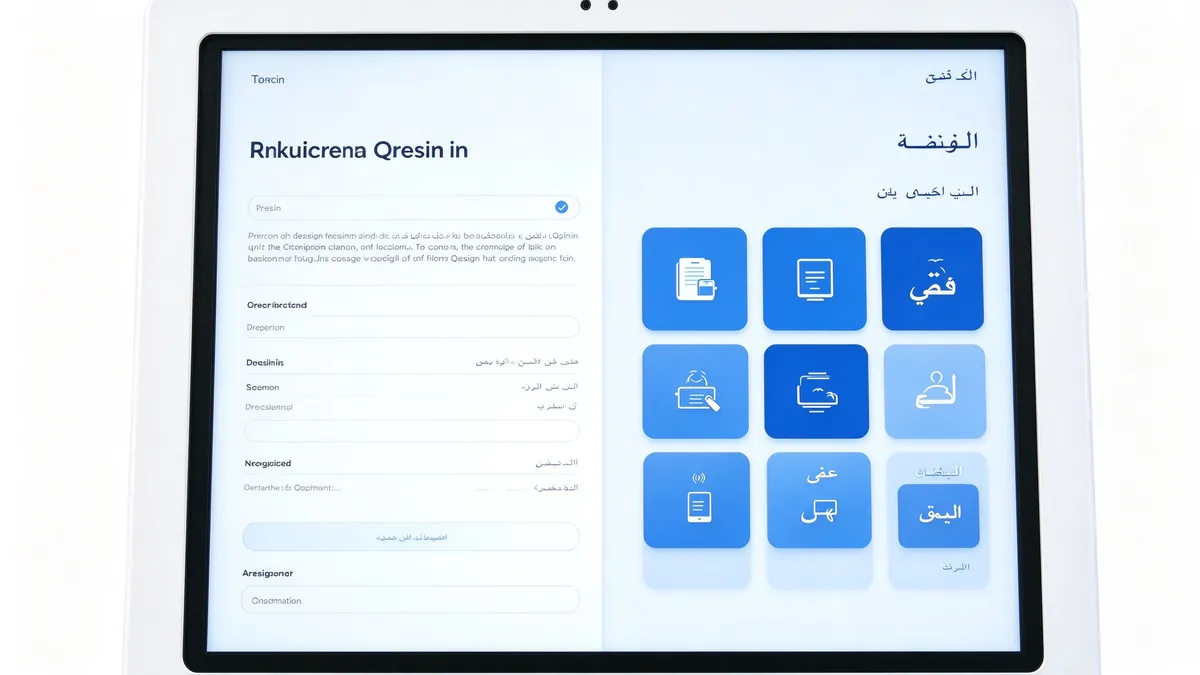
For a combination of functions in a specific scenario, please refer Station Information Inquiry Machine Solution with "Mall Wayfinding soft and hard integration scheme"。
Deliverables include: APK or installation package, system image, interface document, operation manual, and version update instructions. The version number and rollback scheme should be clearly written in the contract.

| Prototype | Verification content | Function |
|---|---|---|
| Round 1: Appearance and functional prototype | Appearance, color, Logo position, interface effect, main function | Confirm design direction and find rework points |
| Second round: mass production confirmation sample | Consistent with batch material, process, system image | As a standard for mass production |
| Structural Class Customization (ODM) | On the basis of the above, two rounds of engineering verification and mass production verification will be added. | Verification of structure, heat dissipation, reliability and mass production process |
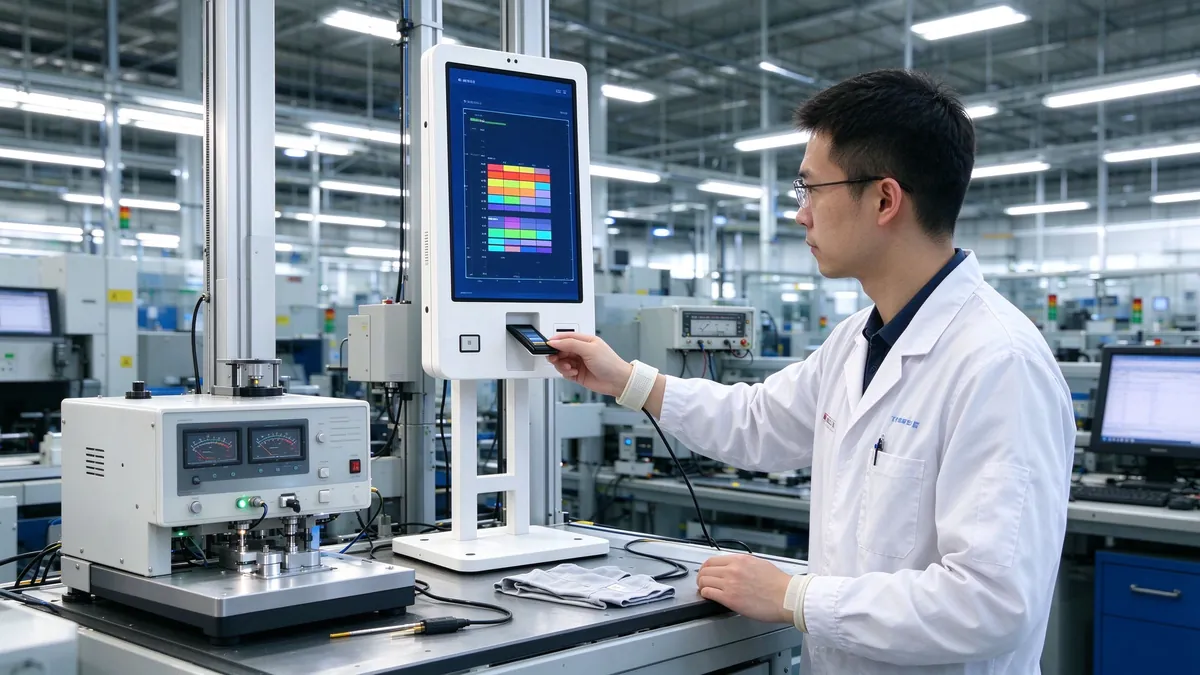
Before batch products leave the factory, each display screen undergoes a 48-hour high-temperature aging test. The whole machine test covers more than 20 parameters such as brightness, color, touch control, audio, network, interface, etc. Each device has a unique serial number, and the test report is saved in the production management system for easy traceability.
When customization involves changes to the structure, power supply, or peripherals, the impact on certification needs to be evaluated. The certification period for each market is usually 6 to 14 weeks and should be arranged in the early stage of the project. Our certificates are available Qualification Certificate Page View.
The following data comes from our custom policy, the specific project is subject to quotation and contract.
| Custom content | MOQ Reference | mold |
|---|---|---|
| Software level (boot screen, desktop themes, pre-installed applications, multi-language) | 1, the prototype always supports 1 | None |
| Appearance (color, Logo, silk screen, laser engraving), based on existing male models | Low MOQ; mass customization often starts with 50 units | No mold fee |
| structural adjustment, based on the male model | Common 50 sets | Depending on the adjustment content, fixtures may be required. |
| New structure or private mold | Batch commitment is required, complete mechanical redesign is usually recommended to 300 to 500 units | Private model development is about $10000 to $50000, depending on complexity |
Small batch pilots can use soft molds or modular designs to reduce investment; large-scale deployments (e. g. thousands) are more suitable for hard molds.
| Phase | Period reference |
|---|---|
| Prototype: Standard OEM | 7 to 10 working days after artwork confirmation |
| Prototype: ODM | 2 to 4 weeks |
| Mockup: joint development of prototypes | 8 to 12 weeks |
| Batch: Standard Configuration | 15 to 25 working days |
| Batch size: whole cabinet | 15 to 35 working days |
| Batch: small batch (1 to 10 sets) | 3 to 7 working days |
| Batch: Repo Order | Up to about 30% faster |
| Customized batch relative to standard model | Usually 3 to 7 days, depending on complexity |
| Overall project: Logo, color or software customization only | 4 to 8 weeks |
| Overall project: complete structure customization | 16 to 24 weeks (from specification signing to first shipment) |
In addition, the overseas projects we have released also provide reference for actual rhythm: 20 inquiry machines in Vietnam for one month, 40 machines in Singapore airport for one month, 22 machines in Bangkok hospital for five weeks, 18 machines in Kuala Lumpur bank for four weeks, and 30 machines in Jakarta business hall for six weeks. These projects have different depths of customization and different cycles.
The cost of customization consists of "one-time input" and "single cost:
The specific amount is quoted according to the project, and we will not give a fixed price in the public article. For information on the price influences of different patterns and configurations, you can refer to How much is the price of a K-type horizontal inquiry machine? with How much is the price of the L-type horizontal inquiry machine?。
| Matter | Proposed form of agreement |
|---|---|
| Confidentiality and Intellectual Property | Sign a confidentiality agreement (NDA). In OEM projects, the customer's drawings and software belong to the customer, and the customer retains complete intellectual property rights and control; in joint development projects, the attribution of hardware reference design, software framework and joint innovation is agreed in the contract according to the existing intellectual property rights and joint development contributions of the parties. |
| Specification freeze and change | Specifications are frozen after confirmation; subsequent changes are made to the change order, and the impact on cycle and cost is explained. |
| Warranty | The warranty period is 1 to 5 years, which can be configured according to the project, and can be extended with original spare parts. |
| After-sales response | It can be agreed according to the service level: high level (4-hour on-site response in major cities), standard level (replacement of parts and labor in the next working day), and economic level (replacement in advance, with self-repair kit). Specific contract shall prevail. |
In terms of batch consistency, the principle of "prototype is standard" is the principle: batch production is carried out according to the materials and mirror images of the confirmed samples, test one by one at the factory and keep records, and acceptance is carried out according to the same list after arrival.
Source manufacturers from China Qtenboard that customization, production and export can be closed-loop within the same factory. Our production base can produce more than 200 units per day and can be increased to more than 300 units in 2 to 3 weeks. This means that when the order is expanded from pilot to batch, the delivery capacity is guaranteed.
This project is a combination of OEM and software customization: brand appearance, brand interface, Arabic layout from right to left, and business interface docking.
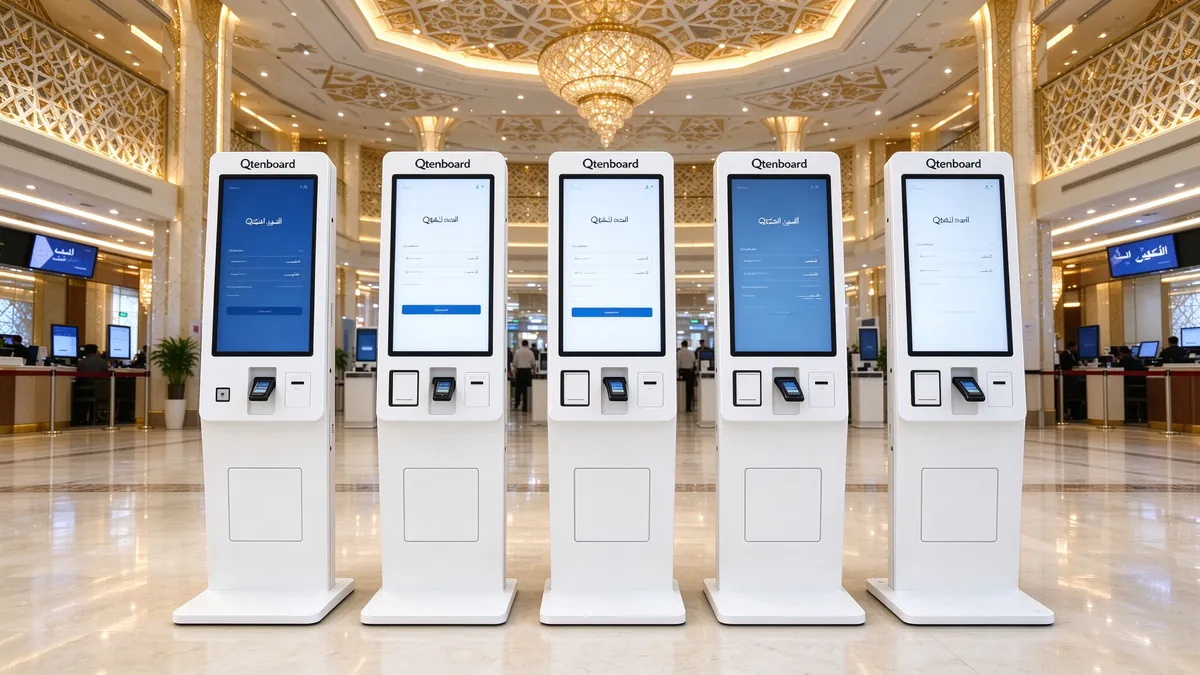
The customer is a system integrator to provide local government service center with its own brand of query equipment. It hopes that the appearance of the equipment is consistent with its own brand image, the interface supports Arabic and English, the typesetting of Arabic should conform to reading habits, and it should be connected with the existing business system of the government affairs center. The project has requirements for brand consistency and delivery rhythm.
We first classify the requirements with customers: brand Logo, color, startup screen and packaging belong to OEM level, based on the existing male model, no mold is required; Arabic interface and business interface belong to software-level customization. After the separation, the scope and cycle of the project are clear. Subsequently, we use the requirements book to write down the Logo position, color number, language and interface requirements one by one, and freeze the specifications after the customer confirms.
The prototype is divided into two rounds. The first round focuses on confirming the layout of brand color, Logo position and Arabic interface. The second round is the mass production confirmation sample, which is completely consistent with the batch material and system mirror image as the standard for mass production.
| Week number | Level | Main responsibilities | Need customer cooperation |
|---|---|---|---|
| Week 1 | Requirements clarification, scheme, specification freeze | Fill in the requirements, confirm the customization scope and cycle, sign the confidentiality agreement, and freeze the specifications. | Provide Logo files, color numbers, language copy and interface documents |
| Week 2 | First round prototype | Make appearance and interface prototype, start software development | Review prototype after artwork confirmation |
| Week 3 | Prototype validation, interface development | Verify brand color and Arabic typesetting; Sandbox interface development; Material preparation | Provide sandbox environment and test account |
| Week 4 | Second round prototype (mass production confirmation sample) | Confirm mass production material and mirror image; Interface joint debugging | Confirm the mass production confirmation sample as the batch standard. |
| Week 5-6 | Mass production | 60 sets of mass production, each set of high temperature aging and machine testing, unified mirror deployment | Acceptance can be viewed remotely |
| Week 7 | Shipment | Export packing, nameplate and outer box according to brand requirements, with box attached installation guide | Confirm receiving and docking person |
| Week 8 | Installation, UAT and Training | INTEGRATOR INSTALLATION TEAM INSTALLATION TO GUIDE, Qtenboard REMOTE GUIDE; UAT & TRAINING | Coordinate installation site and acceptance personnel |
Right-to-left language is not just "text direction reversal": the order of buttons, the direction of return and forward icons, and the display of numbers and mixed text all need to be mirrored as a whole. In the first round of the prototype, we did a typesetting test with the real copy provided by the customer, and let the customer's native language personnel review it. We found that the order of individual buttons and numbers were unnatural. Then we adjusted the layout rules and entered mass production.
The customer's brand color has high requirements for consistency, and the color of different materials and processes will look different. We made spraying and proofing according to the color card, let the customer confirm the actual color in the first round of prototype, and sealed the confirmation sample as the batch color standard, and compared the batch production according to the sealed sample.
The customer's business interface has been adjusted once during the development process. Because the modification after the specification freeze has to go through the change process, we record this adjustment as a change order and arrange it together after evaluating the impact on the cycle. The software is managed according to the version number, and the fallback scheme is reserved to ensure that the modification in the joint debugging stage will not affect the confirmed version.
60 台设备按期完成交付,并投入使用。
集成商项目经理:认可“先分级、再冻结”的方式,认为需求书和规格确认单让双方对范围的理解一致,后续变更也有据可依;对品牌色与封样的做法表示满意。
终端使用方(政务服务中心):反馈阿拉伯语界面阅读自然,群众使用顺畅;个别页面的措辞,希望后续结合本地习惯继续微调。
本地安装团队:认为安装指南清晰,按批次与编号包装便于核对,远程指导对进度有帮助。
定制项目最怕的是边做边改。作为中国源头制造商,Qtenboard 用需求书、规格冻结和两轮样机,把变化控制在可管理的范围内。政务场景的更多方案,可参考 "Government Hall self-service terminal solution"。
可以。Logo 包括开机 Logo、系统 Logo 和设备上的实体 Logo,可采用丝印或镭雕;颜色可以定制前框与后盖,并可对照色卡匹配品牌色。基于现有公模的外观定制,不需要模具费。
可以。需要提供品牌素材(Logo、颜色、字体)、语言与文案、功能清单,以及需要对接系统的接口文档。我们会按原型、UI 设计、开发、联调、UAT 的流程交付。
分为需求澄清、方案与报价、规格冻结、样机、测试与认证、批量生产、发运与售后七个关卡。仅 Logo、颜色或软件定制的项目,整体周期通常为 4 至 8 周;完整的结构定制,通常为 16 至 24 周。
不一定。颜色、Logo、标签等基于现有公模的定制,不需要模具费;只有使用全新结构、需要私有模具时才涉及模具开发,费用视复杂度而定。
软件层面的定制 1 台起,样机始终支持 1 台;批量外观或结构调整,常见 50 台起;完整的机械重新设计,通常建议 300 至 500 台。新项目通常涉及样机费、工程费或定金,金额按项目报价。
OEM 项目中,客户的图纸与软件归客户所有,客户保留完整的知识产权;联合开发项目,则按各方既有知识产权与贡献,在合同中分别约定。所有项目都可以签署保密协议。
改变结构、电源或外设时,需要评估对认证的影响。目的国需要认证的,通常为 6 至 14 周,建议项目前期就安排。我们的证书可在资质证书页面查看。
Qtenboard(深圳群茂 QUNMAO 显示技术旗下品牌)是中国触摸查询一体机与自助终端的源头制造商,自有生产基地,支持配置级、OEM 与 ODM 定制。从设计、软件到生产与出口,都可以在自有体系内完成。
回到开头的问题:想要一台带自己 Logo、界面和功能的查询机,要准备什么?现在的答案是:先分级、再写需求书、冻结规格、用样机验证,最后批量生产。这不是“改个 Logo”,而是一个有关卡、有交付、有签字的过程。
作为中国触摸查询一体机的源头制造商,Qtenboard 把起订量、模具、周期、质保和知识产权都放在明面上,让买家在项目开始前,就清楚地知道每一步会发生什么。利雅得 60 台的项目,是这个方法的一次实践。选择 Qtenboard——一家愿意把定制流程讲透的源头工厂,能让你的品牌设备落地得更稳、更快。
 Partner Links:
 en
 中文

 Previous:
 Return to list